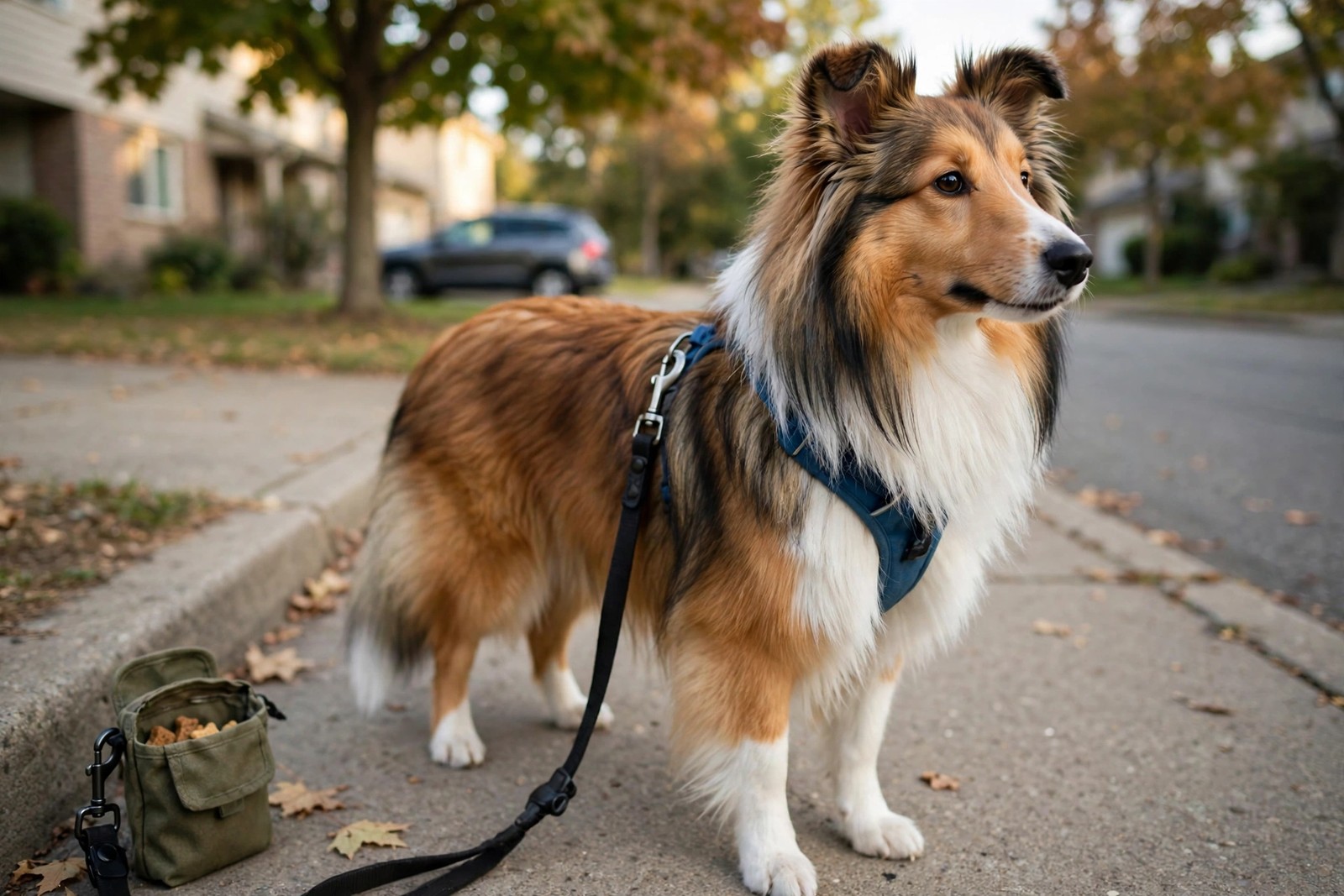
An adult Shetland Sheepdog typically weighs 6 to 12 kg (13 to 26 lb). Females usually fall at 6 to 11 kg (13 to 24 lb), and males usually fall at 7 to 12 kg (15 to 26 lb). Shelties vary in height more than many small breeds, and a taller dog in correct condition can weigh half as much again as a petite dog in equally correct condition. That spread makes the hands-on check central rather than optional with this breed. The range frames the conversation, and rib feel plus height settles it.
A Small Dog Inside a Spectacular Coat
The Sheltie coat stands off the body in a mane around the neck and dense feathering behind the legs, and the silhouette suggests a much larger animal. Owners of lean Shelties get asked whether the dog eats enough, and owners of overfat Shelties hear compliments about a glorious coat. Ignore both audiences. Part the coat to the skin along the ribcage and feel for ribs under a thin fat cover, found with light pressure once your fingers reach the dog rather than the hair.
Weigh a Sheltie in a consistent coat state when you can, and always pair the reading with the rib check done the same day. A bath flattens the coat and reveals the true outline, and a photograph taken then, from above and from the side, becomes a reference your memory cannot argue with later. Look in that photograph for a waist behind the ribs and a tuck behind the chest, and expect both to show clearly on a dog in correct condition.
Small Numbers, Large Percentages
One kilogram on an 8 kg (18 lb) Sheltie equals an eighth of the dog, and treat habits move that kilogram quietly. Break treats into pea-sized pieces, weigh the daily ration rather than scooping it, and count the extras that training classes hand out. Herding breeds stay busy and bright on work for the mind, and food puzzles, scent games and short training sessions burn the restless energy that boredom often converts into begging.
Shelties can also run to a sensitive digestion in some lines, and sudden weight loss, changed stools or a fading appetite deserve a prompt vet visit rather than a brand shuffle at home. A vet can investigate thyroid function, digestion and other possible causes, and can set a personal target weight that respects your dog's height. Bring your weight log to that visit, since small numbers over months tell a clearer story than one reading.
Grooming as the Weigh-In Ritual
Shelties need regular grooming anyway, and tying the condition check to the brush-out guarantees the check happens. Weekly grooming reaches the skin, loosens the undercoat and puts your hands on ribs, hips and shoulders in a calm routine the dog already accepts. Note the rib feel in a single line each week, and review four lines together at the end of the month.
Agility and herding handlers watch Sheltie weight closely, since a small dog jumping many times its own height pays for surplus in landing forces on fine legs. Even without sport, the logic holds at garden scale, and a lean Sheltie climbs stairs, jumps into cars and plays longer with less effort. If your dog competes or trains, weigh before a training block and after it, and let the rib feel arbitrate between the scale and the stopwatch when the two seem to disagree.
Households share small dogs casually, and casual sharing duplicates meals. In KinsLe Care Teams, the grooming check, the measured dinner and the treat budget each sit with a named person, and the shared timestamps keep a small dog's small ration exactly as planned.