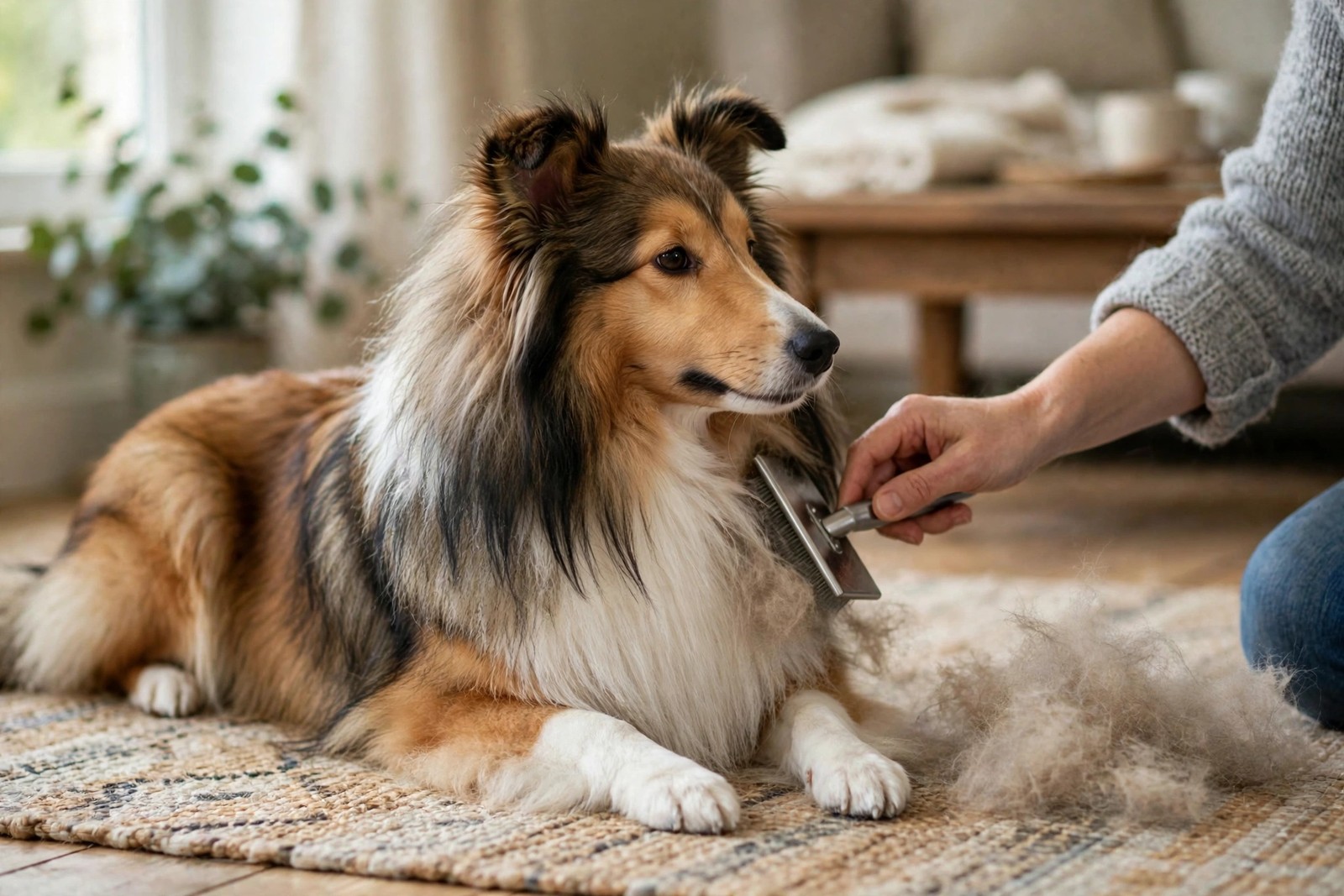
A Shetland Sheepdog carries a full double coat: a harsh outer layer over a soft, dense undercoat that does the insulating. That coat stays in good order on a weekly rhythm for much of the year, with one important exception. Twice a year the undercoat turns over in bulk, and during those spring and autumn blows the schedule has to tighten or the shed hair packs into felt before it ever reaches the floor.
The Weekly Brush-Out
Once a week, brush the coat out thoroughly rather than skimming the surface, working in sections and against the lie of the hair so you lift loose undercoat out instead of smoothing over it. Spend your time where packing starts: the thick ruff around the neck, the soft hair behind the ears, and the trousers on the backs of the hind legs all hold shed undercoat long after the sides look clear. A comb passed to the skin tells you whether a section is genuinely clear or just looks tidy. Behind-the-ear hair is fine and silky and knots silently, so tease small tangles apart with fingers while they are still small. A weekly session done properly also doubles as a skin check, since parting the coat section by section reveals redness, parasites or lumps that the double coat otherwise hides completely.
Coat Blows in Spring and Autumn
When the seasonal blow starts, you will know: hair comes away in handfuls, the coat looks dull and bulky, and loose undercoat clumps behind the ears and in the trousers within days. Move to a brush-out every couple of days for the few weeks it lasts. Leaving shed undercoat in the coat during a blow is what creates dense packing at the skin, and packed undercoat holds moisture, pulls uncomfortably and eventually has to be worked out in a long, miserable session for dog and owner alike. A bath partway through the blow can help loosen undercoat that is ready to leave, provided you dry the coat fully and brush it out afterwards. Short, frequent sessions beat marathon grooming here too, and clearing the loose coat promptly shortens the whole episode.
What a Professional Groom Adds
About every two months, a professional groom earns its place for many owners: a thorough bath that reaches the skin, a full brush-out with the right tools, nail care, and a tidy trim of the feathering on the feet, hocks and trousers so the outline stays neat without shortening the coat itself. A groomer also spots what home grooming misses, including early mats at the skin, ear problems and skin changes under that dense ruff. Between salon visits, trim the hair between the paw pads level so mud and grit do not ball up, and keep feet checked after wet or muddy walks. Puppies should learn the brush-out routine gradually with short, rewarded sessions, because a Sheltie groomed calmly from youth is a far easier adult to maintain.
Protect the Double Coat
One rule protects everything else: never shave a Shetland Sheepdog's double coat to save grooming time or supposedly to cool the dog in summer. The two layers work together, insulating against heat as well as cold and shielding the skin from sun, and a shaved double coat can regrow unevenly, softer and prone to the very packing you were trying to avoid. If summer heat is the concern, the answer is a properly brushed-out coat with dead undercoat removed, shade and sensible exercise times, not clippers. Matted areas that cannot be teased out by hand belong to a groomer, who can remove them without nicking skin hidden tight beneath the mat. In KinsLe, Care Teams keeps the rhythm visible: the weekly session, the tighter coat-blow schedule and the two-month salon booking can each sit with a named person.