
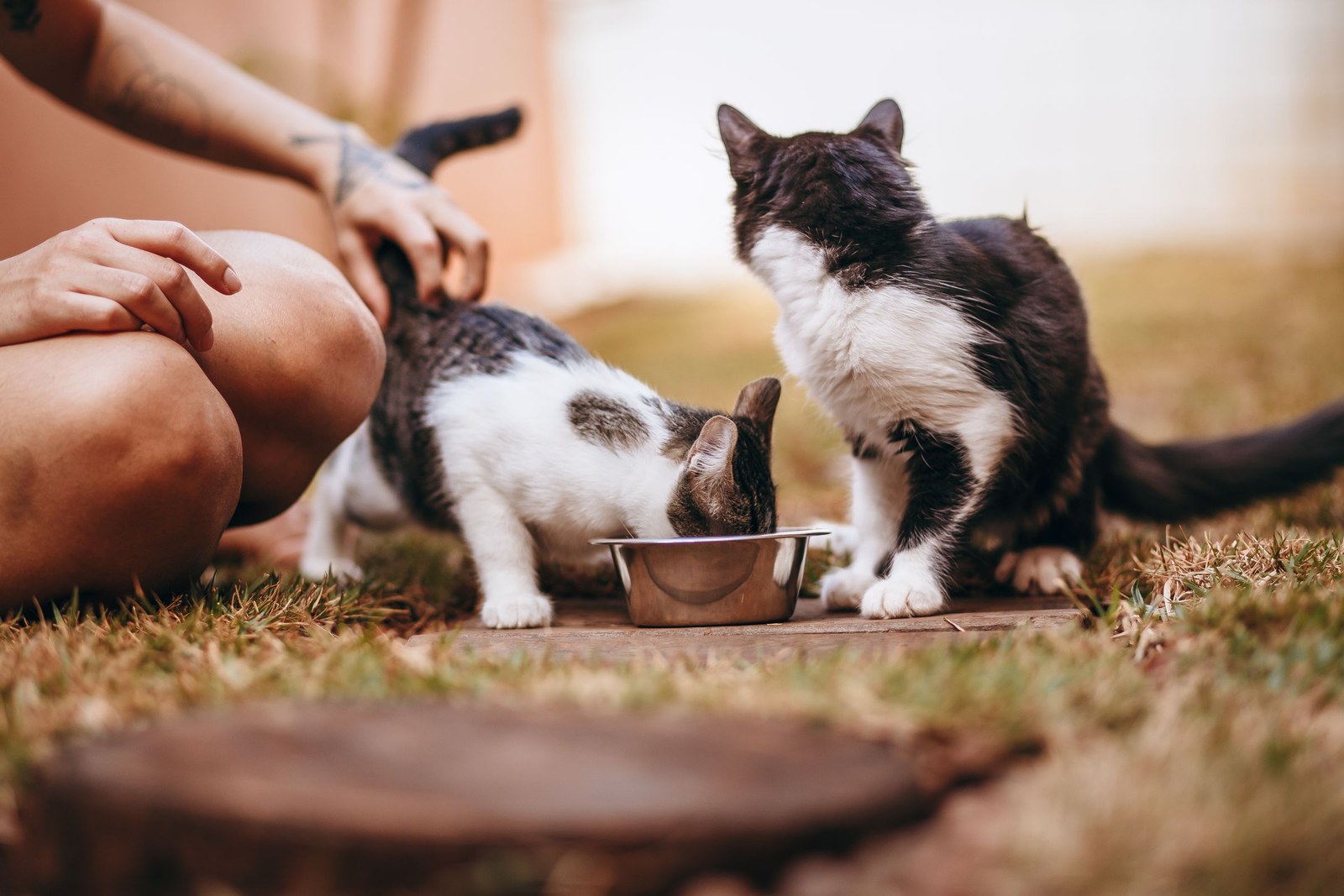
For most cats, scheduled feeding is the better choice: measured meals at set times make portion control possible, appetite changes obvious, and multi-cat feeding fair. Free feeding — leaving dry food out all day — can work for the rare naturally self-regulating cat, but it commonly leads to slow weight gain and hides the early warning signs owners most need to see.
What scheduled feeding does well
When meals arrive at predictable times, you know exactly how much each cat ate. That matters for weight, but it matters even more for health monitoring. A cat who normally trots in for breakfast and one morning only sniffs and walks away has told you something important — with free feeding, that signal is invisible because nobody knows when she last ate.
Scheduled meals also solve the multi-cat problem. In many homes, one confident cat grazes all day on everyone's share while a shy cat gets less than she needs. Feeding measured meals in separate spots, even separate rooms for a few minutes, guarantees each cat her own portion. It also fits life with medication given with food, special diets for one cat only, and kittens, adults, and seniors in the same house who each need different food.
Routine itself is reassuring to cats. Most adapt within a week to two or three meals a day and begin appearing hopefully a few minutes before mealtime.
The honest case for free feeding
Free feeding is convenient, and a small number of cats — often young, active, single cats — nibble modestly and stay lean on it. If you choose it, at least measure the total amount you put out each morning so intake is capped and you can tell if the level barely dropped that day. Only dry food can be left out safely; wet food spoils and should always be served as meals.
Even then, weigh your cat monthly. Gradual gain is the typical failure mode, and it is far easier to correct early. If weight creeps up, appetite becomes hard to judge, or a second cat joins the home, those are strong reasons to switch to scheduled meals.
How to run scheduled meals smoothly
Pick times you can keep daily — for most adults, morning and evening; kittens and some seniors do better with three smaller meals. Measure with a cup or scale, adjust portions based on body condition rather than the bag's generous suggestions, and pick up uneaten wet food after 20 to 30 minutes. Puzzle feeders and slow-feeder mats can stretch a meal for fast eaters without adding calories.
Transition free-fed cats gradually over a week: offer meals, remove the all-day bowl between them, and expect a few days of complaints at the empty spot. Do not let a cat — especially an overweight cat — go without eating for extended periods to “teach” her; cats who stop eating need food and, if it continues beyond a day, veterinary advice.
One plan for everyone who feeds
The best system fails if each person improvises. KinsLe's Care Teams let you assign feeding duties to family members, with timestamped completions when each meal is done, so everyone feeds on the same plan instead of guessing or double-feeding. That consistency is what makes scheduled feeding work in a real household. Put breakfast and dinner on the Care Teams plan on KinsLe, with a specific person assigned to each meal who records whether she ate, so an appetite change is noticed once and handled consistently by the whole household.