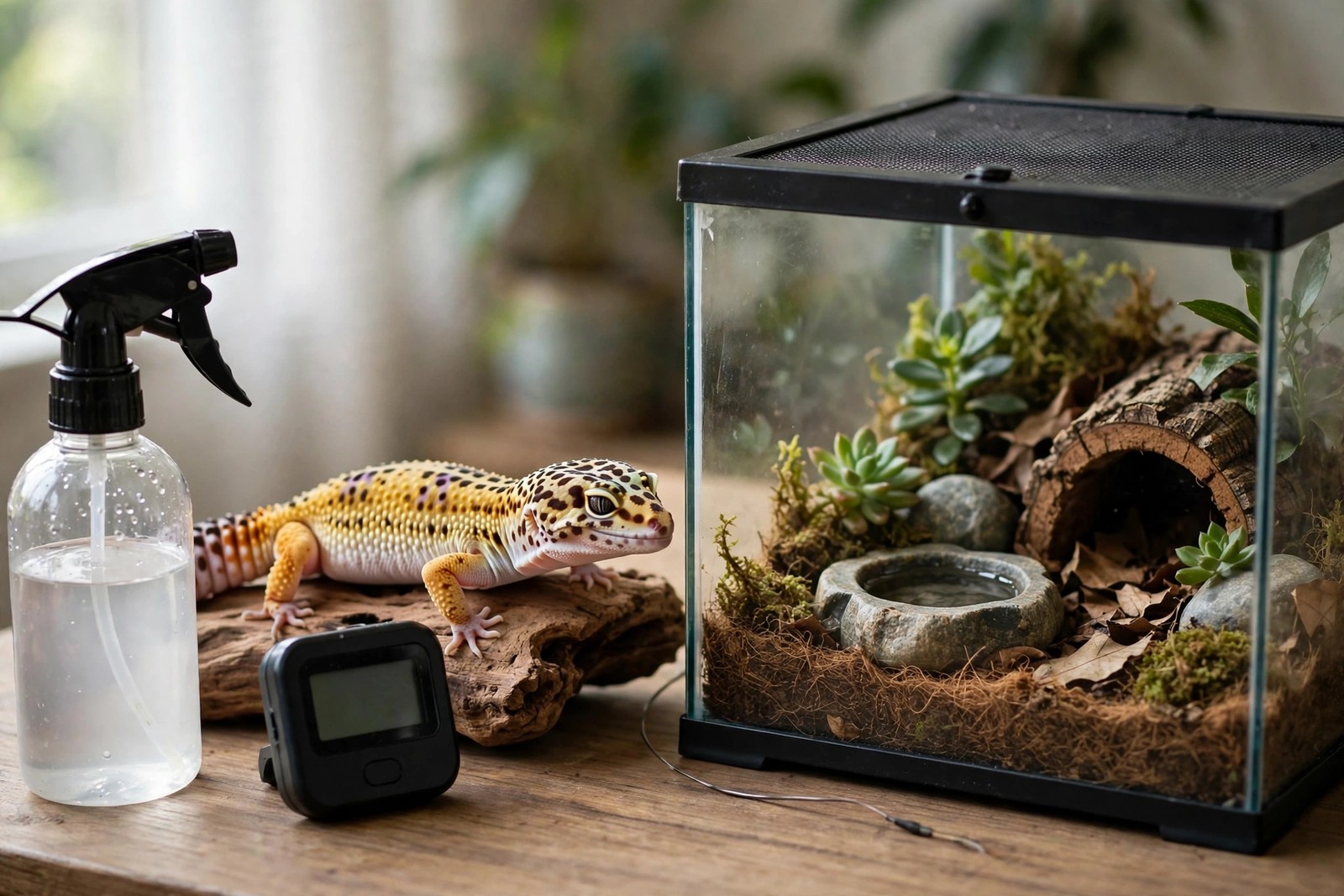
Work through the vivarium before worrying about the gecko itself. Start with heat: the floor of the warm hide needs to sit around 31–33°C, read where the gecko actually lies with a probe thermometer or an infrared gun, not from a stick-on dial, because a gecko that cannot get warm cannot digest a meal. Next, look for an approaching shed, since many geckos refuse food for a few days around one, and check toes and eyes for retained shed afterwards. Then weigh season and age: adults commonly eat less in cooler months, and females may pause while ovulating. Finally, check the offering itself — prey no wider than the space between the gecko's eyes, presented in the evening when it is active.
Then Check the Gecko
Look at the tail: a plump tail means reserves are fine and a short fast is low-risk; a thinning tail with appetite loss is a vet matter. Check the mouth for sores (mouth rot shows as redness or cheesy material at the gum line, often with drooling), the belly for hardness or a dark shadow (possible impaction), the skin for mites or retained shed, and whether stools are normal when passed. Weigh weekly in grams and change one variable at a time. A healthy adult can miss a week or two without concern in the right conditions; a juvenile who stops eating needs attention much sooner, since youngsters have small reserves.
Working With Your Vet
With a gecko off its food, your job is to gather clean evidence for the vet: when it last ate, what was offered, the floor temperatures at both hides, and any shed or weight change since. A checklist like this article helps you decide how quickly to book, but only an examination can name a cause — and a faecal sample plus dated feeding notes give the vet something solid to work from.
Contact an exotics vet if a juvenile stops eating for more than a few days, an adult for more than two to three weeks, or at any point with weight loss, a thin tail, diarrhoea, mouth sores, or lethargy. Bring your temperature readings and a faecal sample if one is produced — parasites are on the list of causes and need a sample to find.
Feeding dates, weights, shed records, and temperature logs tell a clearer story together than any one of them does from memory. Together, that evidence travels with this gecko in a single packet — the Pet Passport on KinsLe — so a boarding stay or a change of vet never means reconstructing its history from scratch.