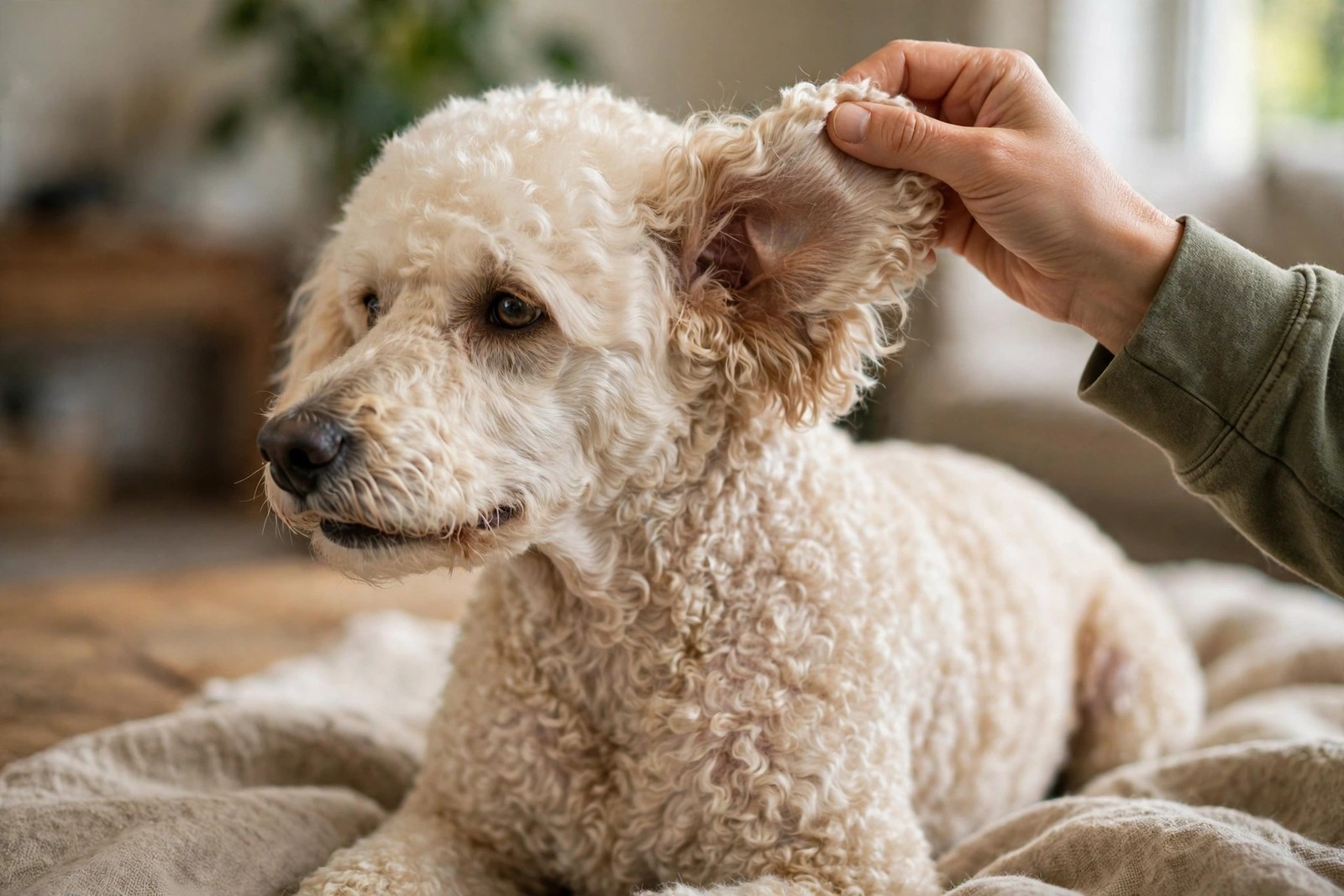
Ear-hair plucking used to be a standard line in every grooming appointment for poodles and their crosses, and many owners still assume a hairy canal is an unhygienic one. Veterinary thinking has moved on. For a dog with healthy ears, the hair is mostly harmless — and the act of pulling it out is not. The question is no longer whether you can remove it, but whether your particular dog has a medical reason for it to come out.
Why Routine Plucking Fell Out of Favour
The skin lining the ear canal is thin and easily damaged. Plucking tears hair out by the root, leaving the canal lining irritated and microscopically raw — and warm, inflamed, damaged skin is precisely the environment yeast and bacteria thrive in. Vets saw the pattern often enough: dogs whose ears were plucked on a strict schedule kept returning with sore, infected ears, while dogs left unplucked stayed comfortable. Hair in the canal also does some quiet good, helping to keep debris and water from travelling deeper. So the modern default for a healthy ear is simple: look, sniff, and leave the hair where it grows.
The Cases Where Removal Does Help
There are dogs for whom clearing the canal is the right call, and they are identified by history, not breed alone. A dog with recurrent infections may need hair removed so medicated treatment can reach the canal wall and air can circulate while the ear heals. Very dense, matted hair that traps moisture after swimming or bathing can be worth thinning for a dog who keeps getting damp, itchy ears. Dogs with narrow canals, heavy floppy ears, and a record of trouble are the usual candidates — and in those cases removal is best done or directed by the veterinary team, sometimes while the dog is sedated for the ear to be examined and cleaned properly, rather than as a standing instruction to every groomer.
What to Do Instead at Home
Healthy-ear care is mostly surveillance. Lift the flap weekly and look: you want pale pink skin, little wax, and a faint, neutral smell. A gentle wipe of the outer ear with a damp cotton pad clears everyday grime; never push anything deep into the canal. After swims and baths, dry the ears thoroughly, since trapped moisture is a far more common trigger for infection than hair. If your dog has hairy canals, you can trim the hair at the opening short so air moves and you can see in — trimming gives most of the visibility benefit of plucking with none of the torn roots. Use only a cleaner your own vet has suggested for your dog, and stop and book an appointment if cleaning makes the dog flinch or the ear smells worse afterwards.
Signs the Ear Needs a Vet, Not a Groomer
Head shaking, scratching at one ear, a sour or yeasty smell, dark discharge, redness, or yelping when the ear is touched all point to a problem that plucking would only aggravate. Ear infections are painful and can involve the deeper ear if they linger, so these signs earn a prompt vet visit, and the vet's findings should shape what happens to the hair from then on. Write those findings down where everyone who cares for the dog can find them: KinsLe's Pet Passport holds the vet's ear plan alongside vaccination and treatment records, so the next groomer trims, plucks, or leaves well alone according to your vet's instruction — not a salon habit.