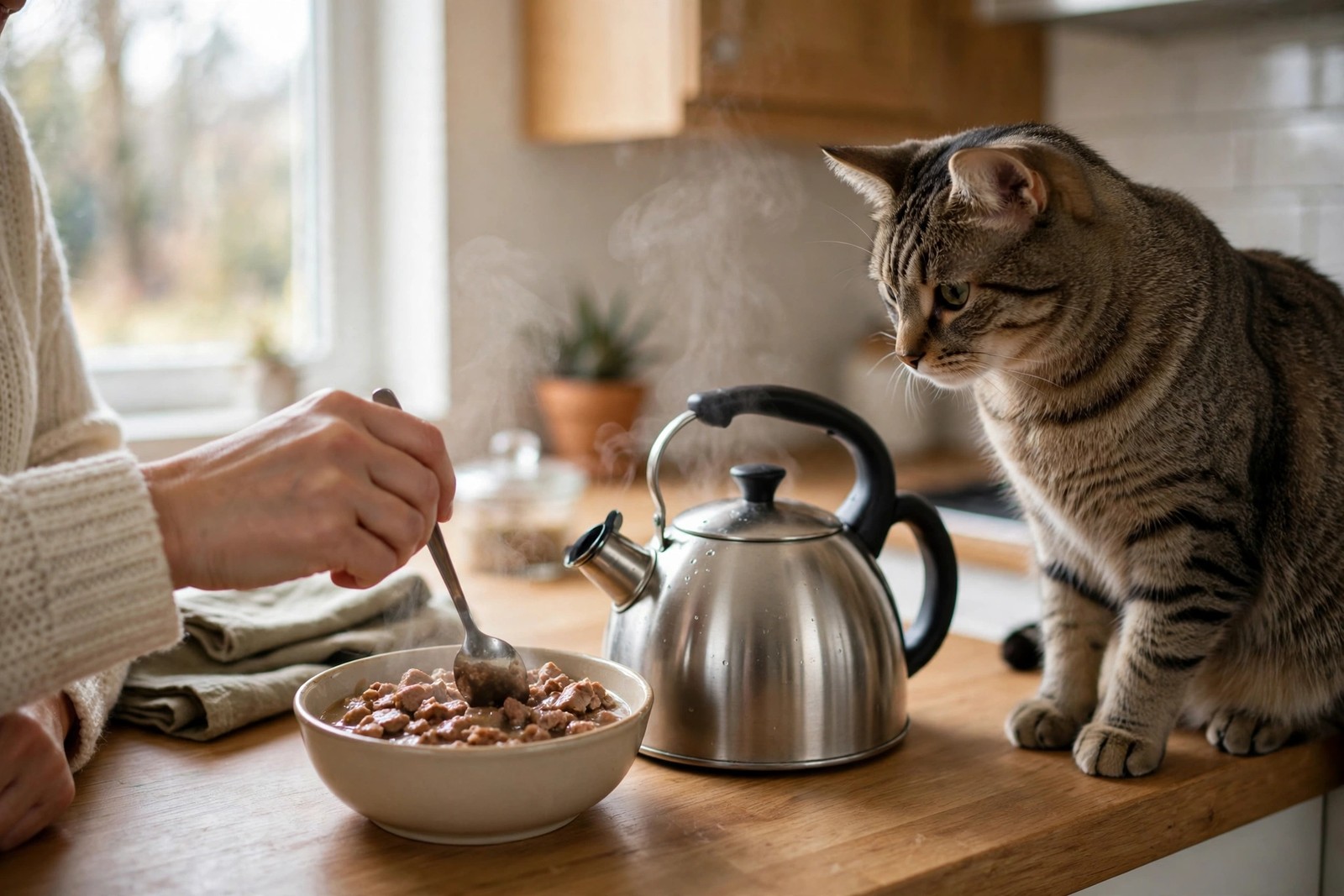
Yes, for many cats warming wet food is a small change with an outsized effect. Cats rely on smell far more than taste when deciding whether food is worth eating, and temperature controls how much scent food gives off. A serving taken straight from the refrigerator is at its least appealing exactly when you want your cat to tuck in.
Why cold food puts cats off
In the wild, a cat's food is body temperature, and that preference is built in. Warmth volatilises the fats and proteins in wet food, carrying aroma to the cat's nose; cold suppresses it, so a refrigerated meal can register as bland or even suspicious to an animal who judges freshness by scent. This is why a cat may walk away from a bowl of cold leftovers and then eat the same food eagerly once it has sat out briefly. Senior cats, whose sense of smell fades with age, and cats recovering from illness under vet care, often benefit most, because warming gives them a clearer signal that the food is good.
How to warm it safely
The goal is lukewarm, roughly room to body temperature, never hot. Spoon the portion into the feeding bowl first, then either stand the bowl in warm water for a few minutes or warm it in short bursts of a few seconds at a time. Stir thoroughly afterwards, because warming is uneven and a hidden hot pocket can burn a cat's mouth and put her off the food entirely. Test with a clean fingertip or the inside of your wrist; it should feel barely warm. Adding a spoonful of warm water and mashing it in also works, releasing aroma while adding a little moisture, which suits cats who drink sparingly.
Never cook the food, boil it, or serve it steaming. High heat changes texture, can reduce the nutrients a complete food is balanced for, and makes the meal less, not more, attractive to most cats.
Leftovers and timing rules
Warm only the portion you are about to serve. Refrigerate the rest of an opened pack promptly in a covered container, and avoid warming and re-chilling the same food repeatedly, which degrades it and invites bacterial growth. Once served, wet food should not sit out for hours; pick up what is uneaten after a reasonable mealtime and offer fresh food at the next meal rather than topping up a stale bowl. If you warm food and your cat still refuses it, do not keep reheating the same serving in the hope she will relent.
When warming is not the issue
Warming helps a healthy cat who is merely underwhelmed by cold food. It does not explain a cat who suddenly stops eating altogether, eats far less for more than a day, loses weight, or shows other changes such as hiding, vomiting, or a sore mouth. Appetite loss in cats deserves prompt vet attention rather than kitchen experiments, because cats who do not eat can become unwell quickly. Note what changed and when, and let your vet judge the cause.
Consistency is what turns a picky eater around, and KinsLe Care Teams lets you record the warming step, portion, and mealtimes in your cat's feeding duties, with each feed timestamped so she is never fed twice or served cold food by mistake.