
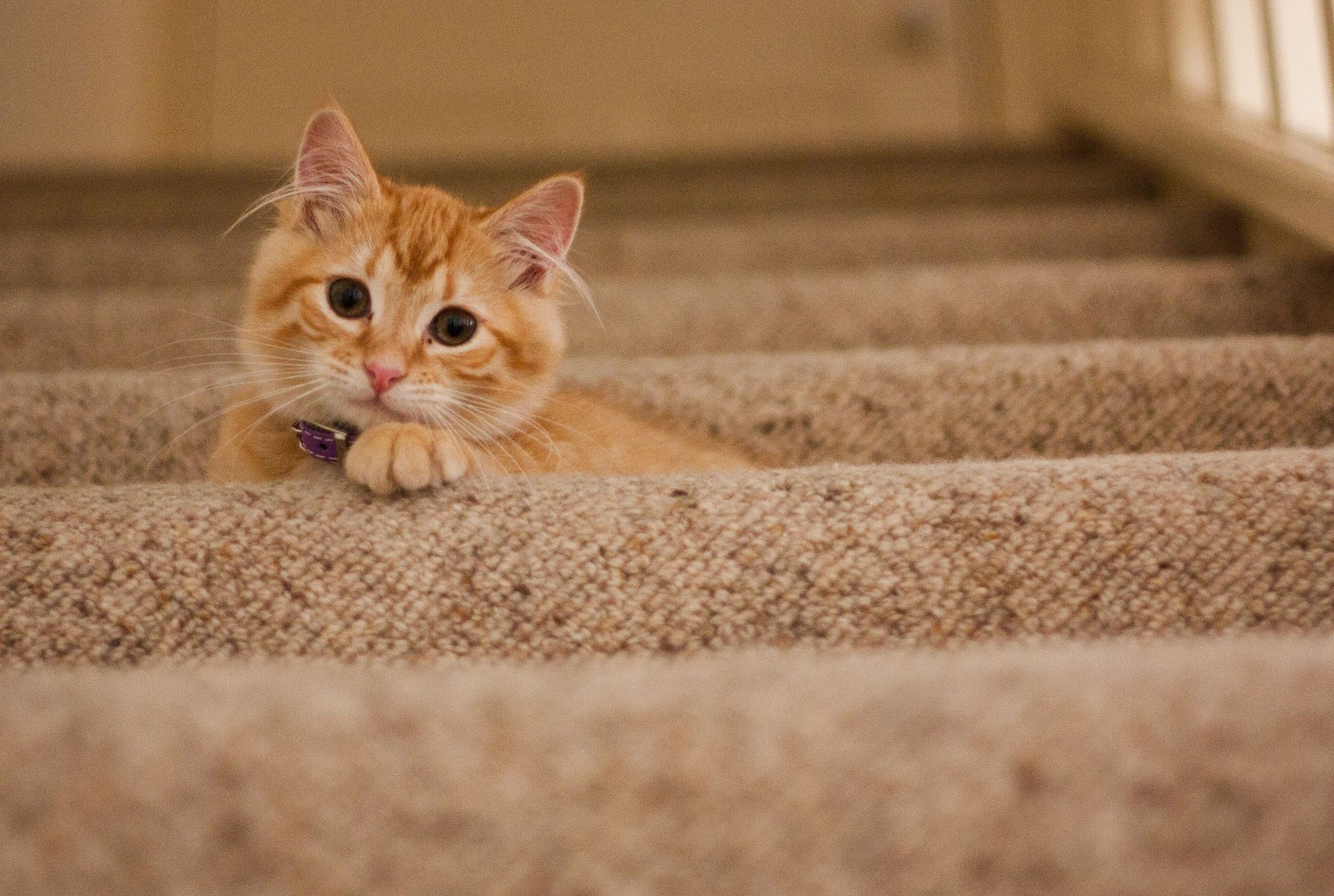
Mobility problems in an older cat rarely announce themselves — cats compensate quietly. The signs to watch for are hesitating before a jump, choosing lower routes than before, stiffness after naps, grooming less in hard-to-reach places, and new irritability when picked up or touched in certain spots.
The jump tells the story first
A cat who once sailed onto the counter now pauses, gauges, stretches up with front paws first, or takes a chair as an intermediate step. Some stop attempting favourite heights entirely and quietly relocate their lives to the floor. Watch the landing, too: a heavy, scrambling descent or avoiding jumps down — dropping awkwardly instead — suggests discomfort. Compare with six months ago, not yesterday; mobility loss is a slow fade, which is exactly why owners miss it until it is advanced.
Stiffness, grooming, and the coat as clues
Arthritic and stiff cats often move carefully for the first minutes after a long sleep, then loosen up — the opposite pattern of a young cat's instant bounce. Grooming is a flexibility test a cat performs daily, so its failures show: a greasy or matted patch along the back and hips she can no longer twist to reach, dandruff, and overgrown claws from scratching less. Matted fur over the spine in a formerly fastidious cat is one of the most reliable quiet signals there is. Litter habits change too — a high-sided box becomes an obstacle, and accidents just beside the box often mean entry hurts, not that she's forgotten her training.
Behaviour shifts that are easy to misread
Pain and stiffness reshape temperament. A cat who resents being picked up, hisses when a particular hip or shoulder is touched, sleeps more, plays less, hides in ground-level spots, or becomes grumpy with a housemate cat may be protecting sore joints rather than turning 'difficult with age.' Note which touches trigger a reaction and which activities have shrunk; that map of sensitivities is genuinely useful information for your vet.
What to do with what you've noticed
Bring a dated list to your next vet visit — or book one sooner if changes came on quickly or your cat seems uncomfortable daily. Don't start pain relief, joint supplements, or leftover medication without veterinary advice; products safe for people or dogs can be dangerous for cats. At home, lower the world: steps to favourite spots, low-entry litter boxes, essentials on one level, warm padded beds, and gentle, short play that keeps muscles working without leaps. Small changes made early protect independence for far longer.
Adjusting daily care to match her mobility
As routines change, KinsLe's Care Teams let you assign gentler, mobility-friendly daily care tasks — feeding, grooming help, litter checks, and play — with timestamped completions, so everyone caring for your cat can see what has been done and nothing essential gets missed or doubled. Care that adapts on paper adapts in real life. Care Teams on KinsLe turns those mobility observations into a written household plan, each gentler duty — litter-entry checks, step help, short play — assigned by name to one household member who marks it complete.