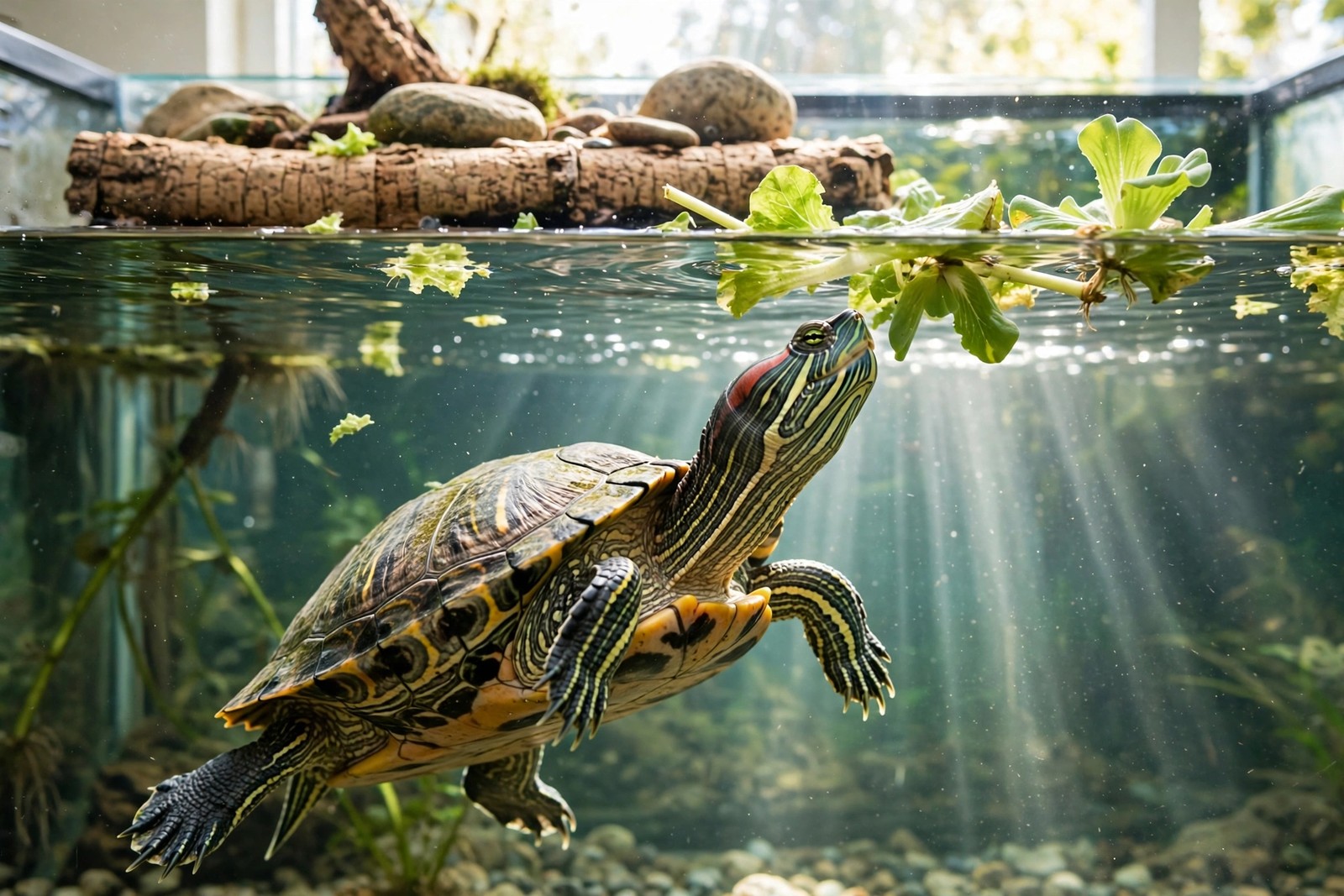
A red-eared slider's menu reverses across its life. A hatchling hunts protein to grow a shell; an adult grazing the same protein-heavy menu grows too fast, gains fat, and strains organs built for a plant-led diet. Feed the age in front of you, keep a quality aquatic turtle pellet as part of the diet at every age, and let the proportions around it shift steadily from animal food toward leafy plants.
Hatchlings and Juveniles: Protein Leads
Young sliders are mainly carnivorous. Offer pellets daily as the dependable base, in a quantity roughly the size of the turtle's head, and rotate animal foods alongside them: earthworms, small feeder fish, crickets and other insects, and pieces of cooked lean meat or shrimp as occasional variety rather than staples. Fast growth in the first years needs that protein, and a juvenile refusing food is worth attention sooner than an adult doing the same.
Offer leafy greens from the start even though youngsters often ignore them. A floating piece of romaine, dandelion greens, or aquatic plant material in the tank costs nothing, teaches the turtle that greens are food, and makes the adult transition far easier. Some juveniles begin grazing earlier than others; leave greens in for the day and remove what is left before it fouls the water. Juveniles eat daily, and feeding in a separate container of tank water keeps the main tank cleaner and lets you see exactly what a young turtle actually took.
Adults: Plants Take Over
As a slider matures, usually across its second and third years, shift the balance until leafy greens and aquatic plants make up most of what it eats. Offer greens daily and freely: dandelion greens, turnip greens, romaine and other leaf lettuces, plus aquatic plants where the setup supports them. Reduce pellets to a smaller share of the diet, offered a few times a week rather than daily, and treat animal protein as an occasional item, an earthworm or a few feeder fish now and then rather than a routine course.
Judge the shift by the turtle, not the calendar alone. A shell growing smooth, with no upturned edges or pyramiding, on a turtle that is active, basking regularly, and neither fat in the limbs nor thin at the head, shows the balance is right. Folds of flesh bulging around the legs when the turtle withdraws signal too much food overall, and the correction is smaller portions and a firmer plant-led balance, never a starvation gap.
Rules That Apply at Every Age
Variety within the age balance matters more than any single perfect food, because no one item covers a slider's needs alone. Keep a cuttlebone or another plain calcium source available for nibbling, especially for growing and egg-laying turtles. Avoid feeding only one protein, avoid iceberg lettuce as a green because it carries little nutrition, and never offer wild-caught insects from gardens where sprays may have been used. Feed in the water, because sliders swallow with water's help, and keep mealtimes in the warm part of the day when the turtle is active and digestion runs best.
Plan the transition gradually when a turtle changes age bands or arrives with an adult body and a juvenile's habits. An older rescue raised on pellets and protein may refuse greens for days; persistence with fresh greens offered daily, and protein held back until greens are sampled, can retrain a reluctant slider without drama. KinsLe's Family Sharing keeps the current age-based menu, with greens daily and pellets a few times a week for an adult, on the profile every household feeder sees, so nobody reverts the turtle to a juvenile routine.