
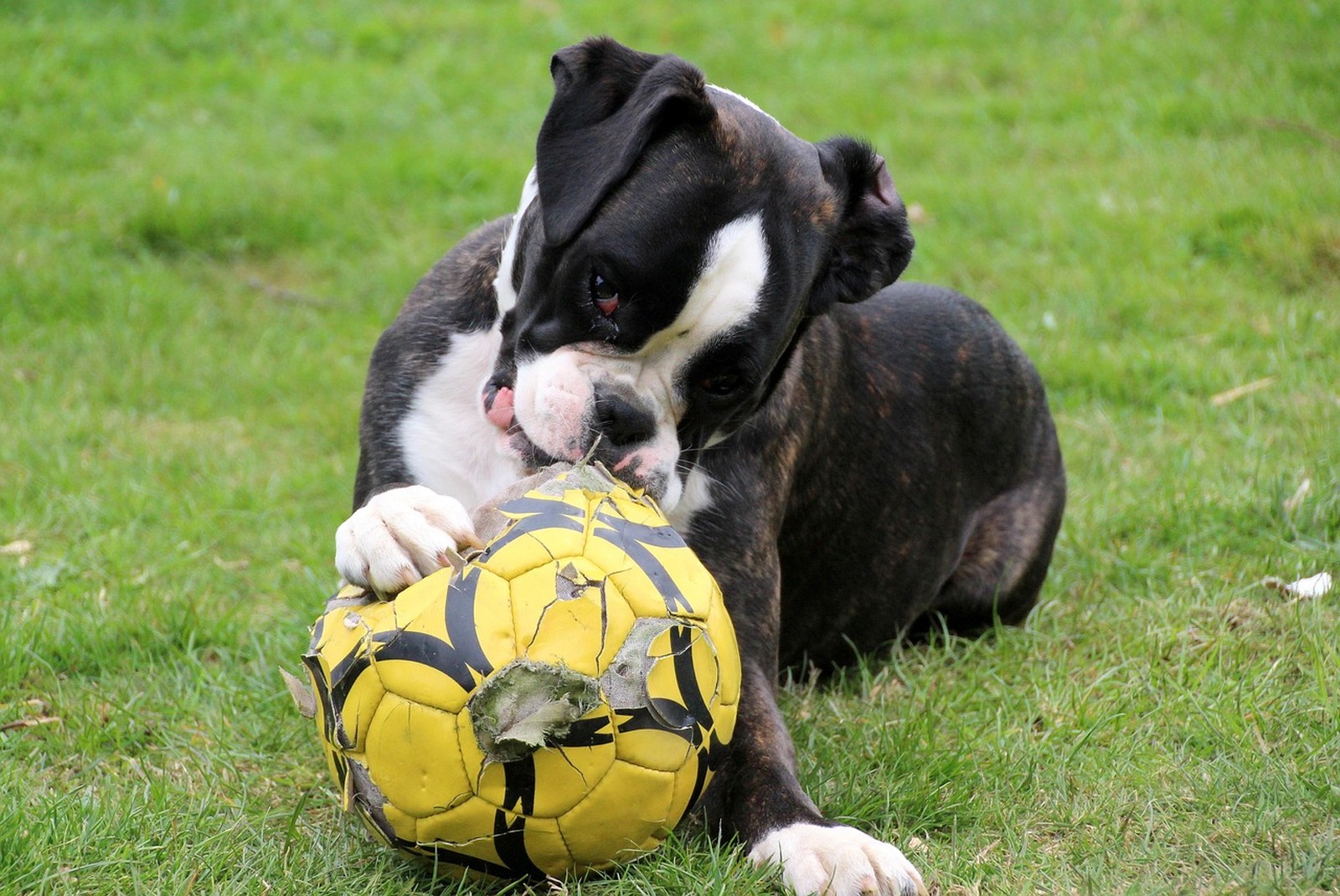
The Morning Starts at Full Volume
A typical day caring for a Boxer begins the moment the dog wakes, which is enthusiastically. The first job is a toilet break and breakfast, and the morning's main event is a proper outing: a long walk, a run with a fit owner, or a park session with recall practice built in. Boxers were bred to work and they carry an athlete's engine under the clown act, so a token stroll produces a dog that bounces off the furniture by ten o'clock. In warm weather that outing moves to the early hours, because the breed's shortened muzzle makes cooling off inefficient and heat is a genuine danger, not a discomfort.
Training Manners Into a Dog That Leaps for Joy
The Boxer's signature greeting is a kidney-bean wiggle that escalates into jumping, so daily training focuses on turning that joy into manners: four feet on the floor for greetings, waiting at doors, walking without towing the owner, and settling on a bed while visitors arrive. Sessions are short, game-like and frequent, because the breed learns happily and bores quickly. This is also the slot for the day's small physical checks: the short coat needs only a quick brush, but jowls get wiped after meals and drinking, paws are checked after rough ground, and owners keep an eye on the lumps and bumps this breed is known for, reporting new ones to the vet rather than watching them grow.
Midday Downtime Protects the Evening
After the morning's work, a healthy Boxer day includes a real rest period: a chew, a nap in a cool spot, and a quiet house. Young Boxers especially need this enforced pause, since the breed matures slowly and an overtired youngster behaves worse, not better. Meals are commonly split into two servings, and sensible owners keep the hour after eating calm rather than launching straight into rough play, as large, deep-chested dogs should not charge about on a full stomach. A midday toilet trip and a gentle garden game break the stretch for dogs whose owners work.
Afternoon Play and the Second Wind
Late afternoon brings the second wind the breed is famous for, and the day's plan gives it somewhere to go: another walk, a training class, swimming where the dog enjoys it, or a structured game of tug with rules about starting, stopping and dropping on cue. Social time matters to Boxers, who are deeply people-oriented dogs, so this session usually involves the whole household rather than the dog entertaining itself in a garden. Owners watch for the overheating signs specific to the breed during this block: frantic panting, thick drool and a dog that stops wanting to play are cues to stop, cool down and rest, and a dog that seems distressed in heat needs a vet's advice the same day.
Evenings End With the Famous Flop
Supper, a final short walk and then the transformation: the day's bouncing athlete becomes a heavy, snoring weight across the sofa, convinced it is lap-sized. Owners use the quiet to run through the day's list: fed, walked, trained, rested. Because a Boxer's care is spread across energetic bursts and several people often join in, KinsLe Care Teams records each task as it is finished with the time attached, so nobody repeats a meal or misses the evening walk on a day when everyone assumed someone else had done it.