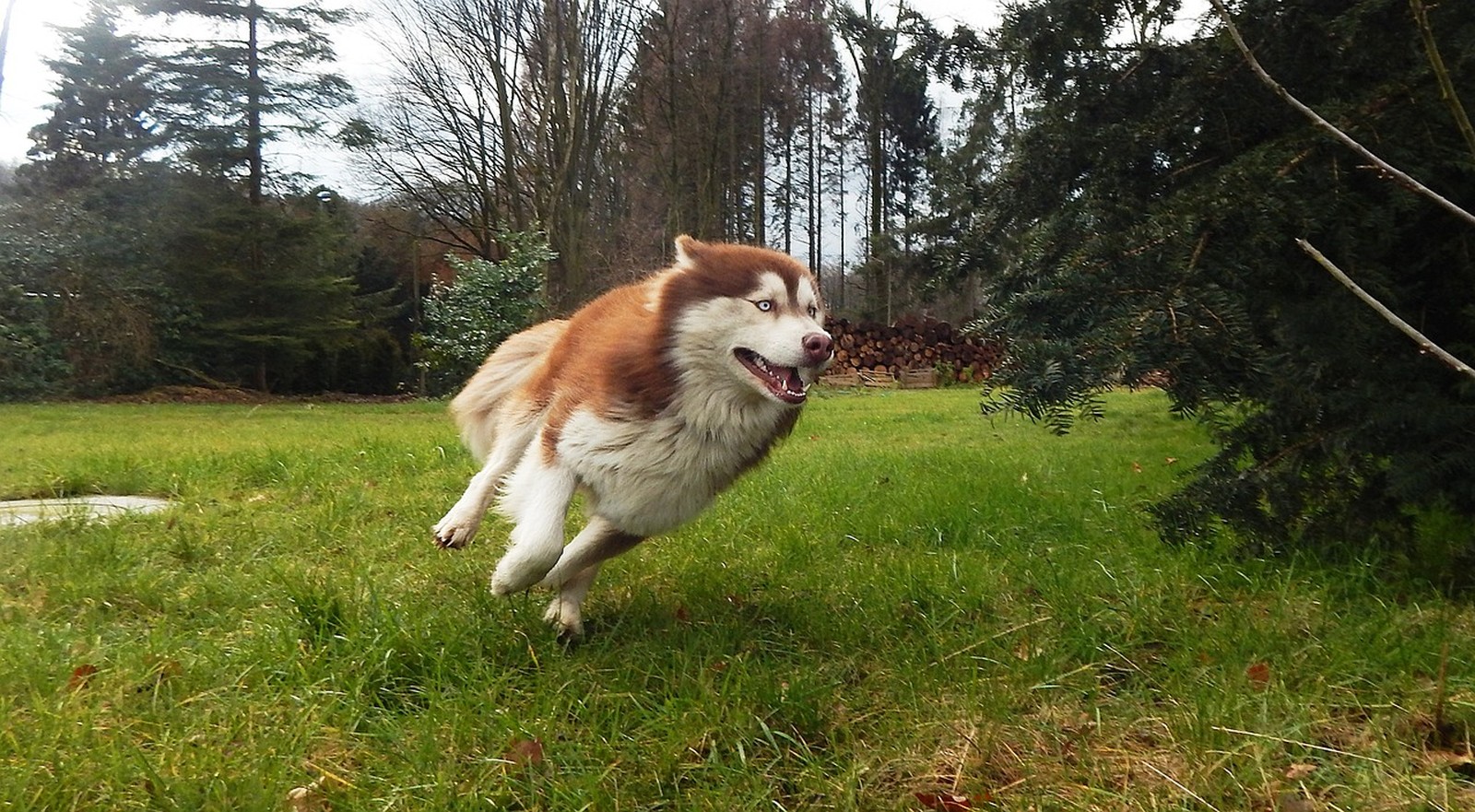
A typical day with a Siberian Husky is loud, hairy, athletic, and frequently funny — provided the exercise gets done. Huskies were bred to pull light loads over enormous distances in brutal cold, and the pet version still wakes up each morning ready for a serious day's work, with strong opinions about expressing himself vocally while he does it.
The morning outing is measured in miles
The day opens with the biggest commitment in pet-dog ownership: an hour and a half or more of running, hiking, canicross, or bikejoring for fit adult dogs, building gradually for youngsters whose joints are still developing. A lead walk around the block does not register as exercise to a Husky. Recall is trained constantly but trusted cautiously — this breed's prey drive and love of running mean off-lead time happens in secure fields, not near roads, and the harness is fitted to a dog who can back out of a loose collar in seconds.
Midday: occupation for a working mind
A Husky left alone and under-exercised redecorates: digging, chewing, and escape attempts are this breed's standard feedback. Households therefore structure the middle of the day with a walker visit or lunch outing, frozen food toys, digging sanctioned in a designated pit, and company whenever possible, since Huskies are pack-oriented and genuinely miserable in isolation. Breakfast and dinner are measured for a breed that, surprisingly, runs efficiently on less food than its size suggests — overfeeding a Husky produces a heavy dog who still wants to run the same miles.
The coat has two seasons: shedding and shedding more
Most of the year, a weekly brush keeps the dense double coat in order and bathing stays rare, since the coat sheds dirt remarkably well. Twice a year the undercoat blows completely, and for several weeks brushing becomes a daily session producing bags of fluff, best done outdoors. The coat is never clipped — it insulates against heat as well as cold — but summer exercise shifts to early mornings and evenings, because a dog built for sub-zero work overheats far sooner than he admits.
Evenings: another outing and the choir
A second substantial session before dinner is standard, after which a genuinely tired Husky is an affectionate, entertaining housemate — though the breed's commentary continues, in howls, woo-woos, and dramatic sighs that neighbours will hear about. Garden security gets its evening check: fence lines walked for digging, gates latched, because a Husky escape is rarely a one-off event once the dog learns the route works.
The honest total for a Husky day
Count on around two hours of real exercise, daily security checks, seasonal grooming marathons, and a dog who should not be left alone for long stretches. A Husky who goes off his food, cannot settle in cool conditions, or limps persistently after rest needs a veterinarian, and a dog who escapes repeatedly needs the containment fixed, not the dog blamed. Even with the best fences, slips happen, so KinsLe's Lost Pet Alert System stands behind the daily routine: it sends a free alert to Circle of Love members nearby, and anyone who finds your Husky can message you directly through the alert rather than your having to rely on posters alone.