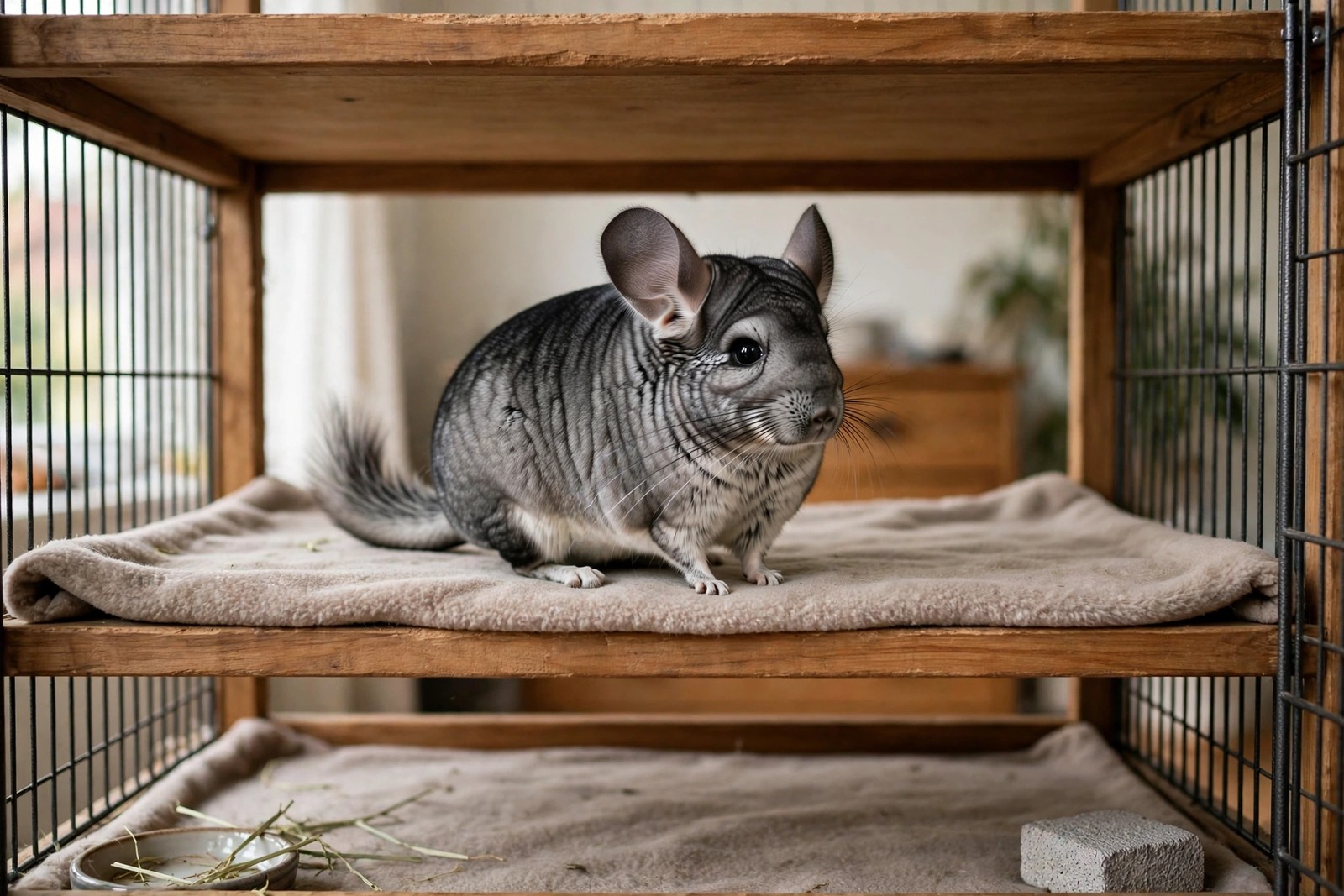
The safe floor for a chinchilla is a solid one. Unlike a dog or cat, a chinchilla has no thick, toughened paw pads: her feet are soft, densely furred, and built for gripping smooth rock, not for balancing her weight on thin wire strands. Every floor, shelf, ramp, and ledge she stands or lands on should present a flat, continuous surface.
Why bare wire mesh injures her
Wire concentrates a chinchilla's whole weight onto narrow lines of metal. Hours of that pressure each day, repeated over weeks, produces sore, reddened feet and can progress to pododermatitis — inflamed, swollen, sometimes ulcerated feet that are painful to stand on and slow to heal in an animal who cannot be kept off her feet. The gaps create a second risk: a toe or foot slipping through and catching as she jumps or turns, which can mean a sprain, a broken toe, or a panicked struggle that injures her further.
Chinchillas are jumpers. They launch between levels and land hard and fast, often in the half-dark when they are most active. A landing surface that flexes, gaps, or catches a claw is a risk every single night, not just during the hours she spends sitting still.
How to make each level safe
Start with the cage base: a solid metal or plastic pan, or solid boards cut to fit, covered with fleece liners or left as smooth tile. Kiln-dried pine shelves are a good chinchilla surface — solid, slightly grippy, and safe for her to gnaw — and any wire shelf a cage came with should be fully covered with a fitted fleece cover or replaced with a solid shelf of the same size. There should be no wire left exposed at the edges where a cover stops short.
Fleece only works as a cover over something solid, never as a hammock-style floor on its own, and it needs securing so it cannot bunch, fold, or be dragged aside to reveal wire underneath. Keep spare liners so a washed set can go straight back on; damp or heavily soiled fleece left in place irritates feet almost as much as the wire did. Check liners for loose threads and chewed holes, which can wrap toes.
Ramps and ledges get the same treatment — solid wood, or covered completely — and any exercise wheel must have a solid running surface, never bars or mesh, and be large enough that her back stays straight while she runs.
Checking the feet you are protecting
Pick a calm moment each week to look at the soles of her feet. Healthy chinchilla feet are dry, pale, and evenly furred on top, with unbroken skin underneath. Redness, swelling, a scab, a missing patch of fur, limping, reluctance to jump, or a chinchilla who starts chewing at her own foot all deserve a veterinarian visit — foot infections in a prey animal who hides pain are usually further along than they look.
Also watch weight and activity together: a chinchilla who stops using her shelves may not be bored or ageing; her feet may hurt on landing.
Recording which shelves are solid, which liners fit which level, and the date of her last foot check in KinsLe's Family Sharing keeps every family member who cleans or rearranges her cage working from the same safe flooring plan.