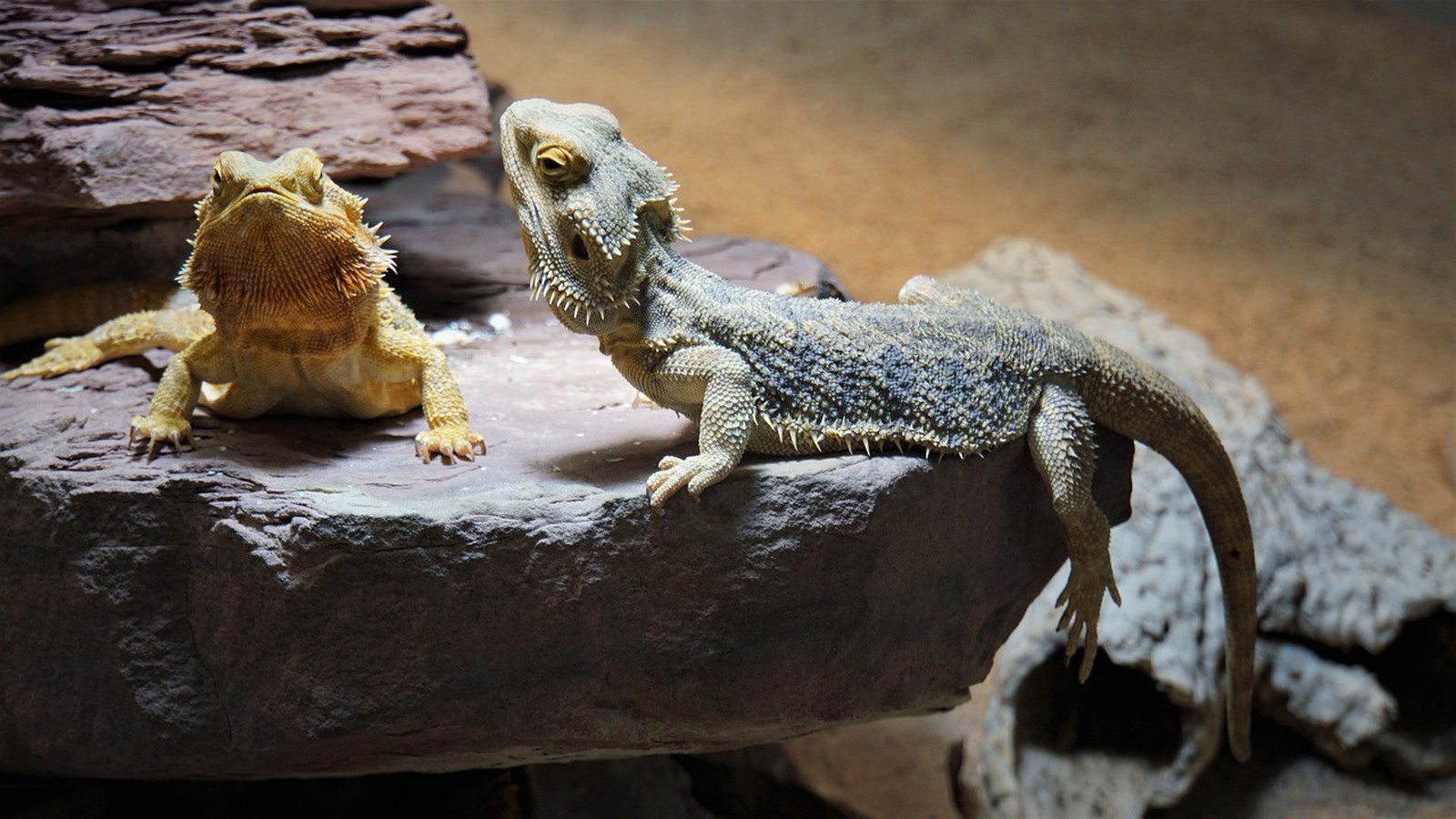
Certain patterns in a bearded dragon should end the watch-and-wait approach straight away: appetite loss paired with lethargy lasting more than a couple of days in an adult who usually eats, weight loss or a thinning tail base, and a beard that stays black outside brief displays. Diarrhoea or undigested food in the stool, gaping or bubbly mucus, swollen joints or jaw, sunken eyes, tremors or twitching, and straining all belong on the same list, as does any limb that drags or fails. A bright dragon who eats and simply has one quiet day can be watched; these patterns should not be.
The Brumation Confusion and Other False Alarms To Sort
The commonest false alarm is brumation: adult dragons slow down, eat little, and sleep for weeks in cooler months, which mimics illness — but a brumating dragon should not lose significant weight, and weight is how you separate the two at home (weigh weekly during any slowdown; loss means vet). Husbandry underlies most of the rest: check your measured basking temperature, cool end, UV tube age (UV output dies months before the light does, and weak UV means weak calcium metabolism — tremors and soft bones follow), and what the diet actually is, because those notes are what the vet will work from. Yellow fungus disease (patches of yellow-brown crusted, spreading skin) is a bearded-dragon-specific emergency-adjacent condition: it is contagious and destructive, so photograph it, isolate the dragon, and get seen promptly rather than treating at home.
What to Tell the Vet, and How Fast
Straining, breathing signs, tremors, blackened spreading skin patches or weight loss need a reptile vet within days, and straining or laboured breathing are same-day problems. Arrive with specifics this dragon's vet can use: when eating last looked normal, how the tail base has changed in weekly weights, the measured basking and cool-end temperatures, and the age of the UV tube, since UV output fades months before the light itself does. Photograph yellow-brown crusted skin patches rather than describing them, and keep a dragon with spreading patches away from other reptiles until seen, because yellow fungus disease spreads between animals.
A dated log built around this dragon — weights during any slowdown, appetite, stools, and the day each sign began — separates brumation from illness far better than memory at the appointment. In KinsLe, the Pet Passport holds this dragon's weight record, appetite notes and visit history together, so the next appointment builds on a dated record instead of recollection.