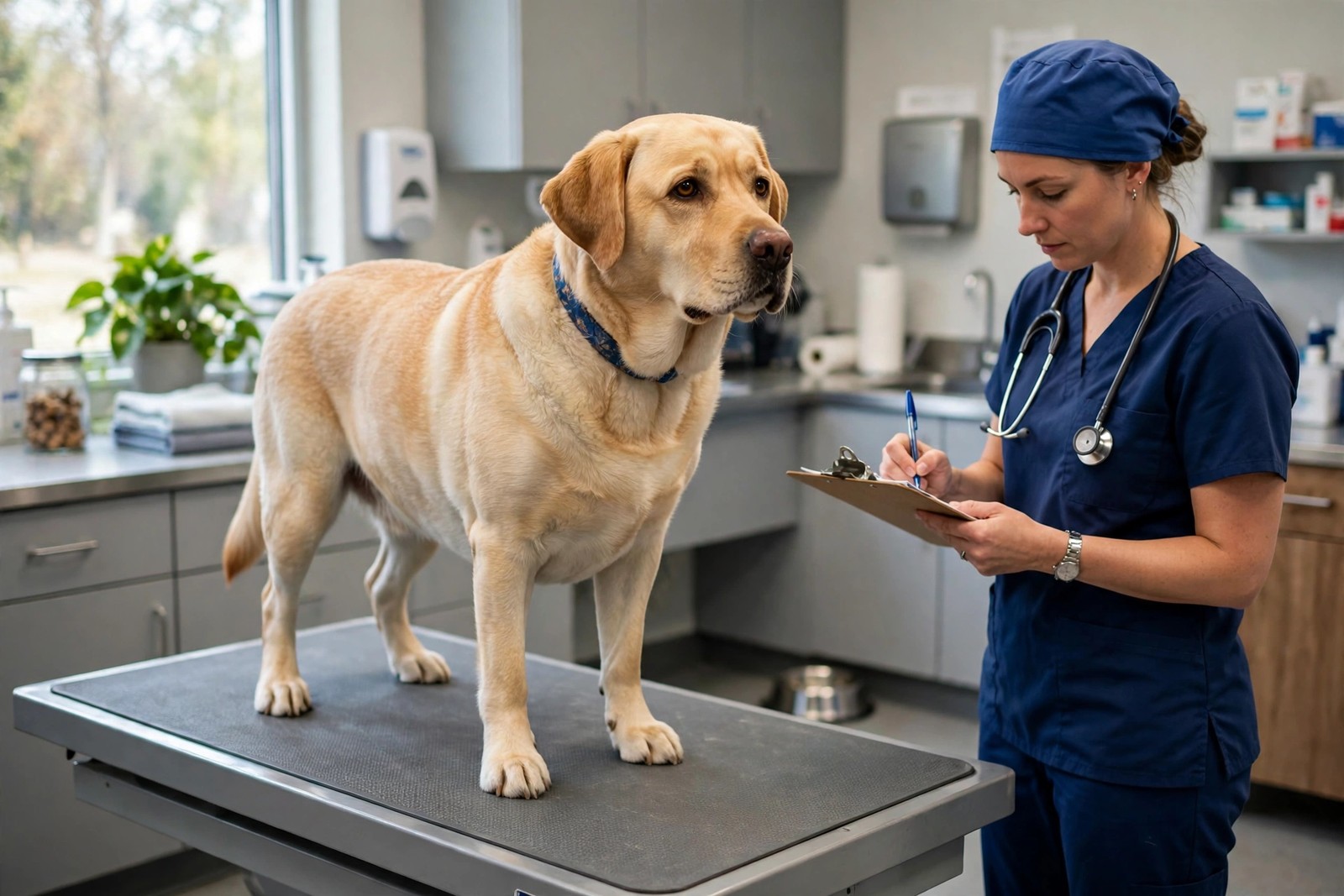
Checking in: the weigh-in and the score
A weight clinic appointment usually starts on the scale, but the number is only half the assessment. The nurse or vet then scores your dog's body condition by hand, feeling the ribs under their fat cover, looking from the side and above for a waist, and grading the result on a scale that runs from too thin to obese. That score is the honest headline, because breed, build, and coat make raw weight misleading: a stocky dog in correct condition can outweigh a taller, fatter one. Photographs are sometimes taken, which feel embarrassing and prove invaluable three visits later when the change is visible in pictures before it is obvious in the mirror.
The target is set from that assessment — an estimated ideal weight for your individual dog — and the expected pace is deliberately slow. Gradual loss protects muscle and keeps the dog from feeling perpetually hungry and raiding bins.
The feeding conversation, in real detail
Next comes detective work about food. Expect questions about the exact food, the amount measured how — a scoop, a cup, a handful — plus treats, dental chews, table scraps, training rewards, and what the dog steals. Many owners discover the diet is fine and the extras are the diet. Grandparents, children, and kind neighbours all feature regularly in these confessions, and a good clinic treats them as logistics to solve, not crimes.
The plan that follows usually includes a set daily amount, a switch to weighing food rather than scooping it, and a treat budget drawn from the day's ration or replaced with low-calorie options and measured training rewards. Some dogs are moved to a specific weight-management food; others simply have their current food portioned properly. Feeding puzzles and slower bowls often appear in the plan, because a dog who works twelve minutes for dinner feels fed in a way a forty-second bowlful does not.
Activity, health checks, and the reasons behind weight
Weight clinics also look at why the weight arrived. The team will ask about exercise honestly — not the intended walk but the actual one — and tailor activity to the dog's joints and fitness, often building duration gradually for a dog who is both heavy and unfit. Sudden weight gain, gain despite a genuinely controlled diet, or gain alongside coat changes and lethargy can prompt the vet to check for underlying causes such as an underactive thyroid, because no feeding plan fixes a medical driver.
Pain gets discussed too. A dog with sore hips or elbows moves less, gains weight, and loads the joints further, and breaking that circle sometimes starts with pain relief and gentle, frequent short walks rather than a heroic weekend hike.
Rechecks: where clinics earn their keep
You will be booked back, typically every few weeks at first. Each recheck repeats the weigh-in and condition score, compares them with the target line, and adjusts the ration if loss has stalled or run too fast. Plateaus are normal and are treated as data, not failure. These short appointments also keep motivation alive: many owners say the diary, the chart on the fridge, and knowing the nurse will ask are what carry the plan through the hungry-eyed evenings of the second month.
If weight will not move despite a plan everyone swears is being followed, the clinic digs deeper — re-measuring food, hunting the secret feeder, reviewing other pets' bowls, and involving the vet again if a medical cause looks likely.
Making the plan survive your household
The best clinic plan fails in a house where one person measures, another guesses, and a third runs a separate treat economy. Write the daily amount, the treat rules, and the walk schedule where everyone sees them, and give each person a part in it.
That shared routine is easy to run on KinsLe's Care Teams, where feeding amounts and walk duties can be assigned per dog, ticked off with a timestamp as they happen, and reviewed together at the next weigh-in.