Why the weight creeps on after neutering
Neutering changes the hormonal signals that regulate appetite and how efficiently the body burns energy. Many neutered dogs feel hungrier while needing somewhat fewer calories than before, and that combination — a dog asking more insistently for food he now needs less of — is exactly how gradual weight gain starts. Nothing has gone wrong; the feeding plan simply has to be recalibrated for the dog he is now. The change is usually noticeable over the months after the operation rather than immediately, which is why it catches owners out: the bowl never changed, but the dog did.
Reset the food: measure, trim, and count everything
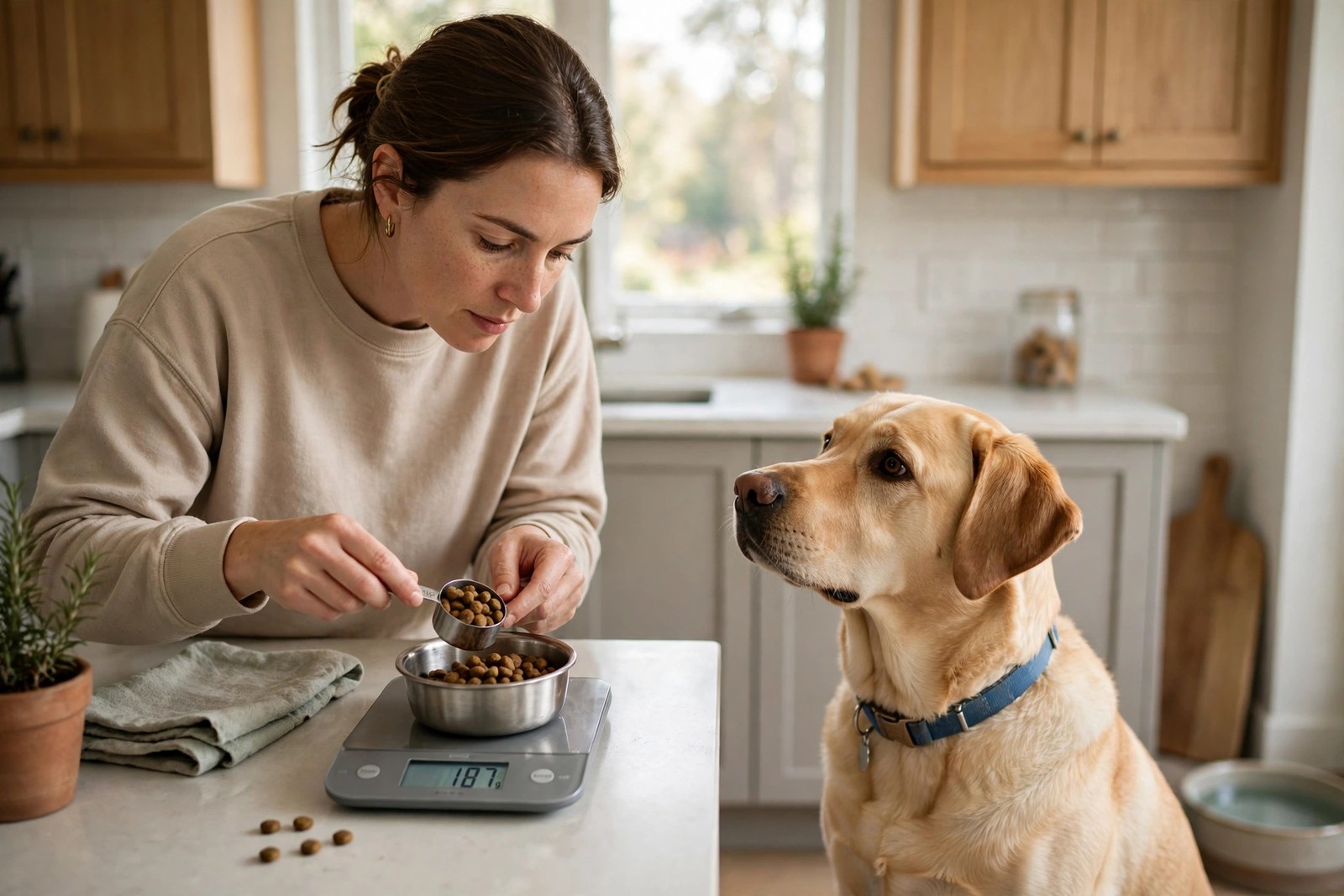
Begin with an honest audit of a normal day. Weigh or measure the main meals with a scoop or kitchen scale instead of pouring by eye, then list every extra: training treats, chews, the corner of toast, food stolen from another pet's bowl, and anything handed over by other family members. For many dogs the extras, not the meals, are where the surplus lives.
Reduce the total modestly — a small, sustainable trim to the daily ration is safer and more successful than a sudden large cut — and ask your vet to sanity-check the target amount and his ideal weight at his next visit, since the right figure depends on his size, breed, and current condition. You should be able to feel his ribs under a thin covering of fat and see a waist from above and the side; your vet can show you how to score that by hand. Feed at set times rather than leaving food down, and if he is a convincing beggar, offer part of his measured ration as the reward instead of adding treats on top.
Move more, but build it up the way he can sustain
Exercise burns calories, but its bigger role is preserving muscle and giving a food-focused dog something else to enjoy. Keep daily walks consistent and add duration or an extra play session gradually, rather than launching a weekend marathon for a dog who is unfit and carrying extra weight — his joints are already working harder. Swimming, gentle hill walks, and interactive play all help, adjusted to his age and any joint issues your vet has flagged.
Weigh him every few weeks, ideally on the same scales, and keep a simple log. Weight loss in dogs should be gradual — a slow, steady downward trend over months is the goal, not a rapid drop. If the weight does not move after several weeks of honestly measured food and regular exercise, or if he seems excessively hungry, lethargic, or is gaining despite the plan, book a vet check: occasionally an underlying health issue, rather than the neutering alone, is driving the gain.
The household problem behind most failed diets
More canine diets are undone in the kitchen than at the bowl: one person measures carefully while another slips the dog leftovers, and the dog learns exactly who to sit beside. Agree the daily amount, the treat rule, and who feeds which meal, and put it where everyone can see it. KinsLe Care Teams let you assign this dog's measured meals and walks to specific people with each task marked done, so his post-neutering plan survives the whole household's good intentions.