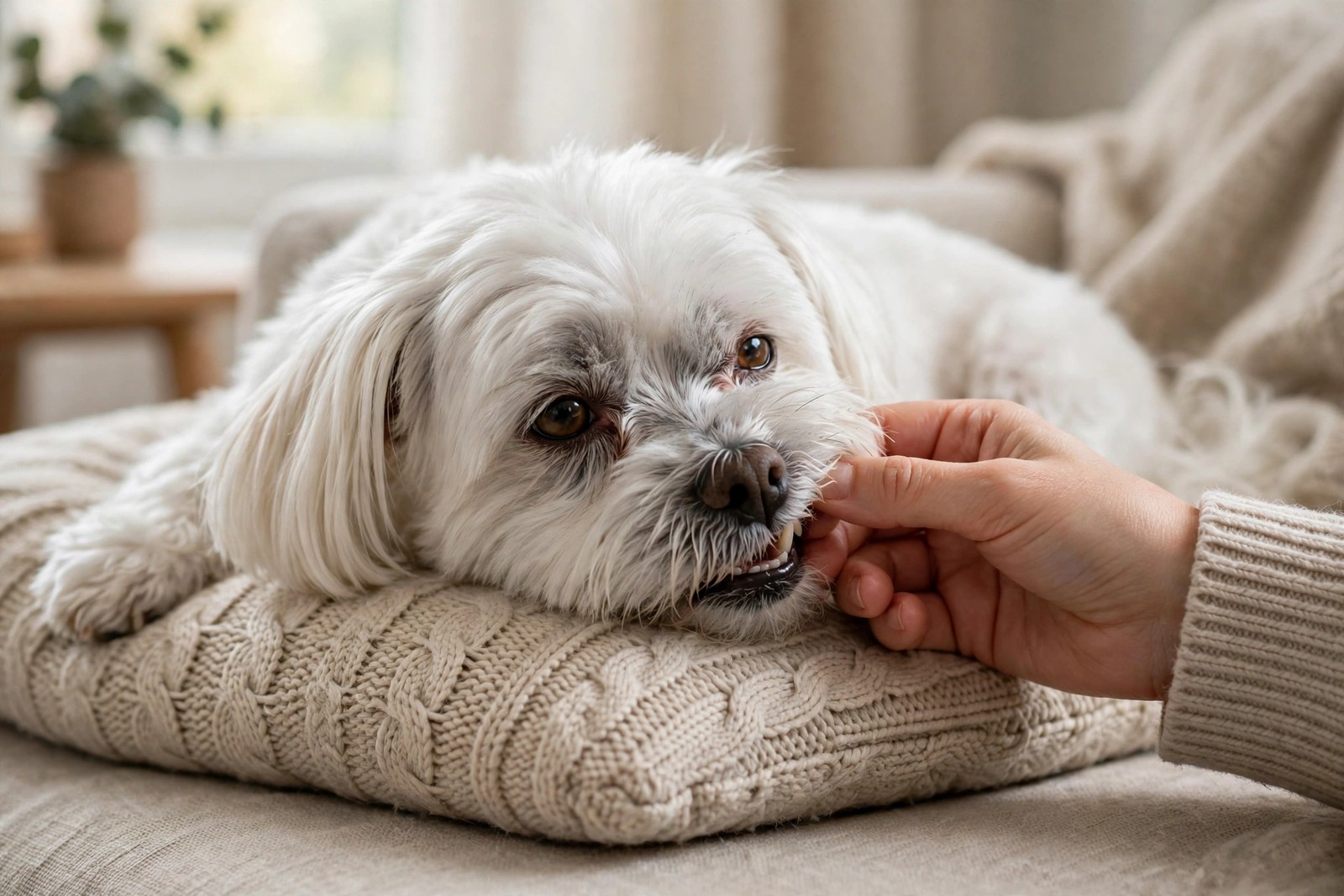
A Maltese who reaches double figures is doing well, and the checks that protect those later years are specific to this small, long-lived breed rather than generic senior advice. The priorities are teeth and gums, heart, eyes, knees, and weight, backed by blood and urine testing at senior vet visits, which are typically held twice a year for an older dog. Twice-yearly visits matter because a condition that develops just after an annual check can run for a long time before anyone sees it in a dog who sleeps more and complains less than he did at five.
Teeth: the everyday senior issue
The Maltese mouth is small, the teeth are crowded, and tartar builds quickly, so dental disease is the most common senior problem owners actually deal with. At each visit your vet should look properly at the teeth and gums, including the back molars owners rarely see, and discuss cleaning or extractions when disease is present rather than waiting for teeth to loosen on their own. At home, check for bad breath that is getting worse, bleeding or receding gums, reluctance to crunch food, eating on one side, or pawing at the mouth. Dental pain in an old dog often shows up as quietness that gets written off as age, and treating it can give a dog back his appetite and interest in life. Keep up gentle toothbrushing if your dog has always tolerated it, and tell your vet if he has stopped tolerating it, because that change itself is information.
Heart, eyes, and knees
Heart valve disease becomes more likely as a Maltese ages, so a careful listen to the heart belongs in every senior check, along with a conversation about any cough, reduced stamina on walks, faster breathing at rest, or fainting episode you have noticed. Your vet decides whether a murmur needs further investigation; your job is to report the cough you heard at night rather than decide it was nothing. Eyes need the same attention: cataracts and other lens changes are common in older Maltese, and a dog who starts bumping into furniture in dim light, hesitating at steps, or startling when approached from one side should be examined promptly, because some eye problems are painful emergencies rather than slow ageing.
Knees are a lifelong Maltese theme. Many have kneecaps that slip, and a joint that coped for a decade may start to matter once muscle mass and cartilage thin. Watch for a hind leg skipped step, stiffness after rest, reluctance to jump onto the sofa he has always used, or walks getting shorter by his choice. Keeping an older Maltese lean is the single most useful thing you can do for those knees, because every extra ounce is carried on small joints.
Tests, weight, and what to track at home
Blood and urine testing at senior visits gives your vet baselines and early warning for kidney, liver, thyroid, and diabetic change, which is why a change in thirst, urination, appetite, or weight should always be reported rather than monitored silently at home. Weigh your dog regularly and write the figure down, because slow loss in an old dog is easy to miss under a long white coat, and the coat itself needs checking too: thinning skin, new lumps, and tear staining that suddenly worsens all belong in the visit notes. Feel over the whole body monthly, and bring any new lump to your vet's attention instead of watching it for months.
Coughing that persists, collapsing episodes, a swollen abdomen, or breathing effort at rest are same-day veterinary matters, not wait-for-the-check items. Between visits, you are the monitoring system: appetite, water intake, sleep, mobility, and mood, noted against your own dog's normal.
That record is what makes twice-yearly senior visits genuinely useful rather than routine. KinsLe Pet Passport helps you bring it together by holding dental notes, heart and eye findings, weight history, and blood and urine results in one packet, so any vet who sees your Maltese can read the whole senior picture at once.