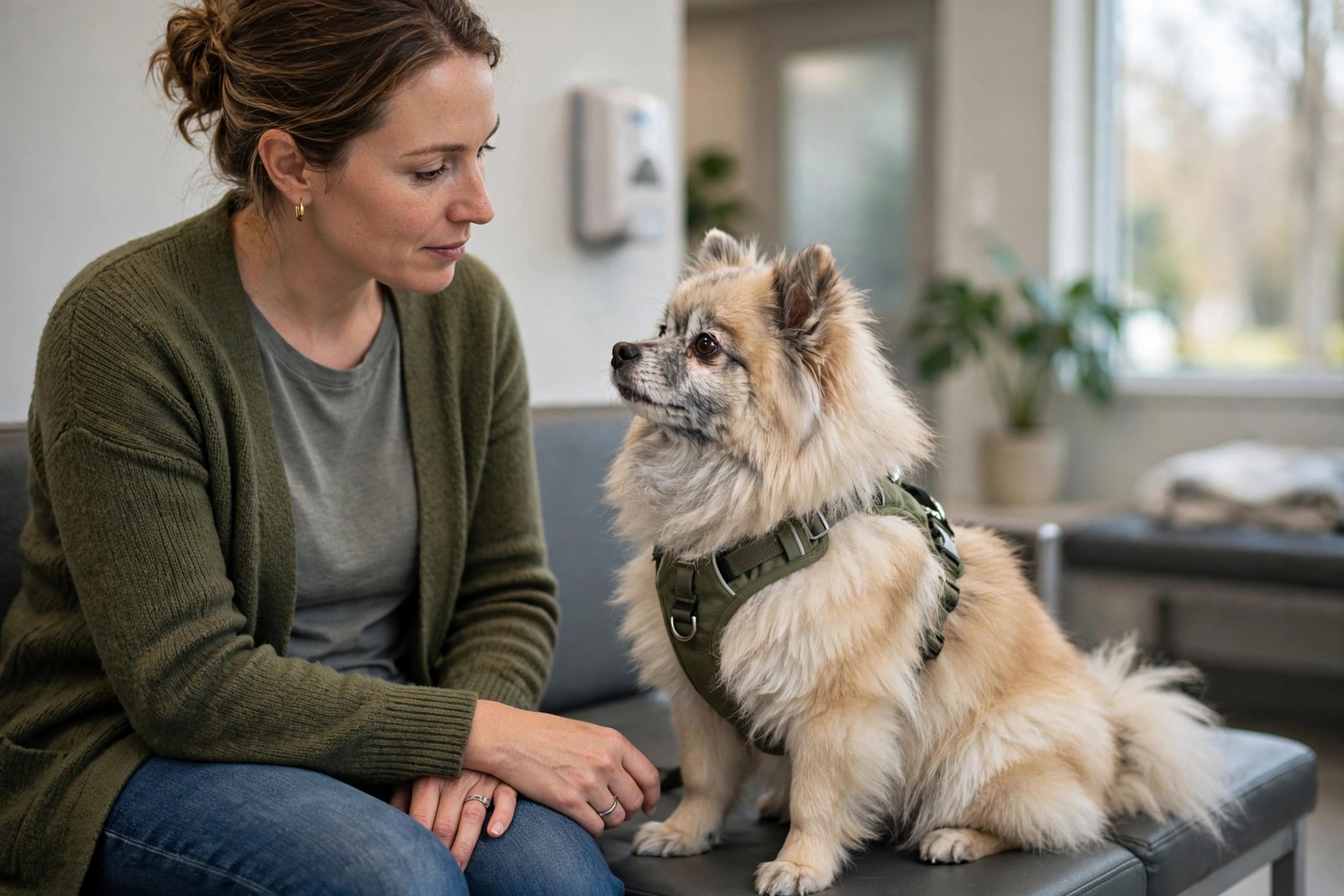
Everything about senior Pomeranian care is a matter of scale. The jaw is tiny and crowded, the kneecaps are small, the windpipe is narrow, and a weight gain that would be invisible on a large dog is a serious load on a very small dog. The checks that matter are teeth, knees and windpipe, backed by a weight check at twice-yearly senior vet visits and a weekly hands-on look at home. Your veterinarian decides what your individual dog needs.
Teeth in a Very Small Jaw
Dental disease is the quiet headline in this breed. A full set of adult teeth is fitted into a miniature jaw, so crowding traps plaque and tartar builds fast. Lift the lip weekly and look: healthy gums are pink, while redness along the gumline, tartar, bad breath, bleeding, dropping kibble, chewing on one side or pawing at the mouth all merit a vet conversation. Do not dismiss mouth pain as fussiness — a small dog who goes quieter at mealtimes may be telling you eating hurts. Brushing helps where your dog tolerates it, introduced gradually with a finger or a tiny brush, and any product you use should be one made for dogs, used exactly as shown on its label, but no home routine substitutes for the vet's examination, because much dental disease sits below the gumline, where only an examination can assess it. Raising teeth early matters doubly in a senior, since vets weigh dental treatment against the anaesthetic considerations of an older small dog.
Knees and the Skipping Step
The Pomeranian sign classic enough to have a signature look is the hop: a back leg carried for a step or two, then placed down as if nothing had happened, when a kneecap slips out of its groove and slides back. Watch for that skipped step, occasional reluctance to jump up, or stiffness after rest. Once a week, watch your dog walk away from you on a flat surface and note which leg skips and how often; a dated note that turns 'sometimes' into 'four times this week, always the left' is what helps your vet judge what is going on. Keep weight lean, since unnecessary grams load a loose kneecap, keep nails short so the feet land squarely, and provide a ramp or steps at the sofa rather than letting an arthritic senior keep jumping down onto hard floors.
Windpipe, Cough and the Harness Rule
A harsh, honking cough — often triggered by excitement, pulling on the lead, or drinking — is the windpipe sign to discuss with your vet, because Pomeranians are among the small breeds where a weakened windpipe is a recognised concern. A cough has many possible causes, including heart and chest disease, so a cough is never something to settle at home; what you control is the load on the neck. Walk your Pomeranian on a well-fitting harness rather than a collar, so lead pressure lands on the chest instead of the throat, keep the air free of cigarette smoke and strong sprays, and note what triggers coughing episodes and how long they last. A cough that is new, worsening, or paired with faster breathing at rest or reduced energy is a prompt vet call, not a watch-and-wait.
Weight on a Tiny Frame, and the Coat Check
Weigh your Pomeranian monthly if you can — hold it in your arms while you stand on household scales, then subtract your own weight — and record it, because gaining or losing a few hundred grams is significant news on this frame and easy to miss under the coat. That coat deserves its own weekly parting down to the skin: look for thinning patches, flaky skin or areas your dog scratches, and mention any change at the six-monthly visit. Feel for the ribs under the fluff each week; on a healthy-weight Pomeranian they are easy to feel with light pressure. KinsLe's Pet Passport holds your Pomeranian's dental findings, knee notes, monthly weights and coat observations in one portable record, so every senior visit starts from the trend rather than from memory.