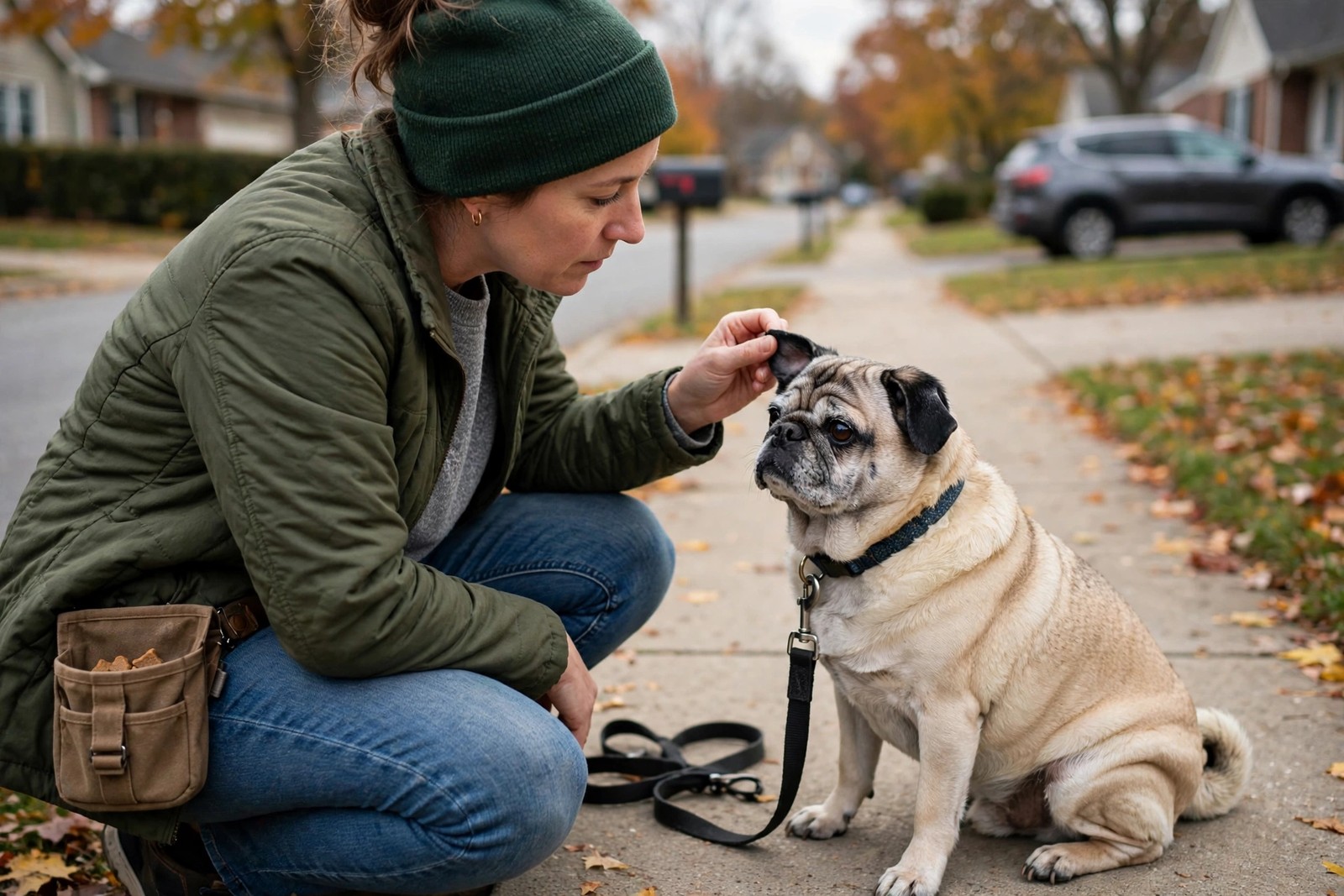
For a Pug growing older, weight, eyes, heat and breathing set the agenda. Build the checks around them into twice-yearly senior vet visits, keep weight lean — extra pounds quietly worsen almost every age-related problem on that list — and report changes in appetite, thirst, mobility or behaviour early rather than writing them off as old age. Everything here is general information about what to monitor and discuss; your veterinarian, who can examine your dog, decides what any individual dog actually needs.
What Owners Need to Know
A Pug's flat face makes breathing the first thing to watch: snoring that grows louder, noisier breathing at rest, or a dog who stops mid-walk to recover all deserve a mention at her next check, and urgently if she struggles in heat. Heat itself is the second risk, because Pugs shed heat poorly, so summer exercise belongs in the cool of the day. Her prominent eyes scratch and ulcerate easily, making any squinting, cloudiness or pawing at a face a prompt appointment, and extra weight presses on every one of these problems at once.
Steps That Make the Difference
Work through these in order and give each one time to become routine before you judge it:
- Book twice-yearly senior visits covering breathing, eyes, weight and mobility together
- Weigh her regularly and keep her slim, because extra pounds worsen her breathing
- Walk her in the cool parts of the day and stop at the first sign of laboured breathing
- Check her eyes daily for squinting, cloudiness, discharge or pawing at her face
- Clean and dry her facial folds gently, and note any new odour or soreness there
Compare her snoring, breathing effort and exercise tolerance with her own normal from a few months ago; a clear shift in any of them deserves a vet conversation rather than a wait-and-see.
Making It Part of Everyday Life
Senior Pug care settles into small daily habits: a short cool walk, a quick look at her eyes, an honest check of her waistline under that curled silhouette, and rest somewhere she can breathe easily. Keep a note of good breathing days and bad ones across a summer, because that pattern helps her vet judge how her airways are coping as she ages. If this Pug ever changes household, her profile travels too — Transferrable Profiles in KinsLe passes her examination notes and everyday routines to the new owner intact.