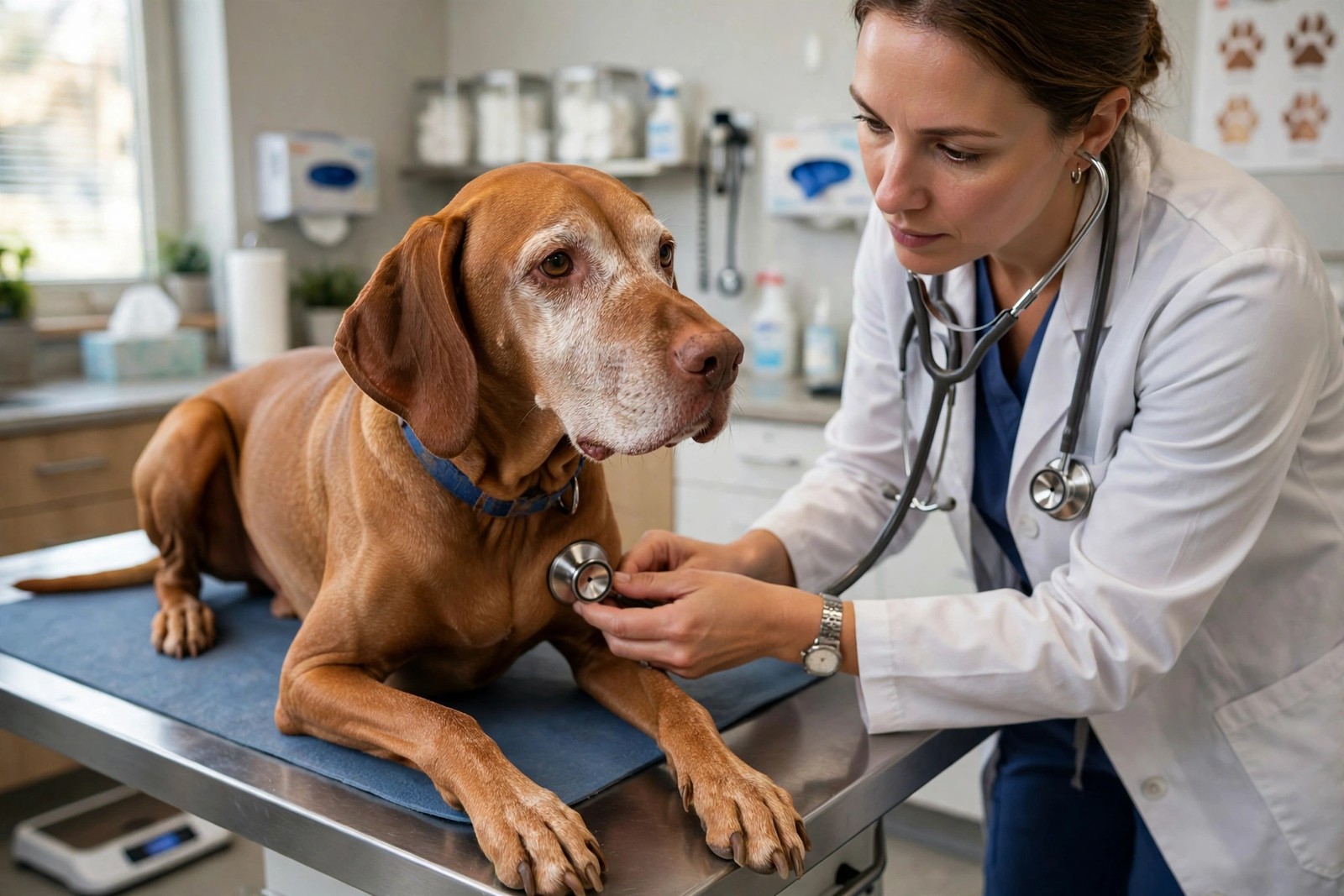
An older Vizsla presents a screening problem that placid breeds do not: enthusiasm outlasts the body. A lean, people-focused athlete will often charge through a favourite run on ageing hips and pay for it across the following two days, so the checks that matter combine hands-on hip and eye examination with an honest audit of condition, recovery, and muscle. Build veterinary visits around those themes, then agree with your practice which general senior screening, such as blood testing, dental review, and heart checks, fits your dog's workload and findings.
Recovery time as your home measurement
Track recovery with the same seriousness you once tracked distance. Note how long your Vizsla sleeps after a familiar outing, whether stiffness appears that evening or the next morning, and how many days pass before the usual bounce returns at the lead cupboard. A dog who needs progressively longer to recover from an unchanged route is reporting something, even when the run itself still looks joyful. Your veterinarian can set it beside a hip and gait assessment, muscle palpation over the hindquarters, and a weight check, then discuss whether the current workload, its surfaces, or its weekly pattern should change.
Hips, muscle, and staying conditioned
Condition is a senior Vizsla's protection, and losing it quietly is the trap. In a naturally lean breed, muscle loss over the hindquarters shows early to a fingertip even when the silhouette in the garden looks unchanged, and weight can drift down as readily as up. Report a shrinking topline, ribs becoming prominent, or hind legs that tremble after standing. Ask the practice to assess hip range and comfort, to confirm a healthy weight range for your dog's frame, and to advise on feeding an older athlete whose mileage has dropped but whose appetite has not. Conditioning work, such as steady lead walking, gentle inclines, and controlled play, should be discussed as a programme with rest built in, not improvised on the first sunny weekend after a quiet month.
Eyes for a dog who ranges ahead
A Vizsla works ground at distance, often in cover, so vision changes show up as behaviour an owner can easily misread. Missing a thrown dummy in plain sight, hesitating at a stile or a ditch once crossed fluently, ranging less widely, sticking closer on familiar fields, or startling at movement from one side all justify raising the eyes at your next visit, or sooner. Ask for an eye examination as part of each senior review, and discuss any finding in terms of what it changes: exercise in low light, work in dense cover, or simply the routes you choose at dusk.
Heart, teeth, and screening for a working senior
Enthusiasm also masks dental pain and early stamina changes, because this breed eats and runs through discomfort that would stop a fussier dog. Lift the lips weekly to check teeth and gums, and report bad breath, broken teeth, or a new habit of swallowing kibble whole. At the practice, a heart listen, weight trend, and discussion of blood screening give baselines for a dog expected to stay active for years yet. Raise any cough, tiring in heat, or slowing on ground your dog knows well, and be candid about actual weekly exercise rather than the programme you intend in theory.
Adjusting the athletic life, not ending it
Retirement for a Vizsla should arrive as editing, not cancellation. Keep the rituals that matter, including the morning outing, the field time, and the close contact this breed demands, while trimming duration, intensity, and jumping loads as the veterinary findings suggest. Rotate in scent games, steady retrieves at short range, and swimming only where the practice agrees it suits your dog's joints, so fitness and interest survive the loss of big mileage. Those combined records sit inside KinsLe under Transferrable Profiles, so a future owner receives the training history, current limits, and vet findings as one continuous file rather than starting this sensitive dog from scratch.