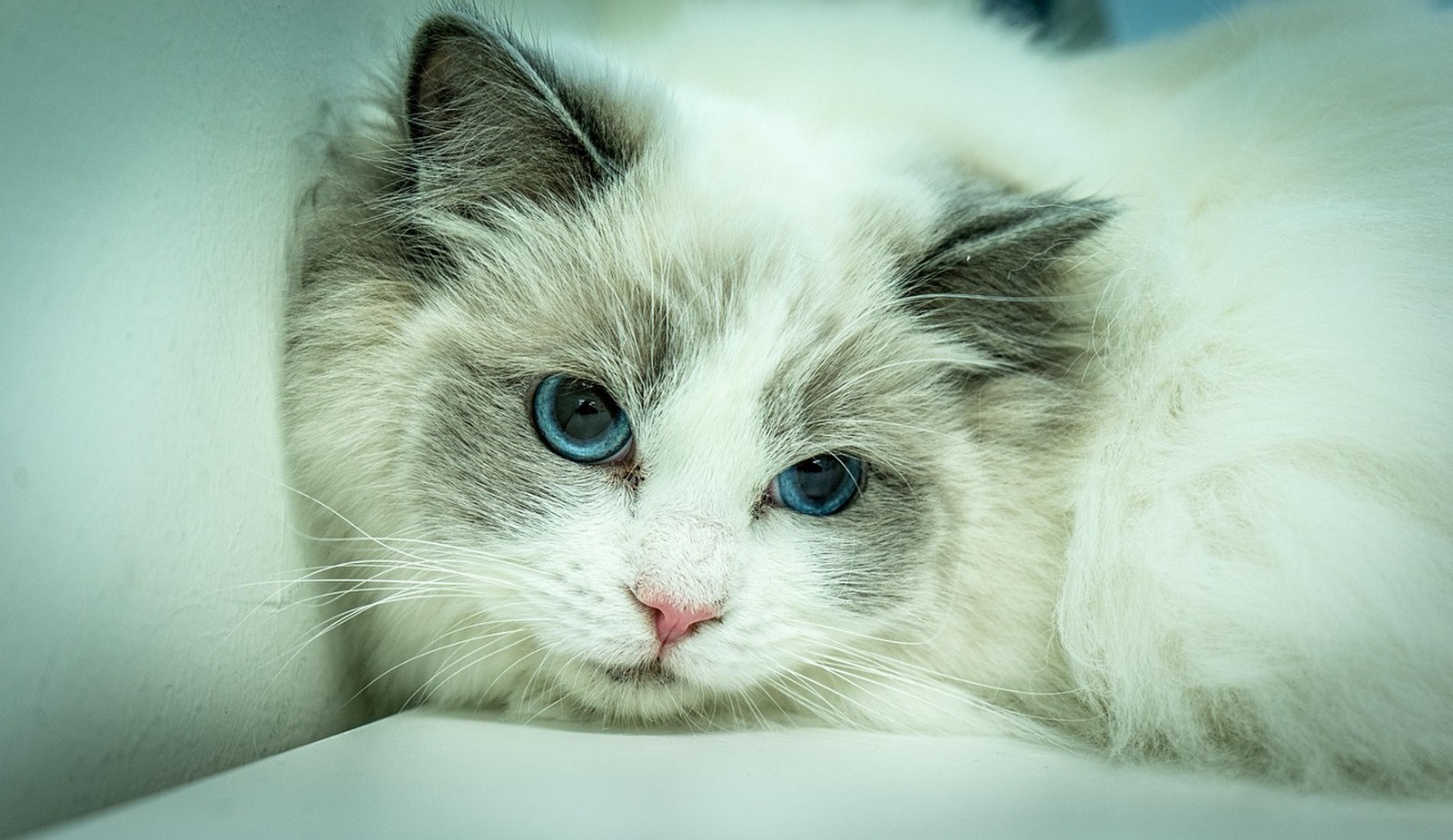
A Ragdoll's health list starts in the heart and kidneys, then shows itself in the litter tray. Hypertrophic cardiomyopathy leads it — the breed has a known mutation for this condition, and careful breeders DNA-test and heart-scan for it. Kidney cysts turn up in some Ragdoll lines, and urinary trouble, including bladder stones, shows up often enough that tray watching is a genuine health habit here. Their famously placid temperament hides a feline truth: a Ragdoll who stops eating, hides, or goes quiet is not 'being lazy' — this breed masks illness behind docility, so changes in routine carry extra weight.
Tray Habits and Quiet Changes
Urinary signs in any cat are time-sensitive: straining in the tray, frequent small visits, crying while urinating, blood in urine, or licking at the rear can mean stones or cystitis — and a male cat who cannot pass urine at all is a life-threatening emergency that needs a vet immediately, day or night. For the heart, ask breeders for HCM DNA and scan evidence, and treat any murmur, breathing change, or sudden back-leg weakness at home as a prompt cardiac work-up. Kidney monitoring follows the standard senior pattern — weight, water, appetite, and twice-yearly screening in older cats. Keep Ragdolls lean under the fluff: feel for ribs monthly rather than trusting your eyes.
Working With Your Vet
With a Ragdoll, the most useful thing you can hand a vet is a dated pattern: when tray visits changed, when appetite dipped, and what a murmur check or scan last showed. Note the day each change began and what else shifted alongside it, and let the veterinarian decide what it means, because this breed's quiet manner makes single-day impressions unreliable.
A cat straining to urinate, especially a male producing little or nothing, is an emergency; breathing changes or sudden hind-leg weakness likewise need a vet now.
Log the Ragdoll specifics: tray trips and any straining, monthly weight felt for under the fluff rather than judged by eye, water intake, and the dates of HCM DNA results and heart scans. A calm cat can drift for weeks before a change looks dramatic, and a dated run of tray notes or weights is often what turns a vague concern into a clear decision about blood work or imaging. Update the log after any house move or new medicine, since both can unsettle a Ragdoll's routine and mask what is medical. From about eight years onward, pair that log with twice-yearly senior screening, since kidney values and heart findings mean more read against her own earlier results than against a breed average.
KinsLe gathers those results and tray notes into the Pet Passport, a single packet you can hand over at any appointment, whatever system the visit concerns.