
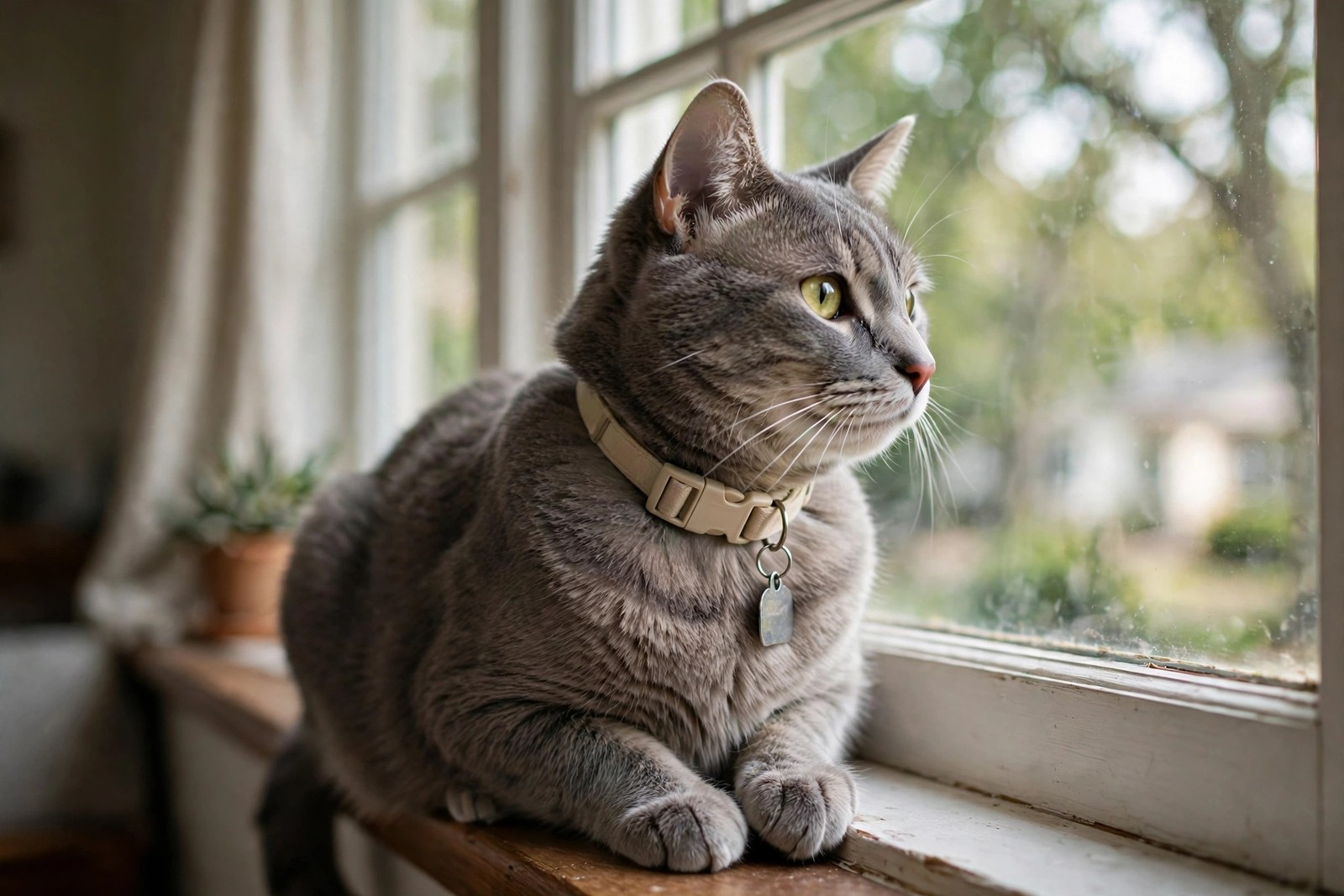
An indoor-only cat should wear a breakaway collar with a lightweight ID tag showing your current phone number — and ideally a second form of identification as backup. It surprises many owners, but most lost cats are indoor cats who slipped out through a door left ajar, a torn screen, or a carrier mishap on the way to the vet. Without ID, a found indoor cat has almost no way to tell anyone where she lives.
Why 'She Never Goes Out' Isn't a Plan
Indoor cats escape in ordinary moments: a guest holds the door for groceries, a child leaves the garage open, a window screen gives way on a summer night. Once outside, an indoor cat is usually terrified and hides close by, but if a kind stranger finds her, the first thing they look for is a collar and tag. A cat with no visible ID may be assumed to be a stray or a community cat, and the window to get her home narrows quickly. Shelters also work faster with identification — a tagged cat is a cat with an owner actively looking.
Choosing the Right Collar and Tag
Pick a breakaway collar, which releases if it snags so your cat stays safe wearing it full-time. Fit it so you can slip two fingers underneath — snug enough that it won't slide over her chin or catch a paw, loose enough to be comfortable. For the tag, keep it small and light; a heavy tag dangling from a small cat's collar is the main reason cats fuss about wearing one. Engrave your mobile number — the phone you actually answer — rather than a home address. Add a second line such as "indoor cat — if I'm out, I'm lost," which tells a finder this cat is not supposed to be wandering and prompts a quicker call.
Inspect the collar weekly. Breakaway clasps wear out, tags fade, and kittens outgrow collars in weeks. If your cat is a determined collar-remover, try a different width or material before concluding she can't wear one.
Backup ID: Microchip and Profile
Because any collar can come off, a microchip is the layer that never leaves. Ask your vet about chipping at the next visit if your cat isn't chipped, and keep the registry details current. Clear, recent photos matter too — face, both sides, and any distinctive markings — because photos are what shelters compare and what flyers and alerts depend on.
The KinsLe QR ID Benefit
With KinsLe, your cat's Verified QR ID Pet Profile gives her a unique QR code for her collar tag. A finder scans it with any phone and sees the contact details you've chosen to share — no special equipment, no waiting for a vet's office to open to read a chip. You control and update the profile yourself, so a new phone number takes effect the moment you save it. Verified QR ID Pet Profiles connect a finder who scans her collar code straight to the owner named on her profile in KinsLe.