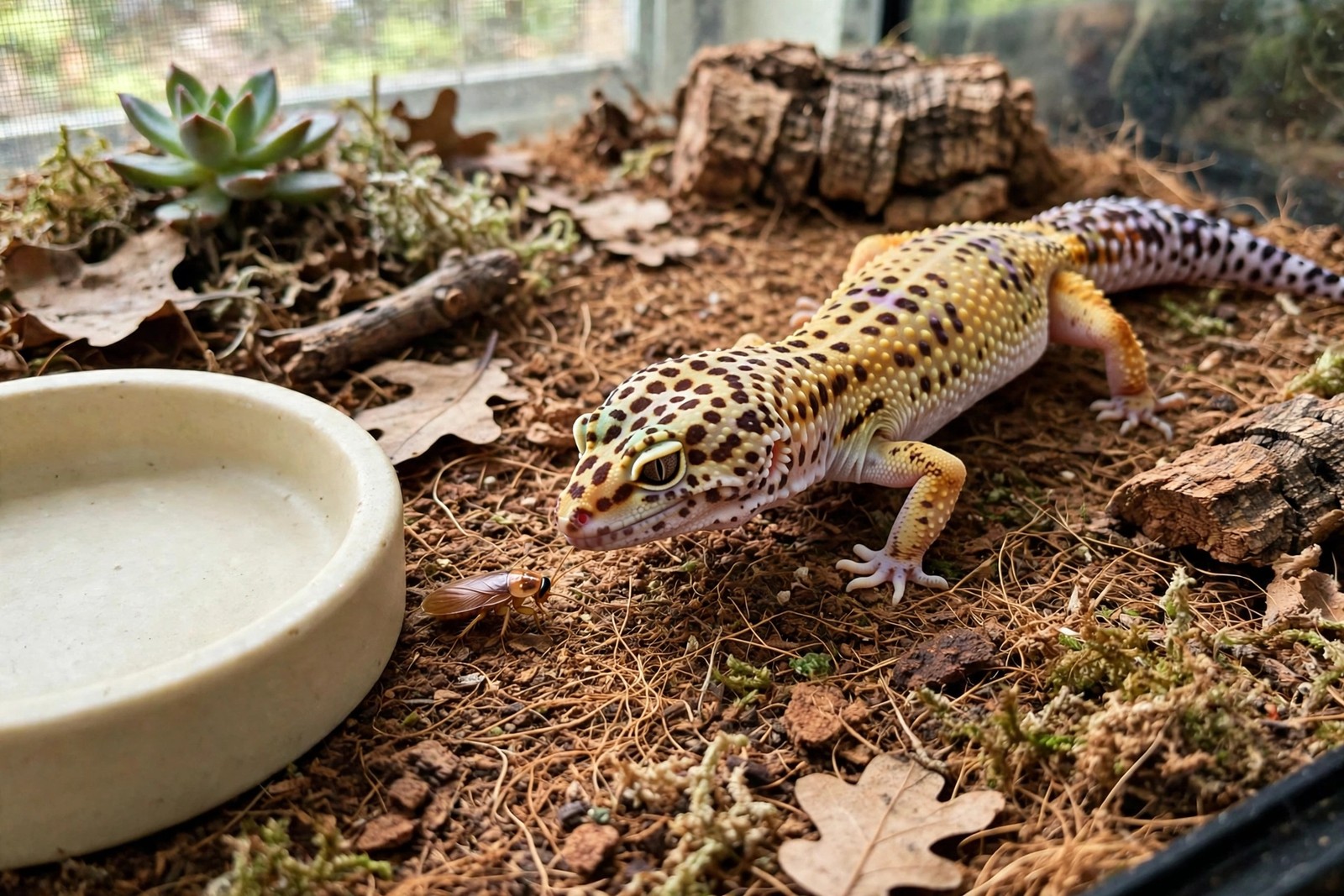
A leopard gecko does best on a rotation of nutritious staple insects rather than one feeder forever. Each insect below has a different balance of protein, fat, and shell, so variety is not indulgence — it is how the diet covers its bases. Size matters as much as species: offer insects no wider than the space between your gecko's eyes, so youngsters get small feeders and adults can handle larger ones.
The Staples Worth Building the Diet On
Dubia roaches are a reliable staple for many keepers: meaty, slow-moving enough to catch easily, low in odour, and with a better nutritional balance than most feeders. Black soldier fly larvae are naturally rich in calcium, need no extra calcium dusting to be useful, and their wriggling triggers a strong hunting response — though some geckos pass them undigested if they swallow them whole and unchewed, in which case piercing the skin first can help. Crickets remain a sound staple and encourage natural chasing, provided they are gut-loaded and never left loose in the enclosure overnight, where hungry crickets can nibble a sleeping gecko. Mealworms are convenient and keep well refrigerated, but their tougher shell and higher fat content make them a supporting feeder in the rotation rather than the sole diet.
Variety Feeders and Treats to Ration
Hornworms are soft, hydrating, and eagerly taken — excellent for variety and for a gecko recovering its appetite, though their size and cost keep them occasional. Silkworms are another high-quality soft feeder where you can source them. Superworms suit adults only as an occasional item: they are large, fatty, and best never given to juveniles. Waxworms sit at the far end of the scale — treat them like sweets, one or two now and then, because geckos can become fixated on them and start refusing staple insects, a habit that is genuinely hard to reverse once set.
Gut-Loading and Dusting
An insect is only as nutritious as its last meal. Gut-load feeders for about 24 hours before serving on leafy greens, carrot, and squash, and keep them housed and fed rather than starved in a tub. Dust insects lightly at feeding time as part of a steady supplement routine — a plain calcium source available in the enclosure is common practice for this species, with vitamin dusting used in rotation as most keepers and vets advise — and shake off the excess so the gecko eats insect, not powder. Feed in the evening when your gecko is naturally active, tong-feed or use a shallow dish for larvae and roaches, and remove uneaten live insects after the hunt winds down.
What Never to Feed
Never offer wild-caught insects, which can carry pesticides and parasites, and never feed insects that are too large, glow in the dark, or were collected near roads or sprayed gardens. If a gecko consistently refuses one staple, rotate to another rather than surrendering to waxworms. KinsLe's Care Teams keeps the rotation honest — feeding days, which insect is due, and dusting turns can be assigned to whoever feeds that evening and marked complete with a timestamp, so your gecko's varied diet survives busy weeks instead of collapsing into whatever tub is nearest.