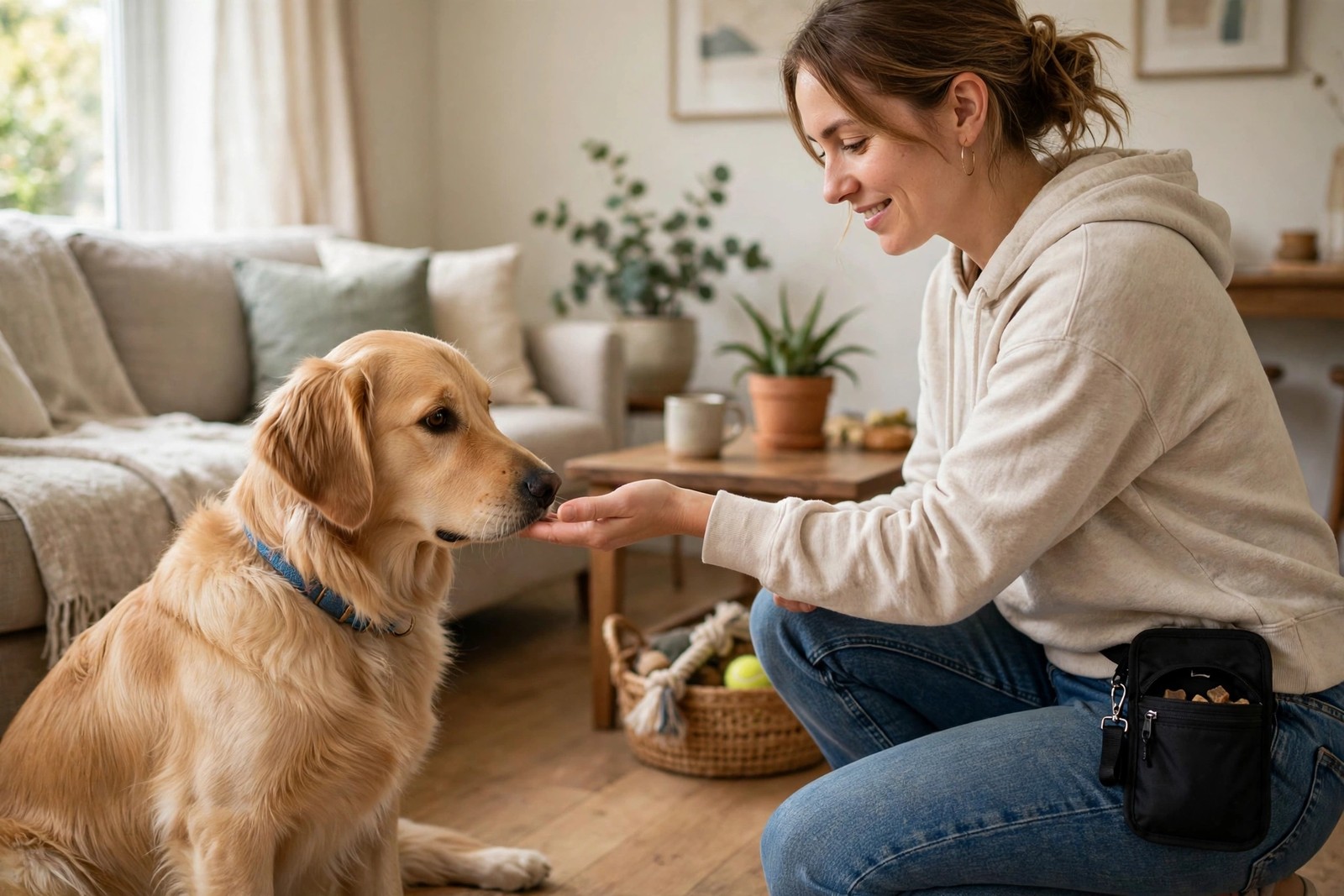
For a dog who has never done any training, the first trick has two jobs: teach a behaviour, and teach the dog what training itself is — that you are worth watching, that trying things earns rewards, and that mistakes cost nothing. A hand touch, nose to your flat palm, does both jobs well, where traditional first commands often struggle. A sit can be fudged and a paw can be grabbed, but a touch is the dog's own clear choice. It usually happens within the first minute, because a hand near a nose invites investigation.
Teaching the Touch, Step by Step
Present your flat palm a few centimetres from the dog's nose, fingers pointing down. Curiosity does the work: the dog leans in to sniff, and the instant nose meets palm you mark it — a clicker or a consistent marker word such as yes — and deliver a small, tasty reward from your other hand. Repeat five or six times in the same position until the dog is bumping your palm deliberately and looking for the reward, which tells you the connection is made.
Then build in small steps, one change at a time. Move the hand a little further away, then to the left and right, then higher and lower, so the dog takes a step or two to reach it. Add the cue word touch only once the behaviour is reliable, said just before you present the hand. If the dog loses the thread, drop back to the last distance that worked and rebuild; confusion means the step was too big, never that the dog is being stubborn. Sessions of a few minutes, two or three times a day, grow the trick faster than one long drilling session.
Mistakes That Slow a Beginner Down
- Pushing your hand into the dog's face instead of letting the dog choose to approach; the choice is what you are rewarding.
- Rewarding from the touching hand, which teaches the dog to mouth and lick the palm; the treat arrives from the other hand or a pouch.
- Raising difficulty on two fronts at once — further away and in a busier place — so the dog fails and switches off.
- Repeating the cue word when the dog hesitates; say it once, wait, and let the dog think.
Use food your dog actually rates, in pieces the size of a pea, so twenty repetitions do not fill the dog up or slow the game down. For a dog that is wary of hands near its face — some rescues are — hold your palm lower and to the side, and reward any look or lean toward it at first, building the touch gradually.
Where the Hand Touch Goes Next
This small trick earns its keep for years. A dog running toward an outstretched palm is the skeleton of a recall: present the hand in the garden, reward the arriving touch generously, and you have a recall foundation without ever having drilled one. At greetings, asking for a touch gives the dog a job instead of jumping up at visitors. At the vet's, a touch focuses a worried dog on something familiar while handling happens. You can also move the dog around with it — touch at your left side, your right side, between your legs — which becomes positioning for loose-lead walking and later tricks such as spins and leg weaves.
Finish every session the same way while the trick is new: one final easy touch, a reward, and a clear all-done signal before you put the treats away, so the game has edges the dog understands. Note how far the dog can currently travel to touch, and what distance comes next, somewhere the whole household can see it. Jotting that progress into KinsLe Care Teams as a shared practice note means your dog's second and third teachers — family, partner, dog walker — reward the same behaviour at the same stage instead of each inventing a version.