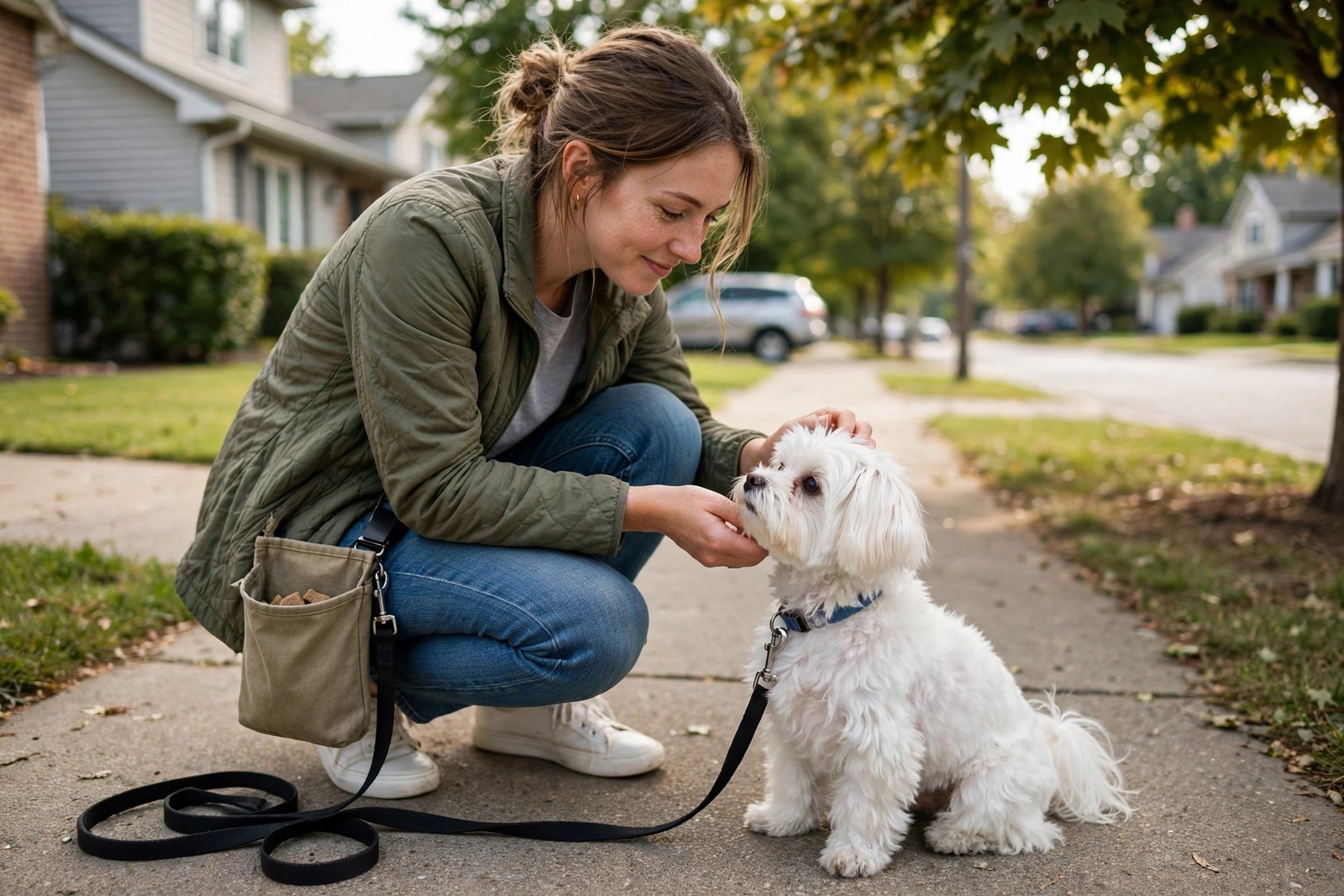
Maltese days are small in scale and large in togetherness. A dog of 4 to 7 pounds (about 2 to 3 kilograms) needs around 20 to 40 minutes of walking across the day, topped up with indoor play: a soft toy chased down a hallway, a gentle game on carpet, and training in short bursts paid with tiny rewards. Owners sometimes assume so small a dog needs no walk at all, yet the outdoor outing delivers sniffing, toilet habits away from indoor pads where that is the goal, and confidence around everyday sights. Routes need hazard awareness that larger breeds forgive: gaps in fencing, uncovered drains, and boisterous dogs who could injure a fragile frame with one clumsy pounce. A harness rather than a collar protects the delicate neck on the lead.
The Coat Decision You Make Every Day
Grooming is the breed's true daily commitment. Kept long, the silky white coat needs brushing every day, working gently through to the skin to stop mats forming behind the ears, under the legs and where a harness rubs, and a missed week can turn into a painful, shaved reset. Many pet owners choose a short puppy cut instead, which trades daily brushing for regular professional trims every few weeks, plus quick brush-throughs between appointments. Eyes need a daily wipe with a soft, damp cloth, since tear staining marks the white face and damp folds can grow sore. Teeth in a small mouth crowd together, so daily brushing with dog toothpaste, started gradually in puppyhood, supports dental health far better than occasional attention, and your veterinarian can advise if tartar or sore gums appear.
Company, Voice and Household Logistics
A Maltese often behaves like a devoted shadow with opinions. Expect a follower between rooms, a lap occupant during any seated activity, and vocal commentary when the doorbell, the window or a neighbouring dog provides material. Alone time needs patient, gradual training from puppyhood, in minutes rather than hours, because a dog bred purely for companionship can find an empty house genuinely hard. Eating is correspondingly small-scale: measured portions weighed in grams rather than handfuls, since a few extra kibbles a day is a meaningful surplus on a frame this size, and treats for training should be broken into fragments. Stairs, sofas and laps all carry fall risks for tiny bones, so ramps, steps and careful handling by visiting children become ordinary household furniture decisions.
Evenings in a Warm Spot
Evenings usually find the Maltese installed in a warm, favoured location, ideally on a person, with one last short outing before bed. The breed often stays playful well into old age, and seniors still enjoy gentle games alongside more naps. Owners who work from home or who want a constant companion tend to suit the breed beautifully, while households wanting an independent, low-grooming dog usually find the daily coat and the constant company demanding. What the Maltese returns is focused, cheerful devotion at very close range, all day and every evening.
Household budgets for a Maltese are dominated by grooming rather than food, since a dog who eats measured grams costs little to feed while professional trims every few weeks, quality brushes and gentle eye-care supplies recur all year. Owners keeping the full coat at home trade that spending for time at the grooming table instead. Either way, a small first-aid habit helps: check the mouth weekly during brushing, keep hair out of the eyes with a soft tie or a trim, and book veterinary dental advice early when breath or gums change.
Trim dates, eye-wipe habits and gram-level portions stay findable for the next household inside KinsLe Transferrable Profiles, filed under this Maltese from day one.