
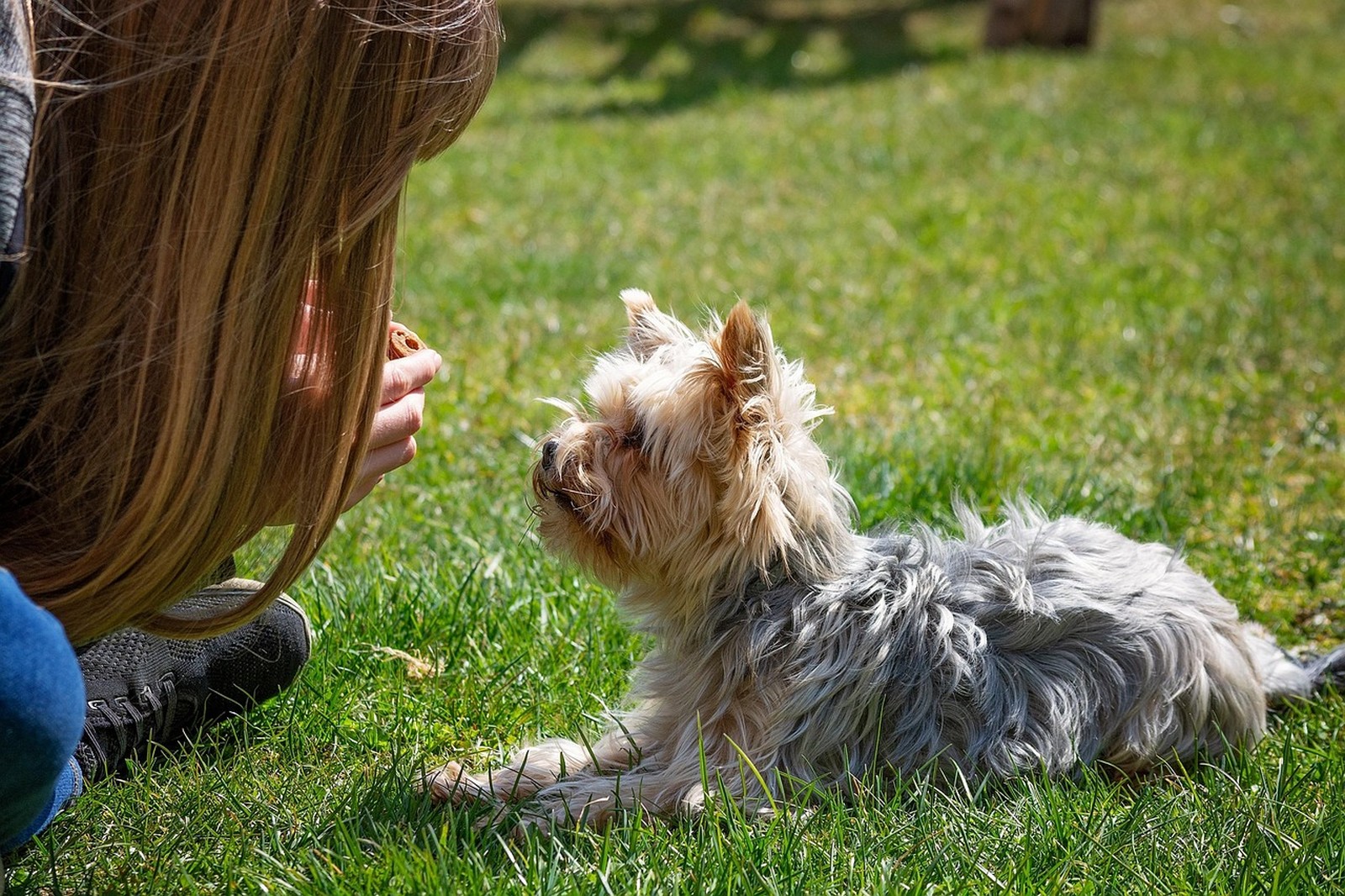
Start by finding his actual currency
A reward is only a reward if the dog thinks so, and a dog who turns away from treats is giving you information, not being stubborn. Watch what he chooses when he is free: does he light up for a thrown ball, live for a game of tug, melt for ear scratches, or care most about racing to the end of the garden to investigate smells?
It is also worth checking why food falls flat. Some dogs are genuinely full, some find the offered food dull compared with the environment, some feel too stressed or over-aroused outdoors to eat, and a few have learned that treats predict the end of fun.
Play as a paycheck, kept short and structured
Play is the most powerful alternative for many dogs. A ten-second burst of tug, one throw of a ball, or a quick chase of a toy dragged on a line can pay for a recall, a wait at the kerb, or a calm look at a passing dog. The trick is structure: the game starts when he performs, stops cleanly when you ask, and the toy disappears between repetitions so it stays valuable and the session keeps its rhythm.
Match the game to the behaviour you are teaching. High-energy play after a recall makes sense, because you are rewarding speed back to you. The same wild game after practising a settle on a mat would undo the calm you just built, so pay that behaviour with slow stroking or quiet praise instead. Think of rewards as having volume settings, and turn the dial to suit the lesson.
Life rewards: the world itself as payment
Some of the strongest rewards cost nothing and are already built into your dog's day. Being released to go and sniff that post, being allowed through the gate to the field, greeting a dog friend he likes, jumping into the car, or being let off the lead in a safe place can all reinforce the behaviour that came just before. The pattern is simple: he does something for you, and the good thing he already wanted becomes available because of it.
This approach, sometimes called using the environment as the reward, is especially useful for dogs who work beautifully at home and fall apart outside, where treats cannot compete with squirrels and smells. Instead of competing, recruit the environment. Ask for a sit and eye contact at the park gate, then let the park itself be the payment.
Praise, touch, and getting the details right
Verbal praise works when it has been genuinely paired with good things and delivered in a tone your dog enjoys; many dogs respond to warm, animated praise far more than to a flat good boy. Touch is more individual: some dogs adore a chest scratch mid-session, while others find hands coming at them distracting or mildly annoying, so let his body language vote.
Whatever currency you land on, timing matters more than size. Deliver the reward within a second or two of the behaviour, keep individual rewards small or brief so you get many repetitions, and end sessions while he still wants more. If a dog who previously took food suddenly refuses all food and seems flat or unwell with it, skip training and check with a vet, because appetite changes can be an early sign that something physical is wrong.
Once you know what your dog works for, the whole household needs to know it too. Using KinsLe, Care Teams lets family and helpers note his winning reward alongside his training duties and confirm each session done with a timestamp, so nobody wastes his best recall offering a biscuit he has never cared about.