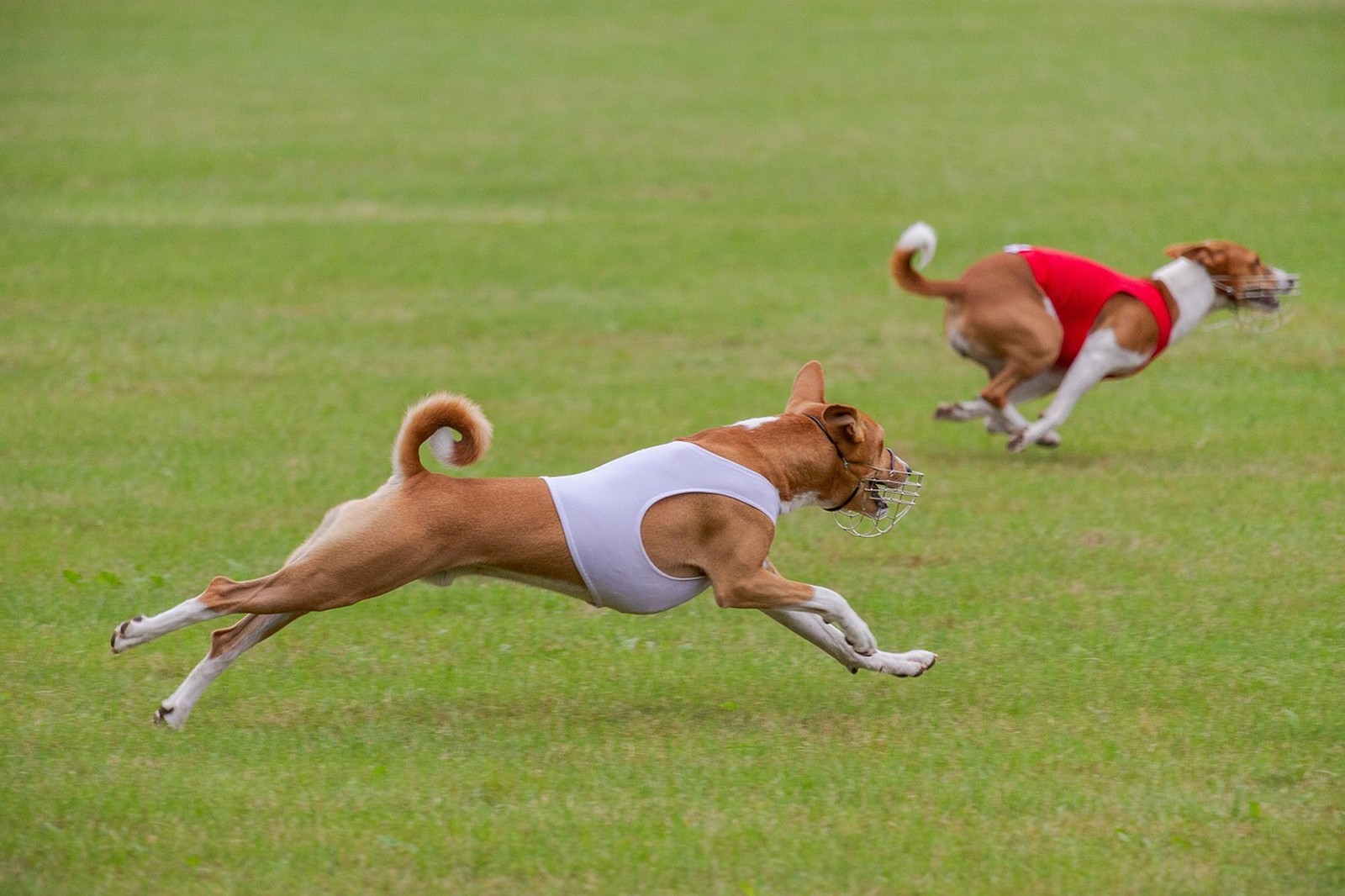
The Basenji and the Shiba Inu get compared constantly, and the pairing makes sense: both are ancient, primitive breeds with pointed ears, curled tails, cat-like self-possession, and a firm belief that your requests are open to negotiation. Yet they come from opposite ends of the world, the Basenji from central Africa and the Shiba from mountainous Japan, and living with each one feels different in coat care, climate, noise, and daily handling.
Looks, Build, and Coat
A Basenji is fine-boned and elegant, standing a little taller and lighter than a Shiba, with a smooth, short, single-feeling coat in rich chestnut, black, or brindle with white markings, and a tightly curled tail. The coat needs almost nothing: a weekly brush, minimal bathing, and so little odor that the breed is famous for grooming itself with a licking routine owners describe as feline. A Shiba is stockier and more plush, with a thick double coat built for snow, a broad face, and a tail carried in a full curl over the back. That coat sheds lightly day to day and then releases in heavy seasonal blows that demand serious brushing for weeks. If low coat effort is a priority, the Basenji wins this comparison outright; if you want a dog who revels in winter weather, the Shiba is dressed for it.
Voice and Daily Noise
The Basenji's larynx is shaped differently from other dogs, and the breed cannot bark. It is not silent: expect yodels, baroos, chortles, and the occasional scream when offended, but the everyday soundscape is far quieter than most breeds, which apartment dwellers notice and value. The Shiba has a full vocal range and uses it selectively. Most Shibas are quiet, dignified dogs day to day, but the breed owns a famous high-pitched scream deployed during nail trims, vet restraint, or moments of deep protest, plus genuine barking when something merits an alert. A Shiba household is calm until it suddenly is not, in a very specific, theatrical way.
Temperament and Training
Both breeds are independent thinkers with strong prey drives, unreliable off-lead recall, and real escape talent, so secure fencing and lead discipline matter equally. In personality, the Basenji tends toward busy, mischievous curiosity, investigating everything, climbing onto tables, and inventing games, while the Shiba tends toward reserved dignity, bonding deeply to a small circle and greeting strangers with polite indifference at best. Neither breed obeys for the joy of obedience. Training works through short, rewarding sessions and collapses under drilling or force, and both breeds can guard valued items if early trading games are skipped. First-time owners often find both harder than expected; experienced owners who enjoy a dog with its own mind find both deeply rewarding, in different flavors, the Basenji more clownish and the Shiba more composed.
Health, Climate, and Daily Fit
The Basenji is a heat-loving dog who feels the cold keenly, needs a coat in winter weather, and will seek the warmest spot in any house. The Shiba is the opposite, happiest in cool climates and merely tolerating summer heat with shade and timing adjustments. Your climate is therefore a genuine deciding factor rather than a footnote. Both are generally hardy, long-lived small breeds, but each carries breed-specific health questions worth discussing with breeders and vets, and both need similar daily exercise: a solid hour of activity and mental work keeps either civilized indoors. Choose the Basenji for a quieter, lower-maintenance coat in a warm home where mischief amuses you; choose the Shiba for a plush, reserved companion in a cooler climate where dignity appeals more than clowning. Whichever direction you lean, KinsLe's Kimmy is there to be asked for guidance in the moment, with what you learn kept alongside the profile of the dog you eventually bring home.