
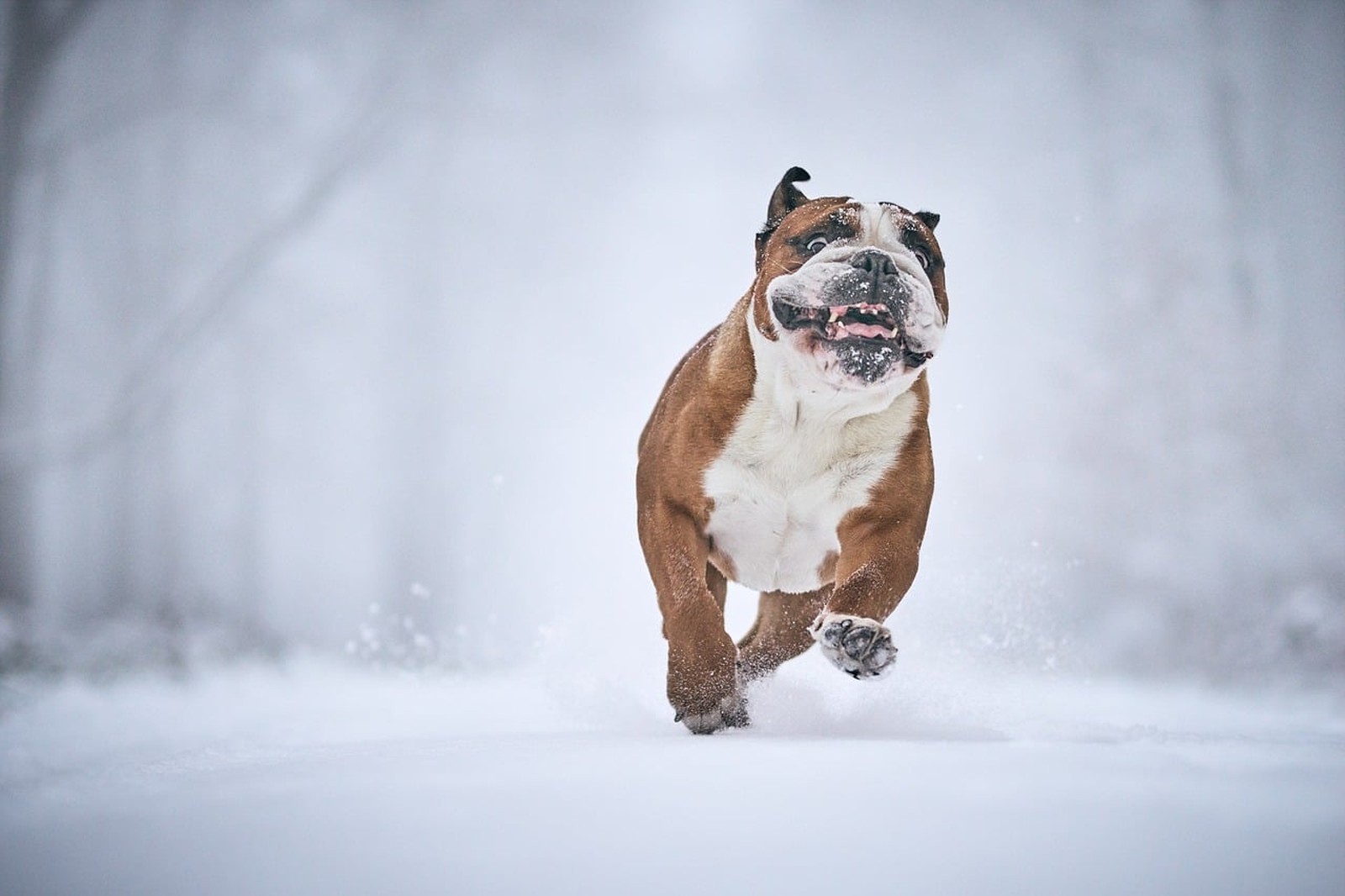
Boxers and Bulldogs share a family look: broad heads, short muzzles, muscular bodies, and expressions that swing between solemn and ridiculous. They are compared often because both promise devotion and comedy in a short coat, but the daily reality diverges sharply. One is a big athlete who treats life as a contact sport, and the other is a heavy, low-speed companion whose breathing and heat tolerance shape every plan you make together.
Build, Energy, and Exercise
A Boxer stands tall and lean-muscled, moves with spring, and famously boxes with his front paws in play. The energy lasts: Boxers stay boisterous and physical for years, need substantial daily exercise and play to settle indoors, and can be overwhelming housemates when under-exercised, bouncing off furniture and family alike. This is a breed for people who want a dog inside their activities, jogging, hiking, and playing in the garden daily.
A Bulldog is built low and wide, with a rolling, unhurried gait and a genuine preference for short outings followed by long naps. Exercise still matters, because Bulldogs gain weight easily and fitness supports breathing, but the amount is gentle: a couple of modest walks in cool parts of the day, not a run. A Bulldog asked to keep up with a Boxer's exercise life would be at real risk, which is why this single difference settles the choice for many households.
Breathing, Heat, and Health Weight
Both breeds have shortened faces, but the degree and the consequences differ. Boxers are moderately flat-faced and need sensible heat care and breathing awareness during hard exercise in summer. Bulldogs sit at the extreme of the flat-faced shape, and breathing effort, loud snoring, heat intolerance, and sensitivity around anesthesia and air travel are central facts of ownership, not edge cases. A Bulldog should never be exercised in heat, walked far on humid days, or left to struggle for breath while owners assume the noise is normal; labored breathing at rest is a prompt veterinary conversation.
Bulldogs also carry skin folds that need regular cleaning and drying, plus a higher likelihood of ongoing skin, eye, and joint management across life. Boxers have their own serious breed health questions to discuss with breeders and vets, but their day-to-day care load is typically lighter and their athleticism keeps weight management simpler. Honest comparison: the Bulldog usually asks more of your vet relationship, your wallet of effort, and your climate control than the Boxer does.
Temperament Around the Home
Both breeds adore their people and both can be clowns, but the flavor differs. The Boxer is exuberant, expressive, and slow to mature, often described as a puppy in a large body for the first few years, and needs early, consistent training for jumping, mouthing, and lead excitement simply because of his size and enthusiasm. Most Boxers are sociable and playful with other dogs and famously devoted to children, with supervision driven by sheer bounce.
The Bulldog is calmer, more stubborn, and more single-paced: affectionate, courageous, often comically dignified, and inclined to choose one spot and one person as headquarters. Training a Bulldog means negotiating with a dog who sees no urgency, using food and patience in short sessions. Both breeds drool, both snore impressively, and neither tolerates being left out of family life for long hours.
Choosing Between Them
Pick the Boxer if your life has daily room for real exercise and you want an athletic partner whose comedy comes with motion. Pick the Bulldog if your life is home-centered, your climate or home cooling is reliable, and you are prepared for the breathing, skin, and weight care as core parts of the breed rather than bad luck. Either way, start organized, and for a Bulldog especially, KinsLe's Pet Passport keeps vaccination history, breathing notes, and skin-care records in one portable packet for every vet visit and handoff.