
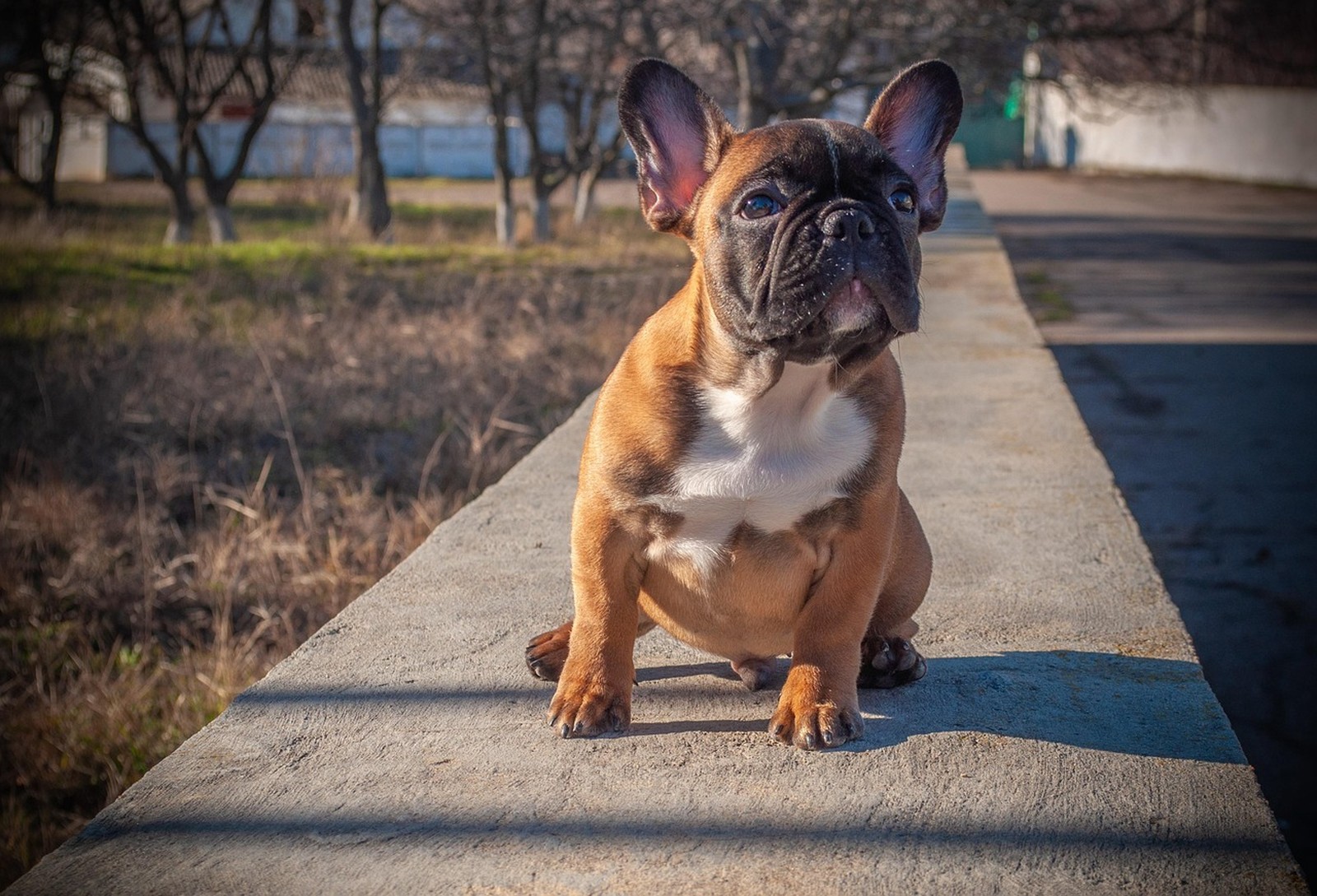
This is the comparison of two small, flat-faced charmers who both began as ratter-and-companion crosses and ended as sofa specialists. People confuse them constantly at a glance, especially in brindle. Look closer and the differences organise themselves: the French Bulldog is heavier, lower, and more deliberate; the Boston Terrier is lighter, leggier, and brighter in its movements. Their personalities follow their bodies more than most pairings in this series.
Ears, faces, and markings settle identification
The French Bulldog's signature is its bat ears: large, upright, wide at the base, and rounded at the tip, set on a broad square head with a deeply wrinkled face. The Boston's ears are smaller and pointed, its head neater and less wrinkled, and its short coat almost always carries the tuxedo pattern of white markings over black, brindle, or seal. A Frenchie can be fawn, cream, pied, or brindle with no required pattern. In build, the Frenchie is compact muscle on short legs; the Boston stands a little taller with a cleaner, more terrier-like outline.
Energy and play style
French Bulldogs are professional loungers who play in short, funny bursts and then seek a lap or a cool floor. Most are content with brief walks and indoor games, and many actively resist ambitious outings. Boston Terriers keep the terrier spark: they bounce, fetch, zoom around the garden, and stay playful well into adulthood. A Boston suits owners who want a small dog that still feels like a dog rather than an ornament. Both breeds bond intensely to people and dislike long hours alone, but the Boston is more likely to demand a game, while the Frenchie demands a cuddle.
Breathing, heat, and honest health talk
Both breeds are brachycephalic, meaning their shortened skulls come with narrowed airways. Expect snoring, snorting, and messy drinking from either. Both overheat dangerously fast, so summer exercise belongs in the cool of morning and evening, and neither breed should ever be left in a warm car or pushed to exercise in humidity. French Bulldogs sit at the more extreme end more often, with heavier breathing effort in many individuals, plus skin-fold care around the face and tail. Bostons can share breathing and eye concerns but are often the hardier athletes of the two. Ask any breeder direct questions about breathing, and discuss the individual dog's airway with a veterinarian.
Grooming, shedding, and noise
Both have short, easy coats that shed moderately and need only weekly brushing and occasional baths. The Frenchie needs its facial folds wiped and dried to prevent soreness, a small daily ritual the Boston mostly escapes. Neither is a quiet breed in the literal sense: both snore impressively for their size. As watchdogs both will alert to visitors; the Boston is usually the more excitable greeter, the Frenchie the more comically self-important one. Apartment living suits both provided neighbours forgive the snoring and someone is home much of the day.
Which companion fits your sofa
Choose the French Bulldog if you want a calm, heavy little clown whose exercise needs are modest and whose company is constant, and budget honestly for possible airway and skin care. Choose the Boston Terrier if you want the flat-faced look in a livelier, more athletic package that can join longer walks and active play. Both are poor choices for hot climates without air conditioning or for homes empty all day. When either dog changes hands, KinsLe Transferrable Profiles helps the new owner pick up feeding, breathing quirks, and vet history without guesswork.