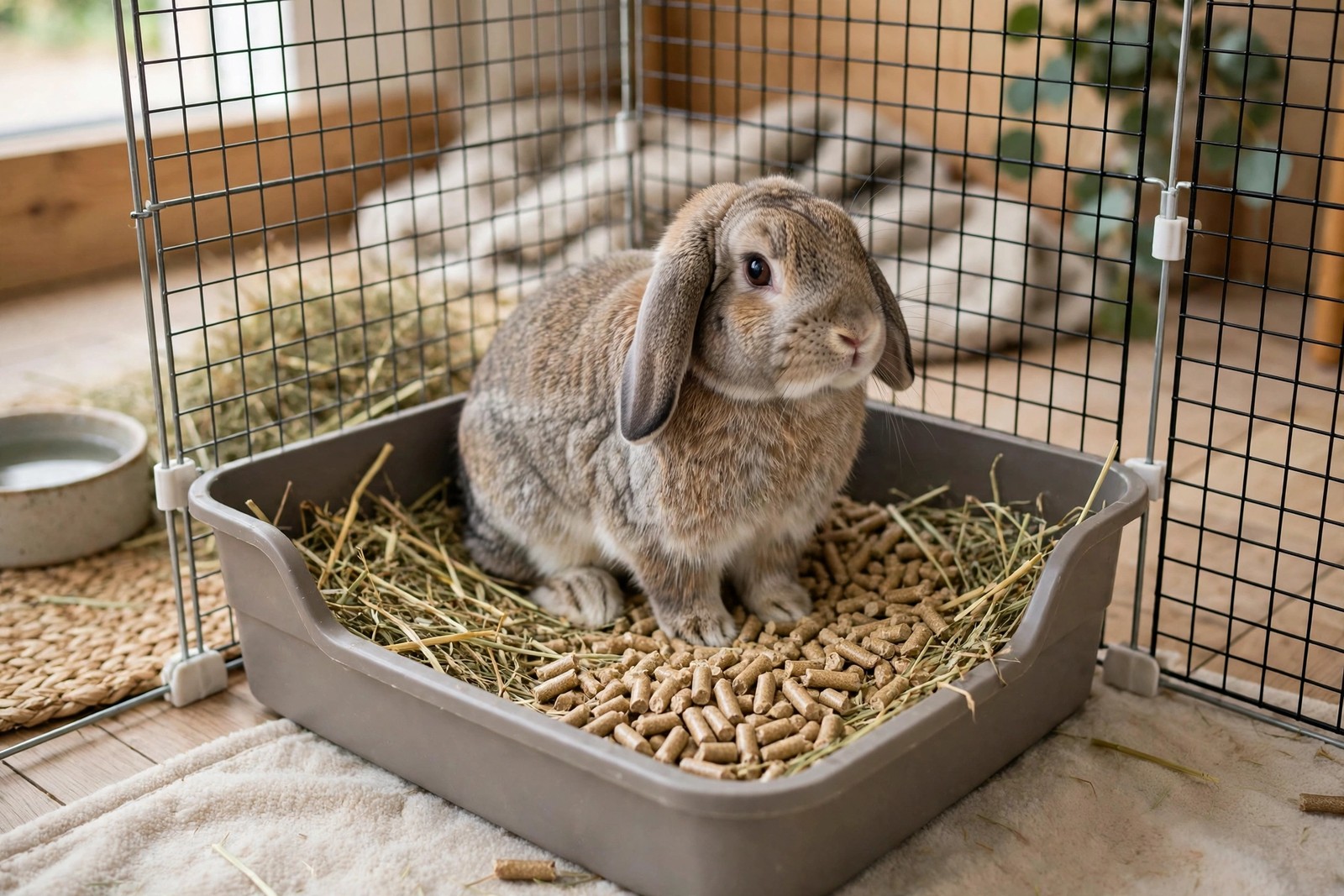
Rabbits interact with their litter more intimately than almost any other pet. They sit in the box for long, relaxed sessions, they graze hay placed in or beside it, and they inevitably nibble some of whatever lines it, all while breathing air a few inches above the surface. Litter safety for a rabbit is therefore about two routes at once: what the litter does if eaten, and what it does to the airways and liver over months of close contact.
The Safe Choices
Paper-based pellets are the most widely recommended rabbit litter. They are highly absorbent, control odour well, are low in dust, and pass through the gut far more safely than mineral litters if a rabbit samples them, although litter is never food and heavy litter-eating is worth mentioning to a vet. Aspen shavings are the one wood option generally considered safe, because aspen lacks the strong aromatic oils of softwoods; look for a dust-extracted product and a texture of shavings rather than fine sawdust. Plain hay makes an excellent top layer over either base: rabbits like to graze while they use the box, which encourages good litter habits, and the hay itself is exactly what should be going into the rabbit. A practical setup is pellets or aspen underneath for absorption, hay on top for comfort and grazing, refreshed daily.
What to Avoid, and Why
Clumping clay litter is the most dangerous common choice. It is formulated to swell and set hard on contact with moisture, which is precisely what it can do inside a rabbit's stomach or intestines, creating a blockage risk in an animal whose gut must keep moving. Cedar shavings should never be used: their aromatic oils are harsh on rabbit airways and are linked to liver strain with long-term exposure. Pine shavings carry the same class of oils in milder form and are best avoided as well, particularly the dusty, strongly scented bags; a rabbit lives with its nose at litter level for much of the day, so mild is not mild enough. Scented litters of any base add perfumes a rabbit cannot escape and can mask the smell changes that warn you about health problems. Crystal and silica litters, corncob bedding that can be eaten in quantity, and dusty fine litters of any kind all fail the same two tests of gut safety and air quality.
Setting Up the Box
Use litter only inside the litter box, and keep the rest of the enclosure on a different surface such as fleece, a woven grass mat, or newspaper or plain non-slip flooring, so the rabbit learns one clear toileting place. Rabbits usually choose a corner; put the box there rather than fighting the choice. A box with a low entry side suits older rabbits and those with sore hocks. Spot-clean wet patches daily, replace the full contents every few days, and wash the box with plain hot water or a pet-safe cleaner rinsed thoroughly, because residue smells deter the rabbit and strong disinfectant scents linger at nose height.
Changes That Deserve Attention
A rabbit who suddenly stops using a previously reliable box, produces far fewer or much smaller droppings, or strains in the box is giving you health information, not a behaviour problem, and rabbits go downhill quickly, so contact a rabbit-savvy vet promptly rather than retraining.
Rotating daily spot-cleaning and full litter changes through KinsLe Care Teams keeps the box on schedule and the safe-litter rule visible to everyone who helps.