A young breed with a carefully documented beginning
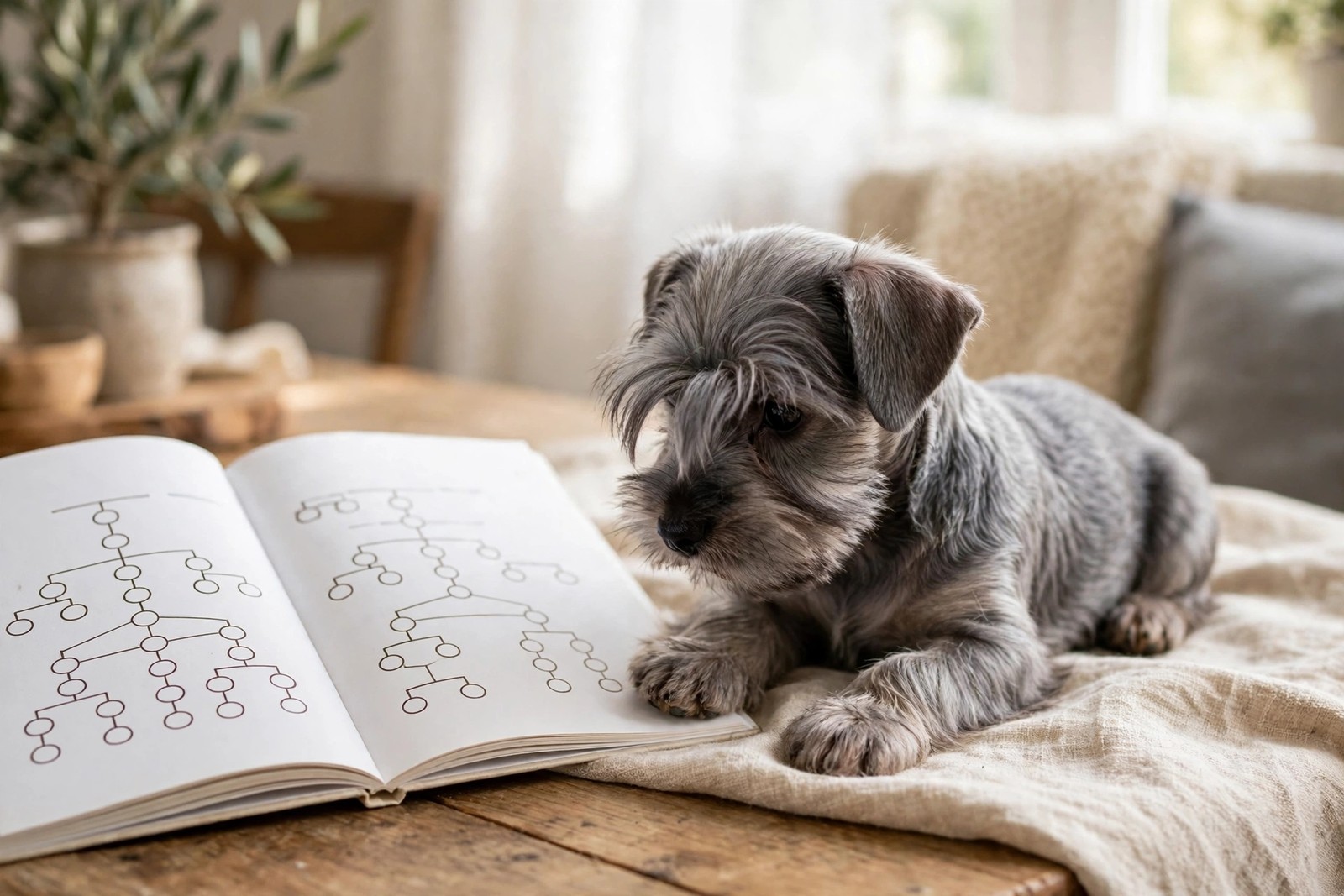
The Cesky Terrier is one of the world's younger and rarer terrier breeds, developed in the Czech Republic from a deliberate crossing of established terriers, and every Cesky family tree descends from that small, well-recorded foundation. Your puppy's folder should therefore open with registration papers or the application and a family tree tracing the sire and dam across several generations. Read it knowing the names matter: in a breed with limited numbers, breeders track lines closely, and your puppy's family tree may include Czech and other European kennels, with foreign registration details worth preserving permanently.
If either parent was imported, ask for copies of the import and foreign registration papers as well, so the overseas generations connect cleanly to the domestic record. The contract should name both parents exactly as the family tree and health certificates do. With a small breed community, a breeder can usually correct a paperwork mismatch quickly at pickup — far more easily than you can months later.
Parent screening and the puppy's vet record
Request copies of both parents' health screening results. Cesky breeders who plan litters carefully complete the screening the breed community recommends and keep certificates, sometimes issued under European schemes with unfamiliar formats. Accept the copies as they come, file them with the family tree, and note the issuing scheme rather than settling for a summary. Your veterinarian will appreciate having the actual documents when the puppy's own file is opened.
The puppy's vet record should list examinations, vaccinations, and deworming with dates and the treating practice's details, ending with a check shortly before homing. Add the breeder's feeding note and a homing weight. The Cesky is a sturdy, moderate little dog, and a written record of what the puppy eats and how he is growing gives your vet a clean baseline. If the breeder has noted anything during weaning — appetite quirks, a sensitive stomach — it should be written in the file, not left to a parting conversation.
Coat notes, temperament records, and the microchip
Unlike most terriers, the Cesky's soft, silky coat is clipped rather than hand-stripped, and it grows a distinctive fall of hair over the eyes and a beard. Ask what grooming the breeder has already introduced — baths, brushing, early clipper sounds, nail trims — and how the puppy responded, then keep that note for your groomer. A Cesky is generally calmer and more biddable than many terriers, and a puppy already relaxed about grooming will stay that way if the routine continues without a long gap.
Socialization notes matter as well: the household sounds, visitors, and outings the puppy knows so far. Verify the microchip number against the vet record and contract, keep the certificate, and register your own details immediately.
Preserving a rare breed's history in one file
Sort the Cesky file into permanent papers — registration, family tree, import copies, contract, screening certificates — and the growing record of vet visits, weights, and grooming appointments. Scan everything, including any pages in another language; the originals of rare-breed documents can be slow to replace, and a clear scan shared with a new vet, groomer, or event secretary saves real trouble. At the first vet visit, hand over the parents' screening copies so the clinical file starts complete.
That completeness is also a courtesy to the breed itself. In a population this small, each dog's documented history contributes to the wider record, and a puppy rehomed with papers intact keeps his story straight. With KinsLe, the Pet Passport feature holds a Cesky Terrier's family tree pages, import copies, screening results, chip details, and visit notes together in one portable packet, ready for whoever cares for him next.