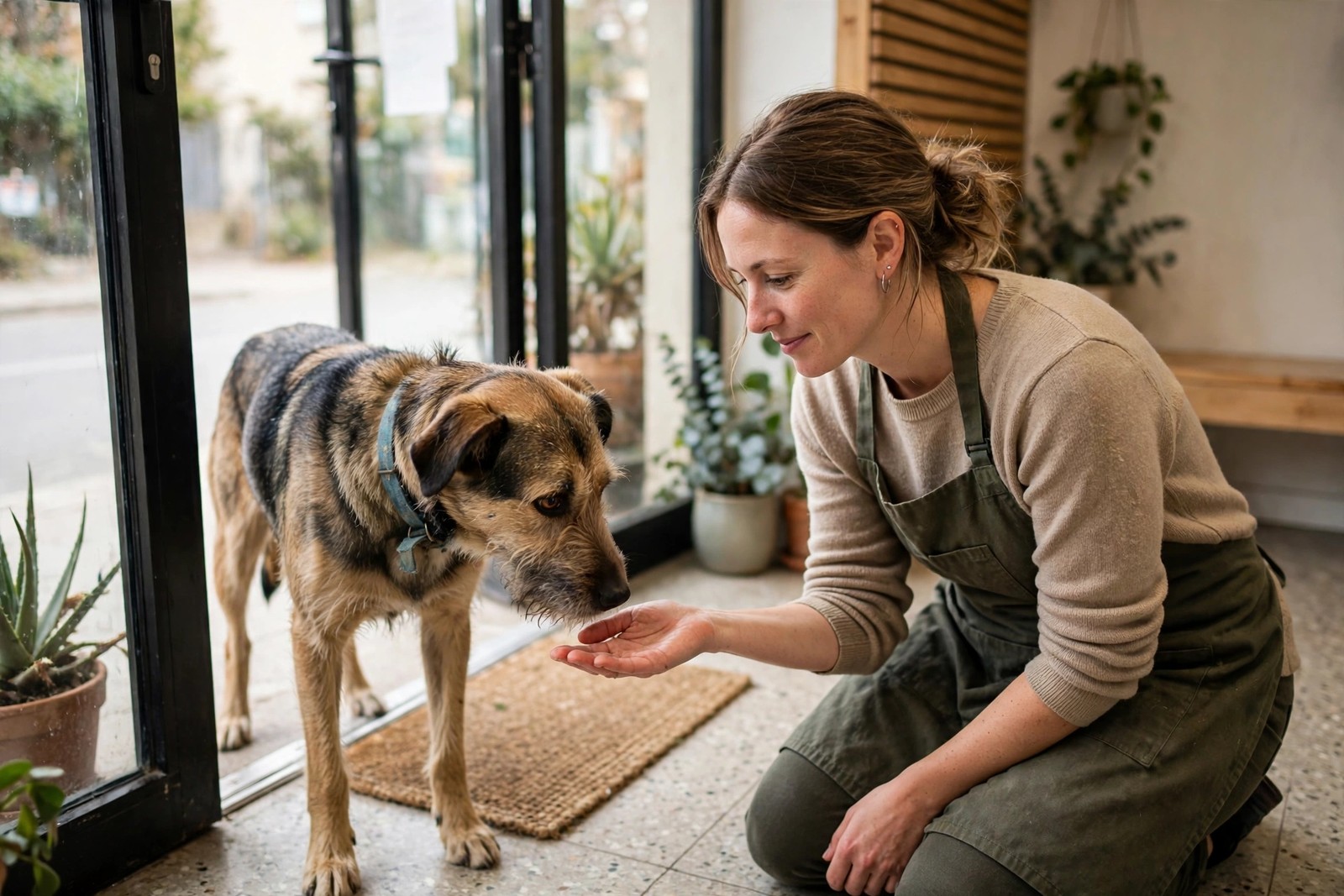
A rescue dog's first grooming appointment is not really about the coat. It is about what the dog learns a grooming salon is: whether strangers' hands, water, dryers, and clippers mean danger or mean a brief, manageable event that ends with going home. Get that lesson right and every future groom is easier. Chase a perfect finish on visit one and you may win the coat and lose the dog's trust in the place for years. So the appointment is designed backwards from a modest aim: the dog leaves calm, having had a positive first experience.
Short and Easy, With a Bath and Tidy as Success
Book a short appointment and say so plainly: this visit, success means a bath and a tidy, nothing grander. A tidy means face, feet, and hygiene areas made comfortable, loose dead coat removed, and any urgent mat that is pulling at skin dealt with if the dog tolerates it. It does not mean a full breed trim, every mat combed out, and nails, ears, and teeth all in one sitting. A groomer who understands rescue work will welcome the brief, because it lets them finish on a win. Agree the stopping point before the appointment starts, so nobody feels the session failed when the full makeover is deliberately left for a later visit the dog is ready for.
Start Before the Appointment: Meet-and-Greet or Trial Visit
If the groomer offers a meet-and-greet or trial visit, take it. A short visit where the dog walks into the salon, meets the groomer, is handled briefly, given a treat, and leaves without anything being done teaches the dog that the place itself is safe, and it lets the groomer meet the dog unpressured and plan the real appointment honestly. Some groomers build this into a first booking; others will do it if asked. Even without a formal trial, you can pass the salon on walks and reward calm interest near the door, so the first real visit is to a place the dog has already seen and smelled on an ordinary day.
Brief the Groomer on Everything Known
Tell the groomer everything known before the appointment: the dog's history as far as you have it, known triggers, how it has been handled so far, what it fears, what settles it, and any health or skin issues already identified. Where the centre or previous keeper passed on notes, share them rather than summarising from memory. This briefing is what lets the groomer choose a quiet slot, the right pace, and the right order of tasks — perhaps starting with whatever the dog tolerates easily and leaving the feared task for a later visit. A groomer working from a good briefing can also tell you afterwards what the dog found hard, which becomes the plan for visit two.
Breaks Built In, and Stress Signals End the Session
Ask for breaks to be built in rather than earned: pauses between bath, dry, and tidy, a chance to move, sniff, and reset, and a pace set by the dog rather than the clock. Then agree the rule that matters above the timetable — the dog's stress signals end the session, not the schedule. Panting, trembling, repeated attempts to escape, freezing, or escalating vocalising are the dog saying the visit is over, and a good groomer stops, does whatever tiny finishing step keeps the ending calm, and sends the dog home with the unfinished parts honestly rescheduled. A first appointment that ends early with a dog still coping is a success worth paying for in full, because it bought every appointment after it.
KinsLe helps the learning from a gentle first visit carry forward, because Care Teams duties for this dog record the handling notes and the plan agreed for visit two.