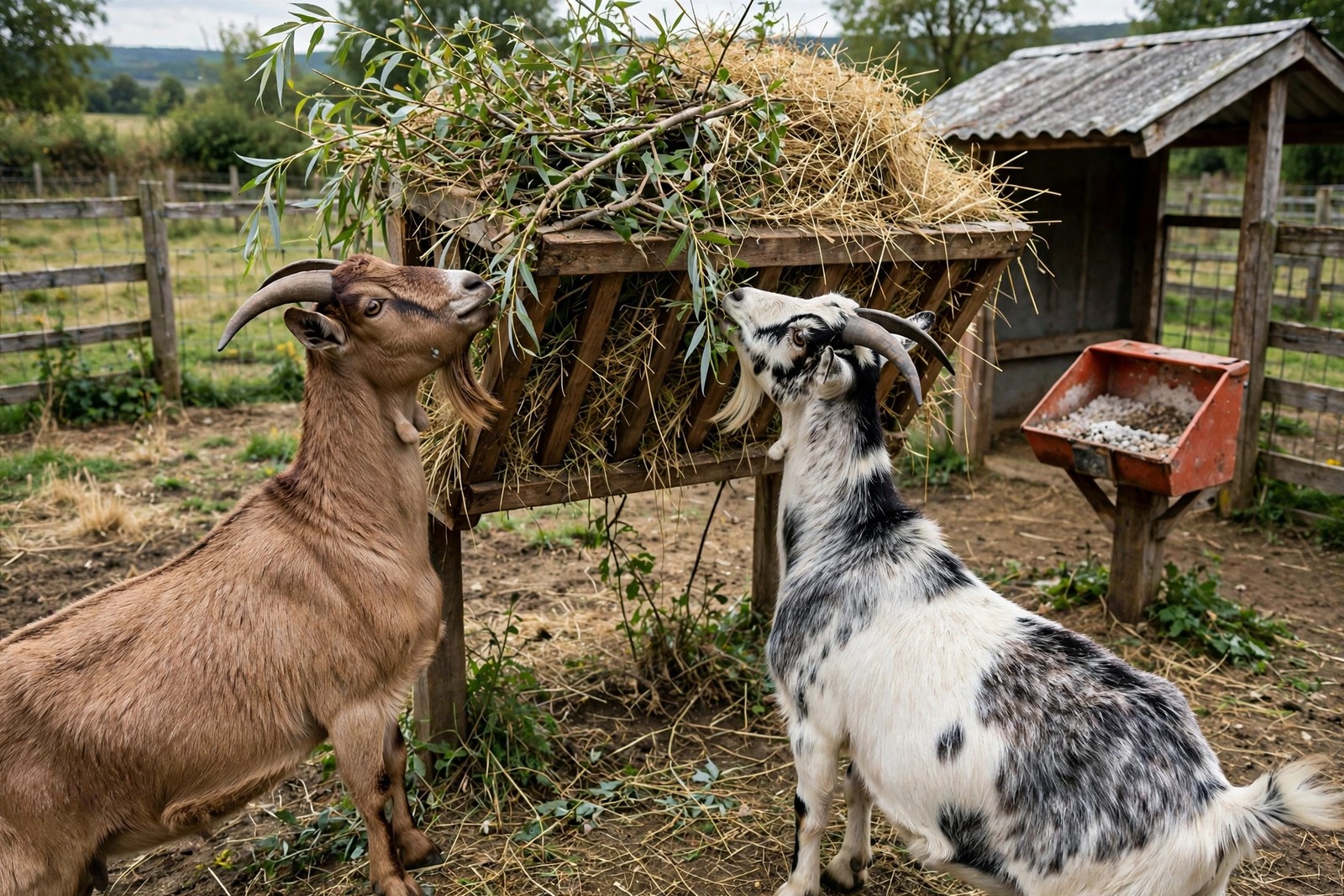
Goats have a reputation for eating anything, tin cans included, and it is nearly the opposite of the truth. Goats are selective browsers with a rumen that runs on fiber, and a healthy daily diet is a short, consistent list. Get the base right and goats are thrifty and hardy; get it wrong, usually by feeding too much grain and too little forage, and digestive trouble follows quickly.
Forage and Hay: The Bulk of Every Day
The foundation is long fiber. Where pasture is available, goats use it differently from sheep or cattle: they browse upward, preferring leaves, brush, weeds, and bark over grazing grass down to the roots, so a paddock with hedgerow and browse suits them better than a bare lawn. Whatever the grazing, good-quality grass hay should be available daily, and for yarded or wintering goats hay becomes the main feed, offered freely so the rumen never sits empty. Feed hay raised off the ground in a rack to cut waste and contamination, and reject moldy or dusty bales, because spoiled hay risks both the rumen and breathing. Make any change of hay or pasture gradual over a week or more.
Minerals: Loose, Goat-Specific, and Always Down
The second daily essential is a loose mineral mix formulated for goats, left out free choice under cover so rain does not ruin it. This is where a common and costly mistake happens: goats need considerably more copper than sheep, so minerals made for sheep are blended deliberately low in copper and will leave goats deficient over time. Buy goat minerals for goats. The mirror warning matters on mixed farms: goat minerals contain copper at levels that can poison sheep, so the two species need separate mineral stations, never a shared compromise mix. Check the feeder on daily rounds and top it up before it runs empty, because goats eat minerals in bursts when the feeder is fresh.
Concentrate: A Supplement With a Short List of Reasons
Grain and concentrate feeds are seasoning, not the meal. A dry, mature pet or fiber goat in good condition on decent hay usually needs none at all, and excess grain is the classic route to obesity, urinary stones in wethers and bucks, and rumen acidosis. Measured concentrate earns its place for growing kids, does in late pregnancy or in milk, and goats regaining condition, introduced slowly and split across the day rather than dumped in one large feed. Feed by condition, scoring the spine and ribs by hand regularly, because a thick coat hides both thinness and fat.
Water and Daily Rounds
Clean water, refreshed daily and kept unfrozen in winter, completes the list, and lactating does drink a great deal more than owners expect. The daily round that keeps all of this working is simple: hay checked and topped up, minerals checked, water scrubbed and refilled, and a look at each goat's appetite and droppings, because a goat off her forage is telling you something early. Splitting those rounds across family or helpers is easy to arrange with KinsLe's Care Teams, where hay, mineral, and water duties can be assigned for your goats and each finished job is timestamped, so nothing in the daily routine rests on memory.