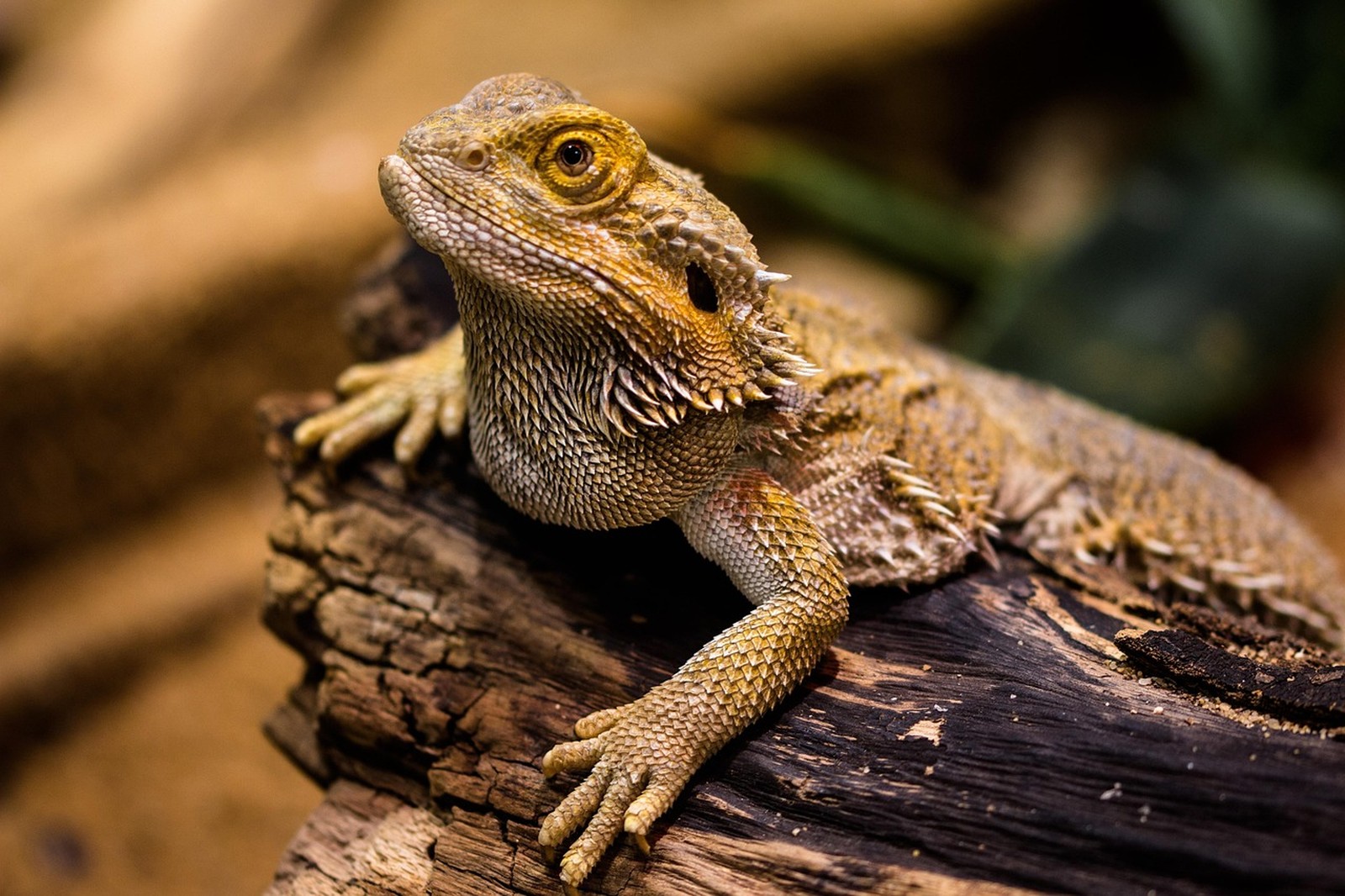
A bearded dragon cannot tell you it has been underfed, kept under a dead UVB tube or treated for parasites, but its body and behaviour carry that history in plain sight. The checks below take a few minutes in the shop or at the breeder's door, and they are the difference between choosing a dragon that is thriving and rescuing one whose problems become your vet bills. Ask to see the animal out of its enclosure, in good light, and watch it before you handle it.
Start With the Head
Look at the eyes first: they should be bright, open and clear, with no swelling, crusting or discharge, and the dragon should track your hand as it moves. Sunken eyes suggest dehydration or longer-term decline. The nostrils should be clean and dry — bubbles, mucus or crust around them point to respiratory trouble. Check the mouth is closed and aligned, with no drooping jaw, trapped food or sores at the corners, and look inside briefly if the animal gapes: the mouth lining should look clean and pale pink. Run a finger gently along the beard and jaw; the jaw should feel firm, not rubbery or soft, because a soft jaw can reflect poor mineral balance during growth.
Body, Tail, Toes and Skin
Work backwards along the body. Every toe should be present and straight, with claws intact — missing toes or a missing tail tip often mean old shedding problems or a tankmate's bite, and while an old, healed loss is not a deal-breaker, the seller should be able to explain it. The tail itself should taper smoothly to an intact tip, with no kinks, blackened sections or tight rings of stuck shed. Feel the tail base: it stores fat, so it should feel firm and fleshy, not flat with the bones standing out. The hips and spine should be covered rather than sharp. Skin should be clean, with no burns along the back, no black spots that do not wipe away, no mites moving in the folds around the eyes and ears, and no patches of retained shed strangling a toe.
Watch How It Behaves
A healthy dragon, warmed up in its enclosure, basks with its head raised and its body alert, reacts when you approach, and walks with its belly lifted clear of the ground. Offer a suitable insect if the seller allows it: a dragon that notices prey, locks onto it and strikes is showing appetite and coordination together. Treat the opposite signs seriously — an animal that lies flat and limp, does not react to gentle handling, cannot lift its front end, or keeps its beard blackened while listless rather than during a brief display. A dark beard alone, flashed by an alert male, can be ordinary behaviour; a black beard on a slumped, unresponsive dragon is a warning. Ask what the dragon currently eats — which live insects, which salads — when it last ate and shed, and what lighting and temperatures it has been kept under, because vague answers tell their own story.
Questions That Test the Seller
A good seller welcomes the checklist: they know the animal's age, its feeding history and its shed record, and they keep it under a proper basking spot and UVB tube they can describe. A seller who cannot say what the dragon eats, keeps several dragons in one small enclosure, or pressures you to decide before you have handled the animal is showing you how it was raised. When you do buy, KinsLe's Transferrable Profiles lets the seller transfer the dragon's profile to you with its feeding history, shed notes and routines intact, so the care it is used to continues from its first day in your home.