
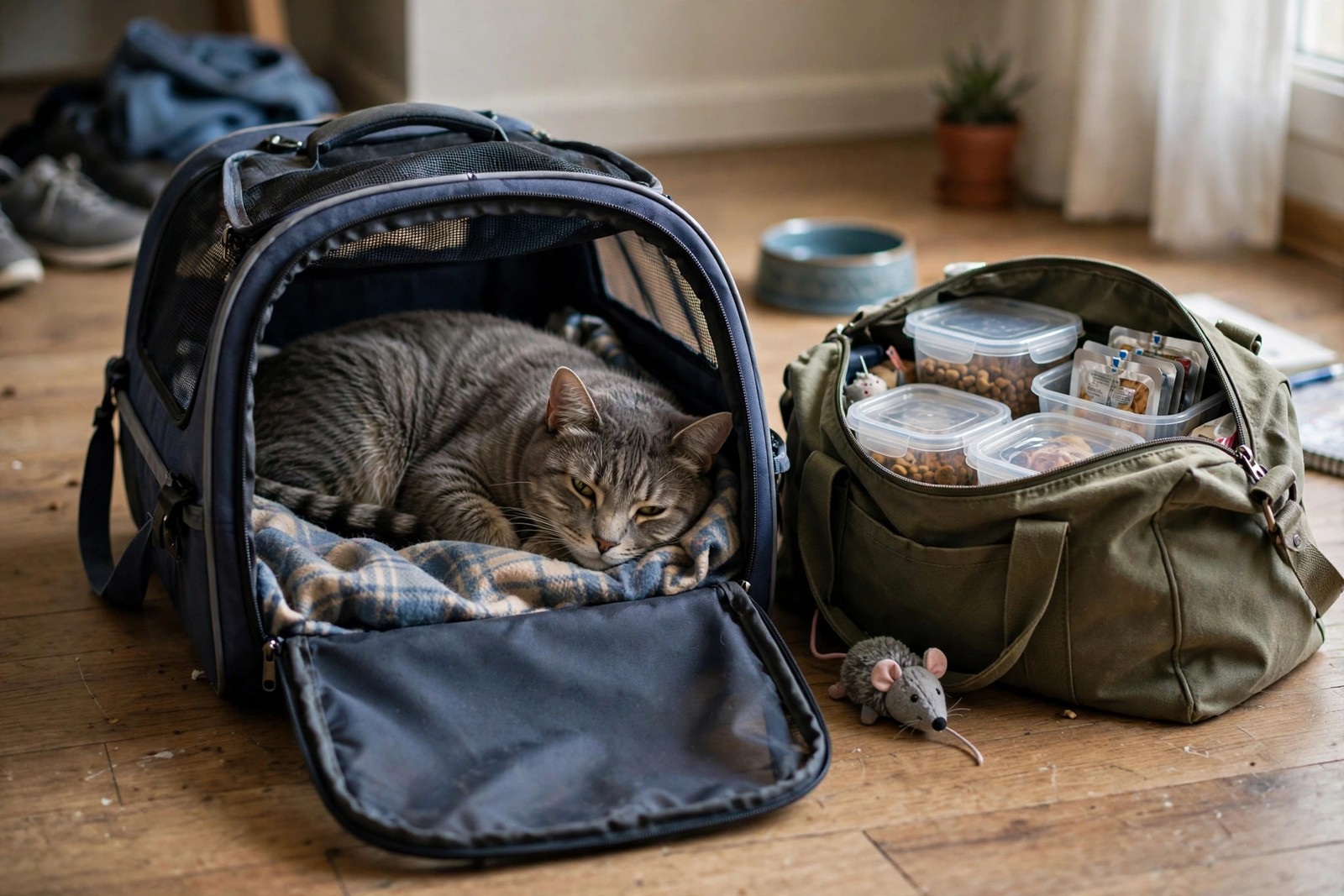
A week is a long time in cat time, and a cat cannot be told you are coming back. What preparation can do — and it does a great deal — is shrink the strangeness: a place already visited once, people already met, food that tastes the same, bedding that smells of home, and a daily routine the caregivers can follow because somebody wrote it down.
Finding and Comparing the Care First
The working step is choosing where the week happens. This search runs through the Pet Services Directory on KinsLe: local boarding and sitting services gathered in one place, so you can compare real nearby options rather than betting the week on a single recommendation. Shortlist two or three, then visit the facility or meet the sitter before booking — never let drop-off day be your first sight of the place. Ask what a day actually looks like: where cats sleep, how much human contact they get, how feeding and litter are handled, and what happens if a cat stops eating or seems unwell. Ask what the service requires of you, too; vaccination is commonly required for boarding, and any health conditions or daily medications should be declared early, described exactly as prescribed, so the service can judge honestly whether it can cope.
A Trial Stay Before the Real Week
Where a service allows it, a short trial — one night, or even a day visit — before a first long stay is a kindness worth arranging, because it converts the unknown into the merely unfamiliar for everyone involved. The cat learns the sounds, smells, and staff of the place in a stay short enough to end well, and you learn how the cat actually does: eating, hiding, recovering afterward. For a home sitter, the equivalent is a meet at your apartment while you are there, plus one practice visit before the week itself.
Packing a Week of Normal Life
Pack continuity, not novelty. Send the cat's usual food for the entire stay plus a spare day, measured out as it is served at home, because a sudden diet change in a strange place is a reliable route to an upset stomach and a refused bowl. Add bedding that smells of home — a blanket or bed the cat has actually been sleeping on, not a fresh-bought substitute — a favorite toy, and the litter type the cat is used to if the arrangement calls for it. Write the routine down in plain language: feeding times and amounts as served at home, litter habits, hiding places and how the cat likes to be approached, handling likes and dislikes, and the quirks caregivers would otherwise learn the hard way.
Two Students, One Checklist
Divide the preparation the way you would divide any shared coursework. One student books the service and owns the calendar — drop-off, pickup, the trial date. The other owns the cat's side: food measured, bedding gathered, routine written, records assembled. Both students' phone numbers go to the service, with an agreed order for who gets called first and who can authorize emergency veterinary care, because a week away often means one phone off, in transit, or out of coverage. Check the list together the night before, and expect the cat to need a quiet day or two after the return.
Carrier Practice at Home
However good the destination, the journey starts with the carrier, and for many cats the box itself is the worst omen of the week. Take the dread out in advance: leave the carrier open in the apartment for days beforehand with bedding inside, feed treats in it, and let the cat nap there by choice, so on travel day the box is furniture, not a trap. Chosen early, tried briefly, and packed with familiar things, a week away becomes an experience the cat can handle, and searching KinsLe's Pet Services Directory early is what leaves time for visits and a trial night.