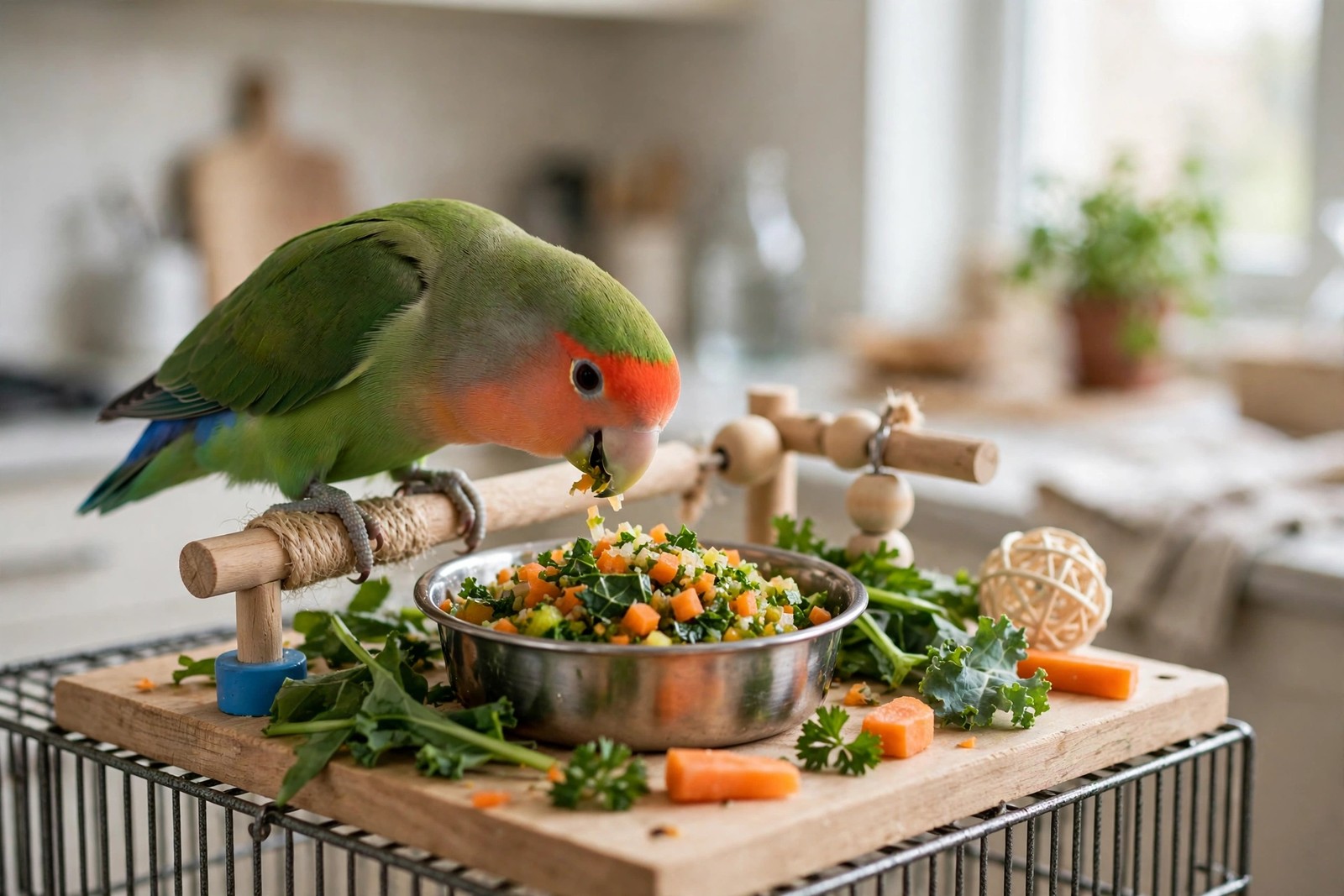
A seed-only lovebird is eating the bird equivalent of a snack bowl at every meal. Seed mixes are high in fat, low in calcium and vitamin A, and birds pick out their favourite sunflower and safflower seeds first, leaving the rest. In the wild, lovebirds eat grasses, fruit, berries, buds and green matter as well as seed, and a pet bird's bowl should reflect that range.
Start With a Pellet Base
For most pet lovebirds, a good-quality formulated pellet makes the most reliable foundation, because every mouthful carries a balanced mix of protein, vitamins and minerals instead of letting the bird self-select the fattiest items. Offer pellets in the main bowl through the day and think of everything else as building around that base. If your bird has only ever eaten seed, switch gradually over several weeks: mix a small proportion of pellets into the seed, raise the share slowly, and watch droppings and weight so you know food is actually being eaten rather than just moved around. A bird that stops eating during a diet change needs a prompt call to an avian vet, because small birds lose condition quickly.
The Fresh Food That Matters Most
Fresh vegetables should appear daily. A finely chopped mix — often called chop — suits a lovebird's small beak and encourages them to try several foods at once. Strong everyday choices include dark leafy greens such as kale, chard and bok choy, plus broccoli florets, grated carrot, cooked sweet potato, bell peppers with their seeds, zucchini, peas and sweetcorn. Wash everything, chop it small, and serve it fresh in the morning when appetite is keenest. Remove uneaten fresh food after a few hours so it does not spoil in a warm room.
Fruit comes next, in smaller amounts because of its sugar: a blueberry, a small cube of apple without the pips, a piece of mango, papaya or melon. Think of fruit as the garnish, not the course.
Foods and Habits to Avoid
Never offer avocado, chocolate, caffeine, alcohol, onion, garlic in quantity, or salty and fatty human snacks — several of these are genuinely toxic to parrots, not just unhealthy. Limit millet sprays and sunflower seeds to training rewards and foraging toys, where they earn their keep by making the bird work and explore. Scatter a little chop through shredded paper or a foraging tray and the new diet also becomes enrichment.
Fresh water matters alongside food: replace it daily, and more often if your lovebird bathes in or soils the bowl, as many cheerfully do.
Reading Whether the New Diet Is Working
A lovebird thriving on a broader diet shows it: bright eyes, smooth tight feathers, steady weight, formed droppings and an active interest at the food bowl. Dull feathering, flaking around the beak, persistent loose droppings or weight loss are reasons to review the menu with an avian vet rather than adding random supplements. Change one thing at a time, keep notes for a fortnight, and let the bird's condition judge the result.
Getting the whole household to serve pellets as the base, chop in the morning and seed only as a treat is where KinsLe's Care Teams earns its place, because you can assign each feeding duty per bird, and the timestamp on every completed task shows the fresh food really went in and the leftovers really came out.