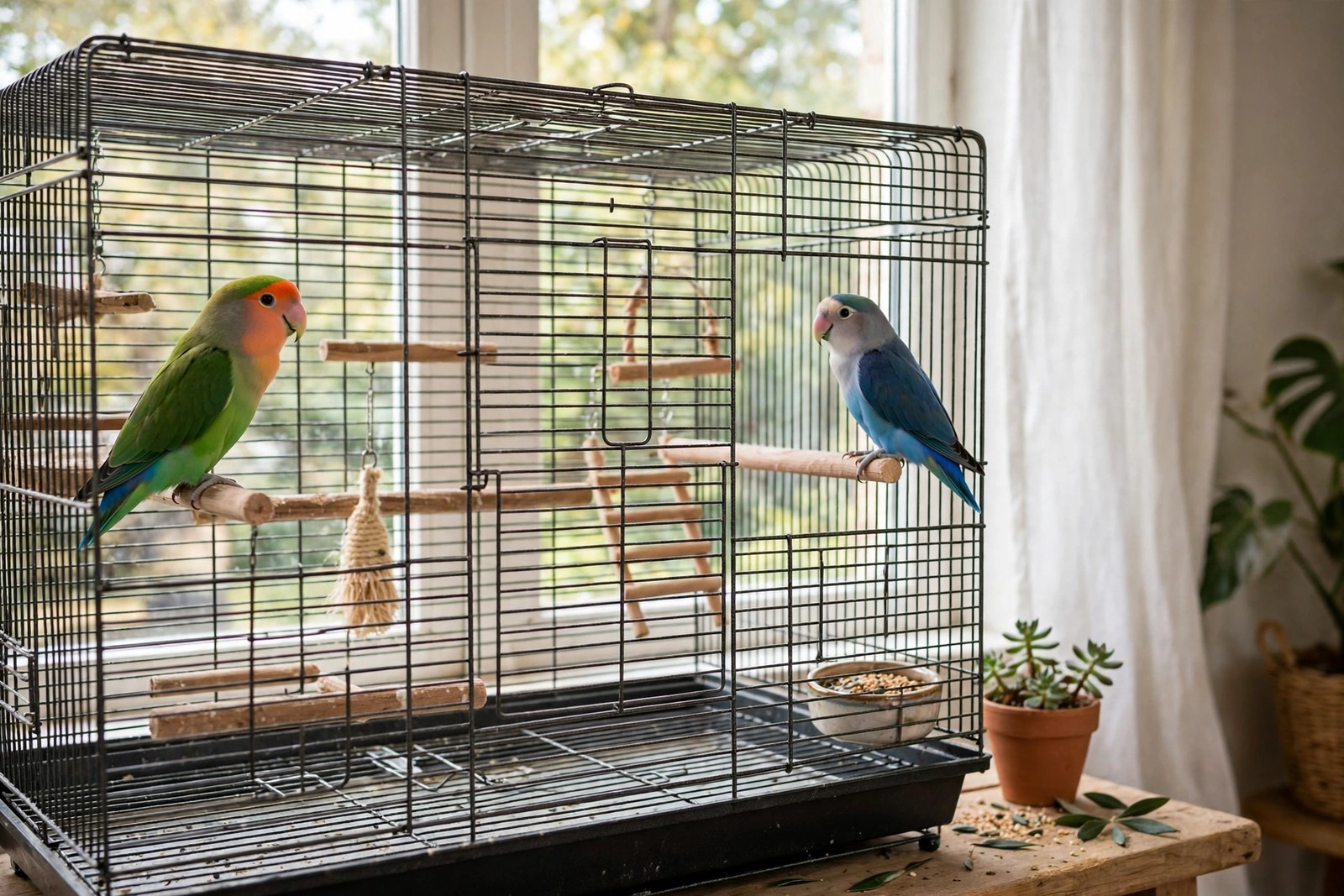
Lovebirds are small, but they are strong, busy fliers, and a tall narrow cage wastes most of its volume on air they cannot use. Lovebirds fly horizontally, climb constantly, and argue enthusiastically, so width, floor space, and an escape route from a cage mate matter more than decorative height.
The Dimensions That Matter
For a single lovebird, treat 18 inches wide, 18 inches deep, and 18 inches high as the floor, not the goal. For a bonded pair, start at 24 inches wide, 18 inches deep, and 24 inches high, and choose a flight cage around 32 inches wide whenever space allows, because that extra width is the difference between hopping between perches and actually flying. Two birds also need room to separate: a cage where one bird can retreat from the other prevents the squabbles that cramped pairs develop. Remember that daily out-of-cage flying time improves life greatly, but it does not shrink the minimum, because the cage is still where the birds sleep, eat, and spend every hour you are out.
Bar Spacing and Build
Bar spacing for lovebirds should be about three-eighths to half an inch, and no wider than half an inch: wider gaps invite a head pushed through and trapped, one of the commonest cage accidents in small parrots. Choose horizontal bars on at least two sides, because lovebirds climb bar by bar and use the walls as a ladder. Check the finish: sound powder coating or stainless steel, no chipped or flaking paint, no sharp welds. Doors need latches a clever beak cannot lift, and feeder doors are a favourite escape route, so secure them. A slide-out tray and grate make daily cleaning realistic, which in practice decides whether it happens.
Fitting Out the Space
Place perches of varied diameter, including natural wood, at different heights, but keep them out of the line above food and water bowls, and leave a clear flight path from end to end rather than filling the middle with toys. Hang toys and foraging items at the sides, add a swing if your birds enjoy one, and position the cage at roughly chest height in a room with daylight, away from kitchen fumes, drafts, and direct midday sun through glass. If a pair begins to bully, the real fix is a second cage, not a bigger shared one.
Living With the Cage You Chose
Measure your actual space, including door swing and cleaning access, before ordering, and buy for the pair's adult life rather than the babies you bring home. KinsLe's Care Teams keeps the new cage's routine running by assigning the daily tray and paper change, water and bowl washing, and the weekly deep clean to named household members, each job timestamped when it is done.