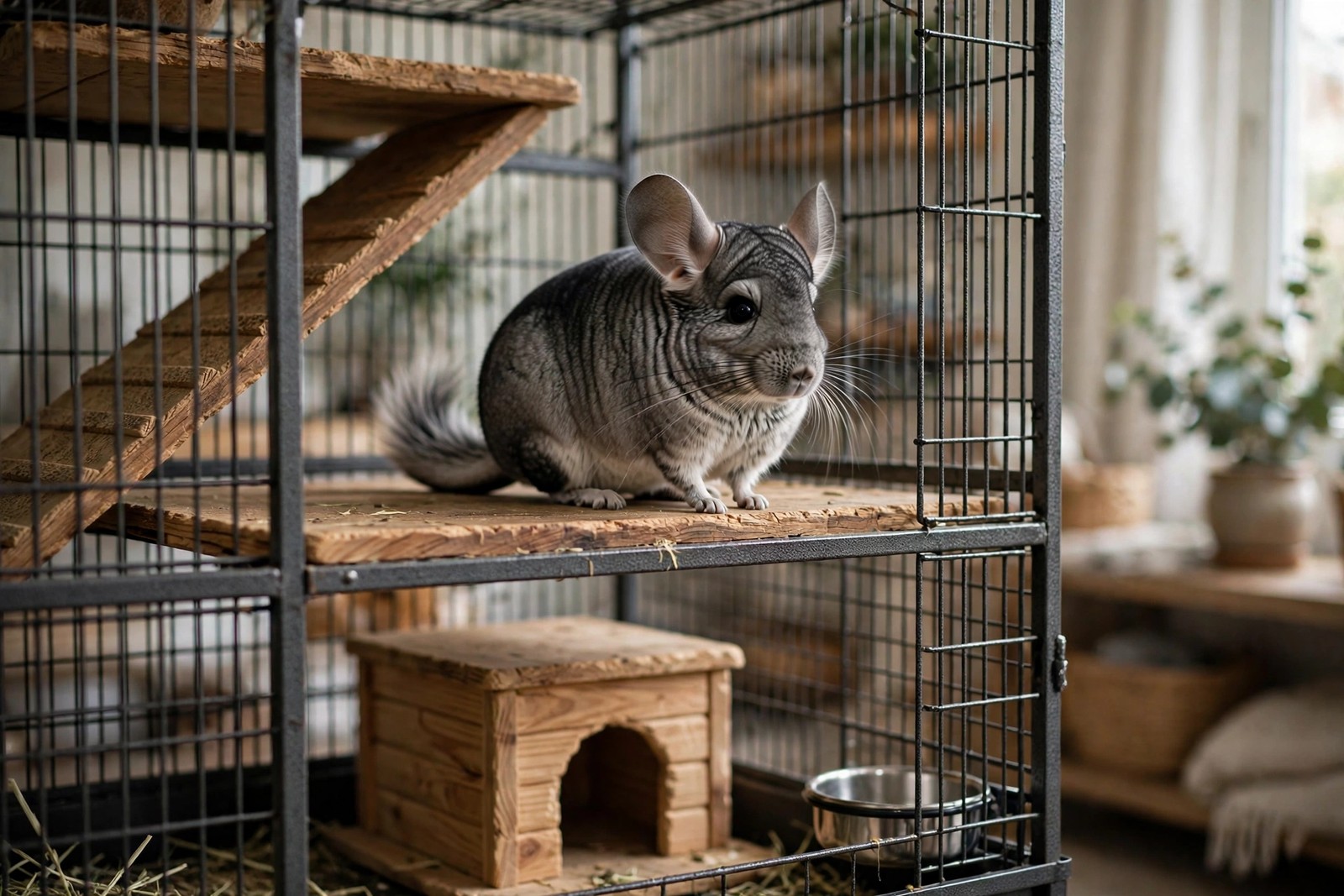
A chinchilla cage is closer to a small climbing tower than to a hamster cage. Plan on at least roughly 24 inches wide, 24 inches deep and 36 inches tall for a single chinchilla, and go larger whenever the room allows — a pair, in particular, needs the extra levels and floor space to rest apart as well as together. Chinchillas are athletic, long-lived rodents, and a cage that is too small shows up quickly as boredom chewing, restlessness at dusk and a coat kept in poor condition.
Using Height Properly
Height only counts if the chinchilla can use it safely. Fill the cage with solid shelves, ledges and platforms at staggered heights so the animal can hop from level to level rather than face a single long drop. Shelves of solid metal or kiln-dried pine give grip and survive chewing; a fall onto a hard base can injure legs, so break up vertical space into short, easy jumps and avoid tall, empty designs.
Floors and ramps should be solid rather than bare wire mesh, which can trap toes and sore feet over time. If part of the base is mesh, cover the areas where the chinchilla sits and feeds most with a solid, washable surface, and check feet regularly for redness.
Bars, Spacing and Chew-Proofing
Choose an all-metal cage. Chinchillas chew persistently and can work through plastic trays, clips and shelf edges, swallowing fragments and escaping through the hole they made. Bar spacing should be no wider than about one inch for an adult, and closer to half an inch for a young or small chinchilla, because heads and bodies squeeze through gaps that look secure. Doors need firm latches, since a chinchilla will learn to test a loose one.
Inside, expect every fitting to be gnawed. Use metal or safe wooden accessories, provide a wooden hide house rather than a plastic one, and inspect shelf edges and ledges weekly for sharp, chewed points. A solid-surface exercise wheel, if you add one, should be large — around 15 inches across — so the back stays flat while running, and it supplements rather than replaces cage space and supervised out-of-cage time in a chinchilla-proofed room.
Placement and Daily Fit
Set the cage in a cool, quiet, well-ventilated room away from radiators, direct sun and damp, because chinchillas tolerate cold far better than heat and humidity. Leave room in the layout for a dust bath to be offered several times a week outside or inside the cage, a hay rack, a heavy food bowl and a water bottle fixed where it cannot be knocked from its holder. Recording the cage dimensions, shelf arrangement and dust-bath days in KinsLe Family Sharing helps anyone who pet-sits rebuild the same layout after a deep clean instead of guessing.