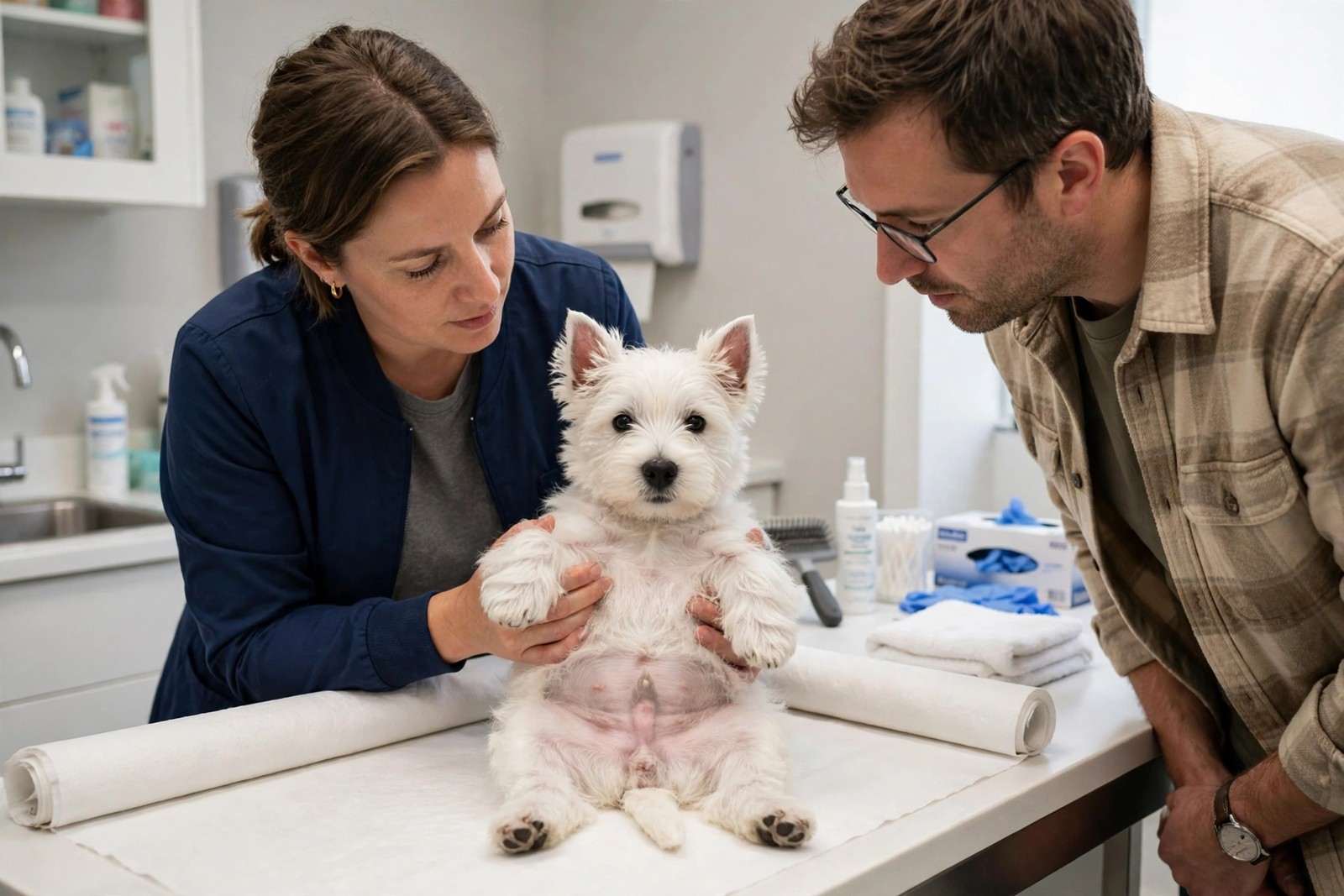
West Highland White Terriers carry a breed reputation for delicate skin, and any honest conversation about choosing one starts there. The breed is known for skin sensitivity and allergy-type trouble: itchy skin that flares and settles, sore patches where the dog has scratched or licked, and recurring irritation that a veterinarian works to explain. That predisposition does not mean every Westie suffers, and it does not let anyone forecast a particular puppy's future. It does mean the breeder interview matters more for this breed than for many others, because the parents' history is the best evidence available to you.
Ask about either parent's skin history
Put the question directly to both parents, not just the mother you may meet. Has either parent ever had itchy or inflamed skin, recurring ear trouble alongside skin trouble, or patches of hair loss? A breeder who keeps good dogs and good records can answer in specifics: which parent, at what age trouble first appeared, and how often it has come back. A breeder who waves the subject away, or who insists the breed has no skin issues at all, has told you something important. Also ask whether the breeder would still breed from a dog that had needed repeated veterinary attention for its skin; the answer shows how seriously the predisposition is weighed in that kennel's decisions.
Ask about past episodes and their patterns
Patterns are what veterinarians think in, so collect them while you can. When episodes happened in the past, did they follow the seasons, turning up in particular months and clearing in others, or did they run year-round? Where on the body did trouble show first: paws, belly, armpits, ears? How long did an episode last, and what did the veterinarian record as the working explanation at the time? Did littermates from earlier litters develop anything similar that the breeder has heard about since? None of this lets you diagnose a puppy, and it should not be used that way. It builds the background file that makes a future veterinarian's job faster and more accurate if your dog ever does develop skin trouble of its own.
Ask what the veterinarian has recorded, and look at the puppies now
Request the parents' veterinary records on skin, or at least a summary the breeder is willing to share, and ask what the puppies' own first examinations recorded. Then look at the litter with your own eyes. Healthy puppy skin is clean and calm: check bellies, armpits, groins, and between the toes for redness, flaking, odor, or thinning hair, and watch whether any puppy is scratching, chewing at a foot, or rubbing along the bedding more than its littermates. One sleepy scratch proves nothing, but visible irritation across several puppies, dismissed without explanation, is a reason to walk away from that litter however appealing the puppies are.
Be equally clear about the limits of what you are seeing. Clear skin at eight weeks does not promise clear skin at two years, because allergy-type trouble in this breed often appears as a dog matures. Anything a puppy of yours develops later is a possibility a veterinarian investigates at the time, using the history you gathered, not a problem you are expected to solve from a breeder's remarks.
Filing what you learn
Gathering this material only pays off if it survives the journey home and the years that follow. The puppy's health packet is where it belongs: on KinsLe, the Pet Passport packet for the puppy holds the parents' skin histories, the breeder's episode notes, and the first examination record together, and that packet is genuinely carried to each veterinary visit rather than left in a drawer. When a new veterinarian asks when a parent's trouble started or whether it followed the seasons, the answer is in your hand. A breeder who answers openly gives you pages worth filing in a Pet Passport record kept on KinsLe, ready for the first skin conversation with your own vet.