
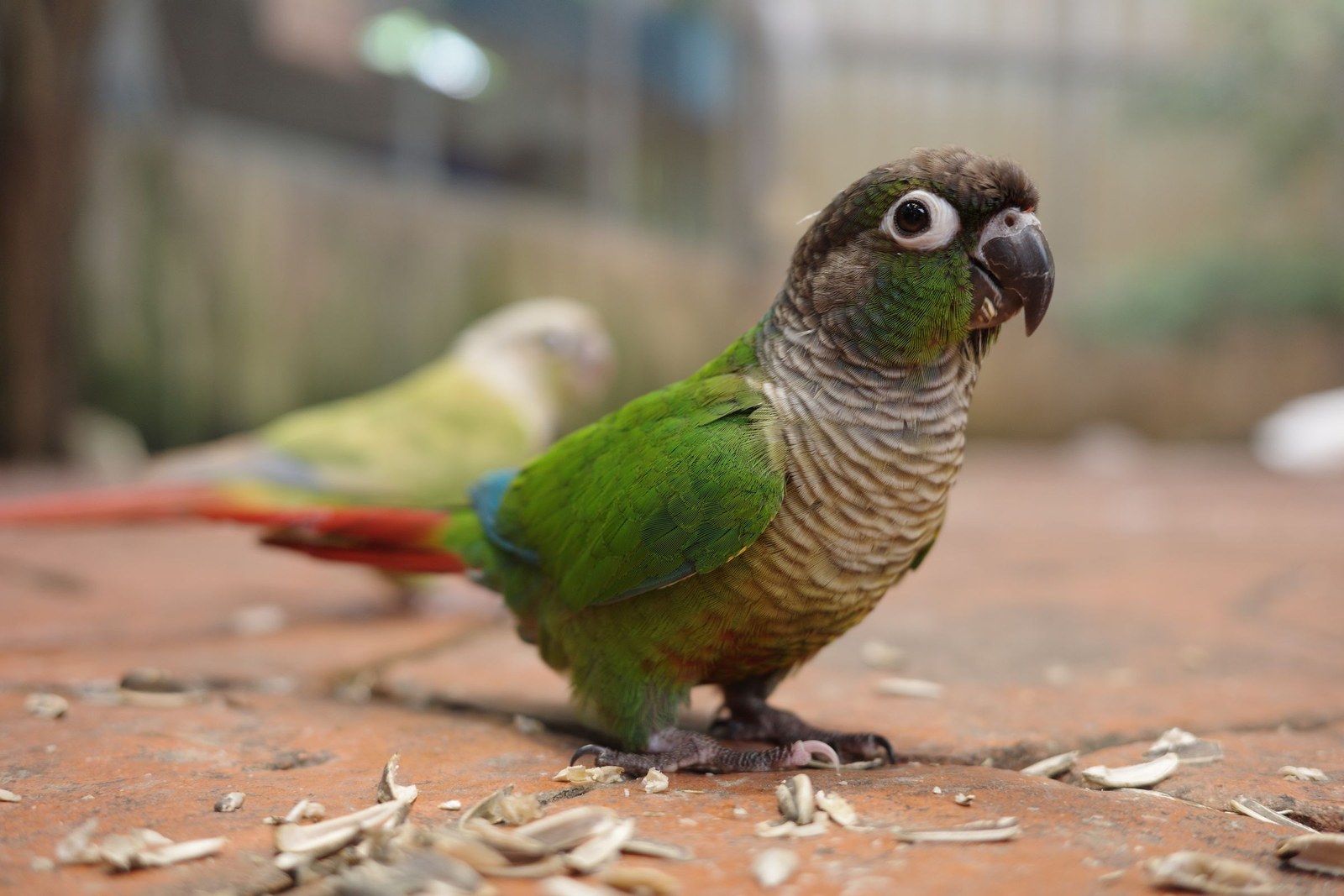
Your conure actually needs three kinds of enrichment: toys it can destroy, puzzles it can work for food, and time out of the cage to play with you. Conures — green-cheeked, sun, and their cousins — are busy, clever, clownish birds, and a conure with nothing to do will invent entertainment, usually involving your baseboards, your earbuds, or screaming for an audience. The goal is not more toys; it is the right rotation of jobs for that beak.
Shreddable and chewable toys
Destruction is a feature, not a flaw. Offer toys built from materials meant to be dismantled: balsa and cork wood, woven palm and seagrass, paper and cardboard, and vegetable-tanned leather strips. A toy your conure reduces to splinters in a week was money well spent — it absorbed energy that would otherwise go into feather-chewing or cage-bar rattling. Keep one satisfying "big project" toy in the cage at all times.
Foraging: make food a job
In the wild, eating takes hours of searching; in a cage, it takes four minutes from a full bowl. Close that gap:
- Wrap treats or favourite pellets in paper cups or small cardboard boxes
- Thread vegetables on a stainless skewer instead of serving them in a dish
- Hide a nut inside a woven foraging ball or a toy with drawers and lids
- Scatter a portion of the diet in a tray of shredded paper for ground-foraging species
Start easy so your conure learns the game, then raise the difficulty as it gets faster.
Social play and bathing
Enrichment includes you. Daily out-of-cage time for flying, exploring a play stand, and simple training games — target training, recall practice, learning to wave — works a conure's brain as hard as any puzzle. Most conures also adore water: a shallow dish to splash in, a perch near a gentle shower, or a misting session turns hygiene into play. A bird that is tired from playing by evening is a bird that sleeps quietly through the night.
Safety checks that keep fun safe
Inspect toys weekly. Remove anything with frayed cotton rope (switch to sisal, jute, or leather), cracked plastic that can splinter, peeling bells with loose clappers, or zinc- or lead-containing hardware. Use stainless steel quick links, and size toys for a conure — toys built for budgies break too easily, while macaw-sized blocks may simply be ignored.
How KinsLe helps
When a rotation stalls or a foraging cupboard runs low, the questions worth bringing to Kinny in KinsLe are practical ones: how often this conure's toys should change, which shreddable materials will hold its interest next, and what treats to restock before the foraging games go stale. Questions that arise between rotations — is this wood safe to chew, how small can foraging pieces be — can go to Kinny in KinsLe, whose follow-up answers draw on the KinsLe Answers library.