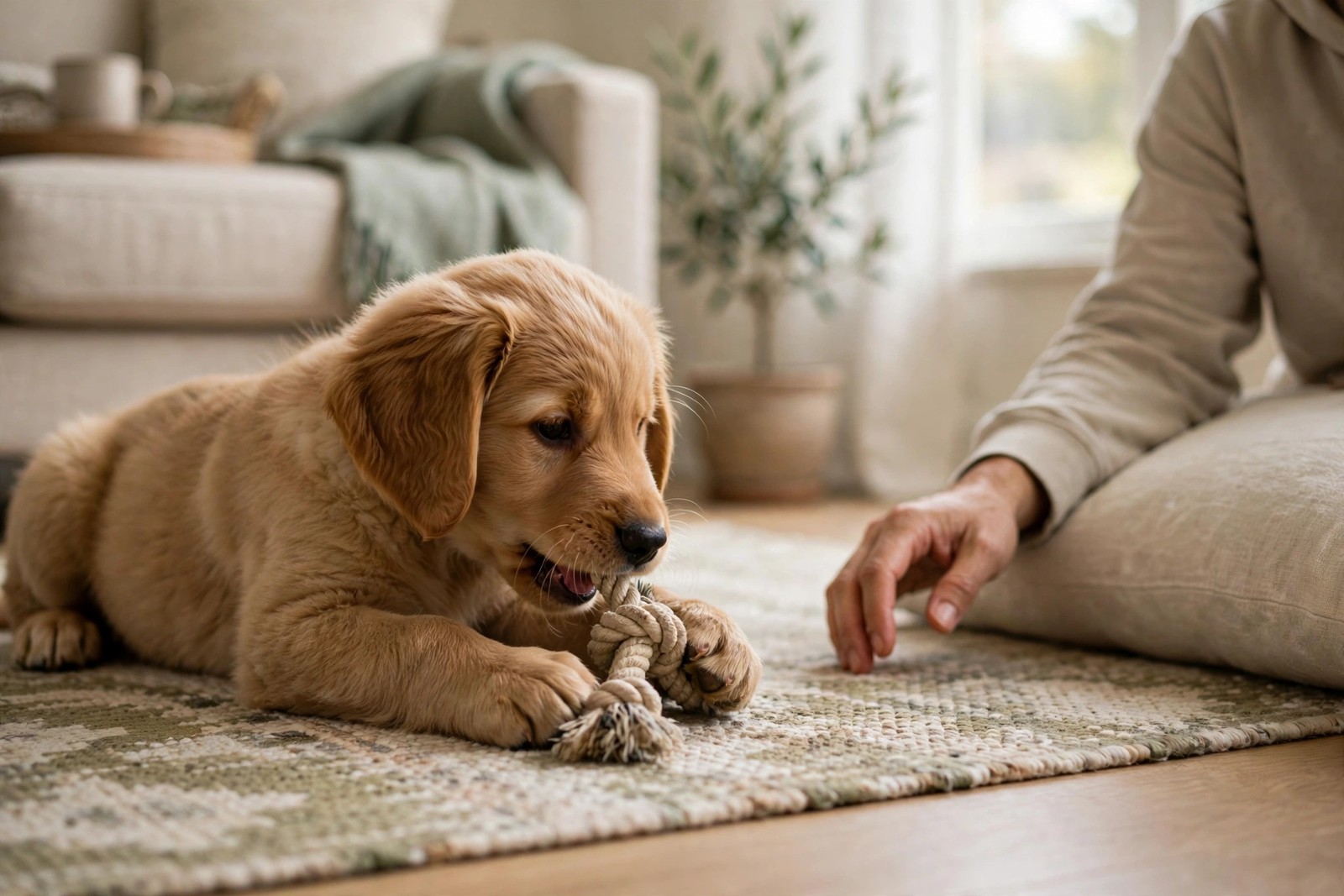
Puppies explore the world mouth-first, and ordinary mouthing in play is how a puppy learns bite inhibition: how hard is too hard, and what happens when teeth meet skin. Normal mouthing has a recognizable feel. The pressure is soft, the puppy's body is loose and wiggly, ears and tail move freely, and play flows in bursts with natural pauses. A puppy who mouths normally can be redirected to a toy, can settle after a pause, and softens pressure over the weeks as feedback lands. The lines below mark where that picture changes.
Signs the Mouthing Has Left Normal Play
Discuss your puppy with a trainer or vet when bites regularly break skin, or when pressure is getting harder instead of softer as the weeks pass. Pay attention, too, when your puppy cannot disengage: play stops, you go still and quiet, and the mouthing escalates anyway, with your puppy returning again and again and becoming more frantic rather than less.
Context matters as much as pressure. Mouthing that arrives with a stiff body, a hard, fixed stare, freezing over a toy or food bowl, or growling when approached is not play mouthing at all; it is guarding or warning behavior that needs a professional assessment. So does mouthing aimed repeatedly at faces, or targeted at children and visitors despite consistent redirection from every adult in the house. A good trainer will assess pressure, arousal, and context together rather than labeling a puppy from a description, so describe exactly what happens, in what order, and what your puppy does afterwards.
The Vet Side of the Conversation
Mouthing that changes suddenly, or a puppy who was soft-mouthed and becomes snappy, deserves a vet conversation as well as a training one. Teething gums are sore, ears and teeth can hurt, and an over-tired puppy has far less control over pressure than a rested one. Mention sleep, teething, appetite, and any yelping, head-shaking, or chewing on one side of the mouth at that visit, and let your vet rule out pain before anyone treats the behavior as defiance. Do not expect a firm conclusion from a description alone, including this one; the value of the visit is a hands-on look at the puppy in front of them.
What to Do at Home While You Arrange Help
Keep the home response identical for everyone: when teeth touch skin, pause the game, go still, and offer a toy to redirect onto; if mouthing continues, end the session calmly and give your puppy a chance to rest, because wild evening mouthing is often exhaustion wearing a disguise. Provide legal chew outlets, rotate toys, supervise every interaction with children, and separate your puppy with a gate or pen for rest rather than as punishment. Keep a chew within reach during the wild evening hour in particular, because a tired puppy at that hour readily chooses hands and sleeves over toys. Never hold a puppy's muzzle shut, tap the nose, or scruff in response to mouthing; those responses add fear or turn the exchange into a rougher game, and both make pressure worse.
Note what you see for a week, meaning the time of day, what happened just before, how hard the contact was, and how your puppy recovered, and take that note to the trainer or vet. With KinsLe Care Teams, you can assign that shared pause-and-redirect response and the daily note as duties across the household, each marked complete with a timestamp, so your puppy hears one consistent rule while you gather the picture a professional needs.