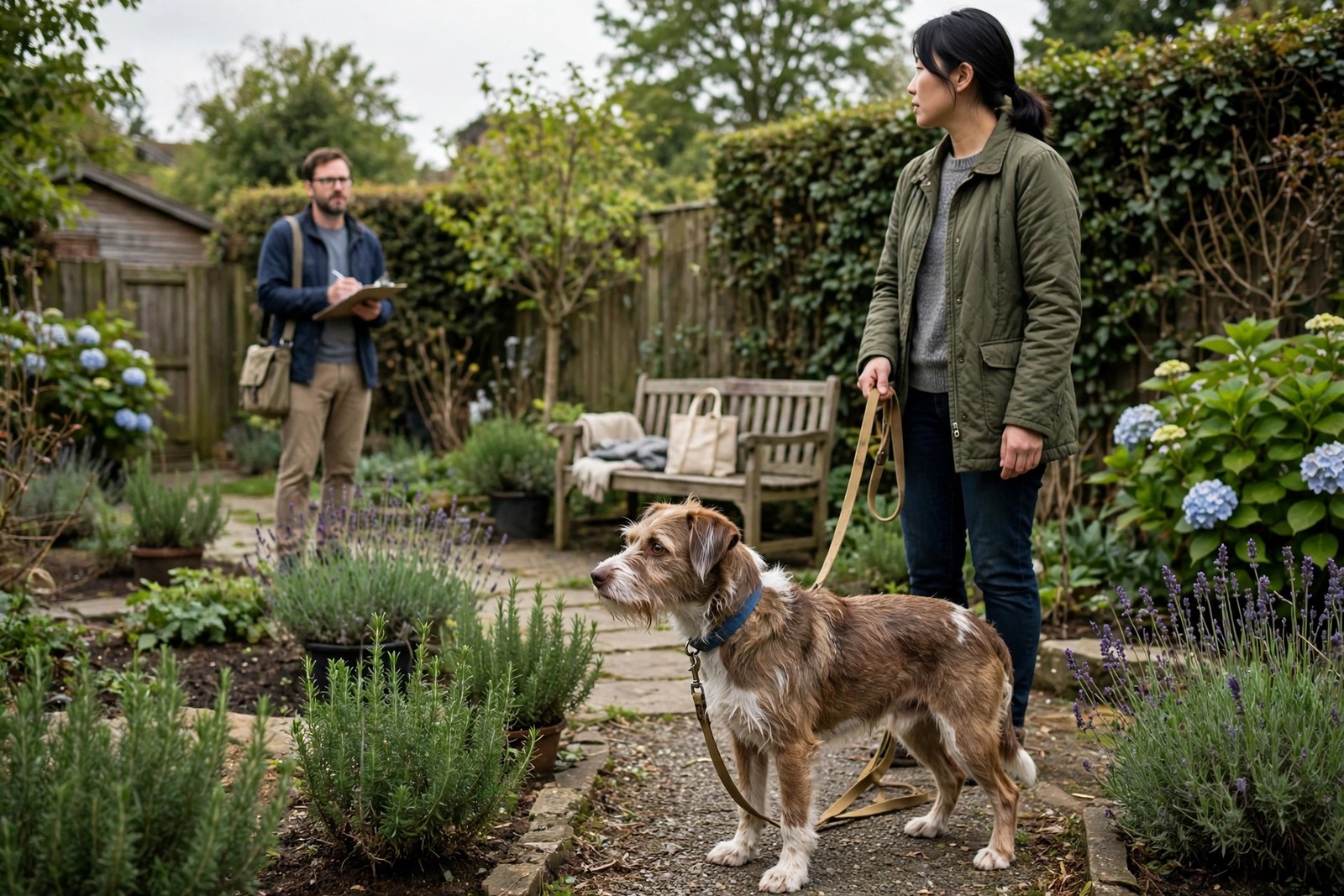
The dividing line: cannot, or cannot cope
The cleanest way to choose is to ask what is actually broken. If your dog understands life fine but lacks a skill, you need a trainer: the recall that fails at the park, the pulling on the lead, the jumping on visitors, the puppy who has not yet learned the house rules. These are education gaps, and a good trainer closes them with structured practice.
If your dog knows the skill but emotion stops her using it, you need a behaviourist. The dog who can walk beautifully on an empty street but panics and lunges when another dog appears is not being disobedient; she is overwhelmed. Fear, anxiety, frustration, and aggression are emotional states, and changing them takes a behaviour modification plan built on assessment, not just more repetitions of an exercise.
Signs the problem belongs with a behaviourist
Aggression is the clearest signpost. Growling, snapping, lunging with intent, guarding food or resting places, or any bite, however minor it felt, deserves behaviourist-level assessment because the risk of someone being hurt changes the stakes and the plan. The same applies to fear that structures your dog's day: hiding from visitors, trembling through storms or fireworks, refusing walks, or being unable to settle in ordinary situations.
Separation problems that involve panic, self-injury, destruction aimed at exits, or howling for hours belong here too, as do repetitive behaviours such as tail chasing, shadow chasing, flank sucking, or licking that the dog seems unable to stop. Reactivity that is intensifying month by month despite consistent reward-based training is another strong signal, as is any problem where you have stopped inviting people over or started dreading walks. When a behaviour is shrinking your dog's world, it has outgrown a training class.
Where the vet fits into the picture
Behaviour and health are braided together, and the behaviourist route usually starts with your vet. Pain is a common, under-recognised driver of irritability, reactivity, and aggression, and a dog who snaps when touched may be reporting a sore joint or ear rather than a training failure. Sudden behaviour change in an adult dog, in particular, should always trigger a health check before any behaviour plan, because treating the training while missing the cause helps nobody.
Many qualified behaviourists work on veterinary referral for exactly this reason, and the strongest setup is a triangle: vet ruling out or treating medical factors, behaviourist designing the emotional rehabilitation, and sometimes a trainer helping you rehearse the practical exercises within that plan.
Making the call and what to expect
Start by writing down what actually happens: the trigger, your dog's response, how often, how intensely, and how long she takes to recover. That record, plus any video you can capture safely without provoking the behaviour, is gold for an initial consultation. Expect a behaviourist to take a long history, observe your dog, give you management steps to keep everyone safe straight away, and then build change gradually over weeks to months.
Choose credentials as carefully as you would for any professional: degree-level study in animal behaviour, recognised clinical accreditation, reward-based methods, and willingness to work with your vet. Be cautious of anyone offering to fix aggression quickly or through confrontation, because suppressing the warning signals of a frightened dog makes the eventual bite more likely, not less. Acting earlier is nearly always cheaper, safer, and kinder than waiting for a crisis to make the decision for you.
Once you know which professional your dog needs, finding one locally becomes a practical search rather than a guess. KinsLe's Pet Services Directory brings local trainers, behaviourists, and other pet services together in one place where you can connect with them, so the dog whose world is shrinking gets the right kind of help booked.