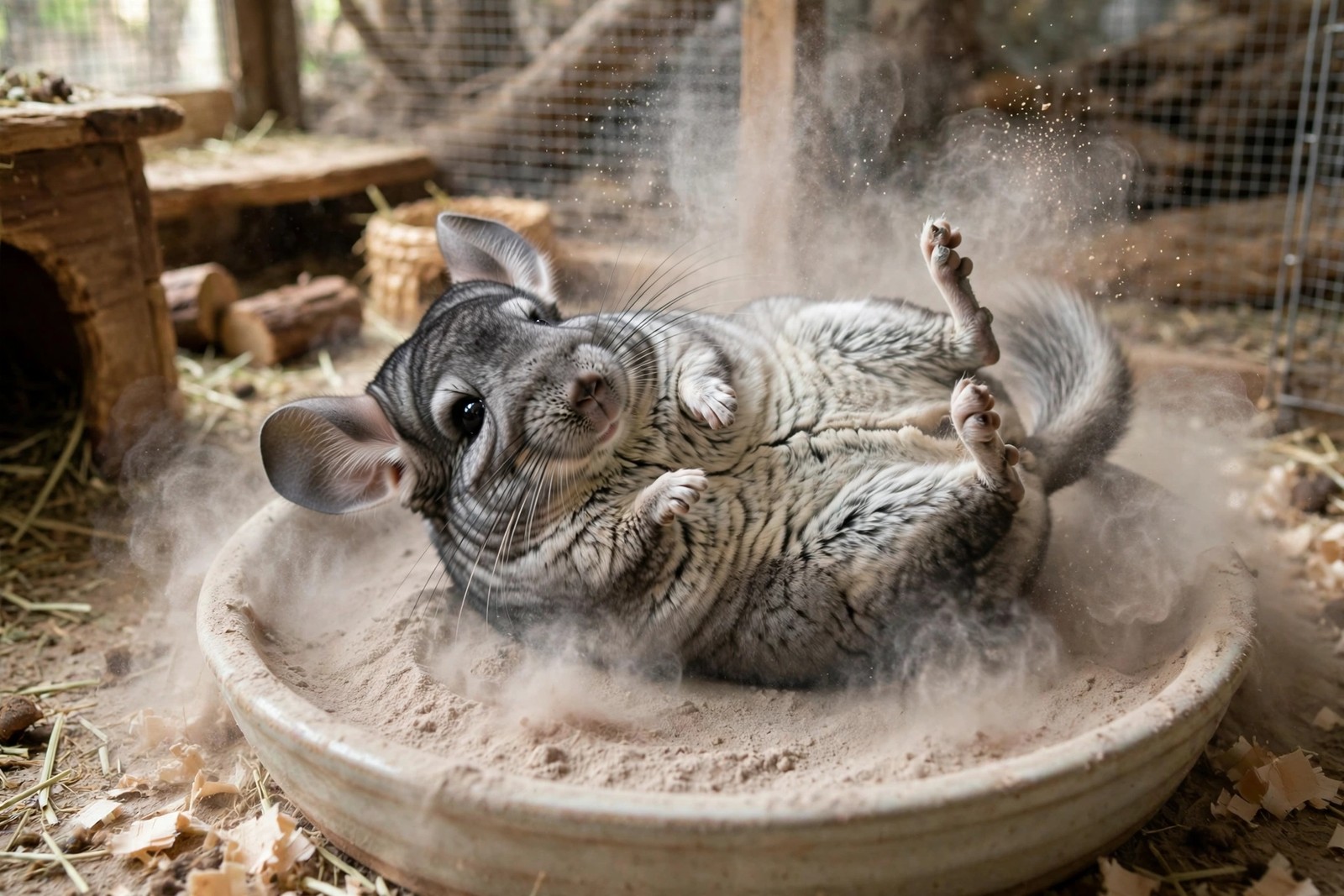
A chinchilla's coat is unlike the fur of almost any other pet. Dozens of fine hairs grow from each single follicle, packed so tightly that the coat feels like solid velvet and parasites struggle to reach the skin. That density is wonderful in the chinchilla's native high, dry, cold mountains, and it is exactly why water is dangerous: once water works its way down through that packed fur to the skin, air cannot circulate to dry it, and the coat can stay damp against the skin for many hours after the surface feels dry.
What Trapped Water Actually Causes
Warm, damp skin under an airless coat is where trouble starts. Fungal skin infections take hold readily in a coat that never fully dries, showing up as flaky patches, hair loss, and intense itching that a chinchilla scratches into sores. Wet fur mats into dense clumps that pull at the skin and cannot be combed out the way a dog's coat can, sometimes leaving the coat needing to grow out rather than be rescued. Chilling is the faster danger: a small animal soaked to the skin loses body heat quickly, and a chinchilla that stays wet in a cool room can become dangerously cold, quiet, and hunched within a short time. A wet chinchilla also cannot groom itself back to normal, because its whole self-cleaning system is built around dust, not water.
Dust Baths Are the Real Bath
In the wild, chinchillas roll in fine volcanic dust, and pet chinchillas need the same routine. Offer a sturdy bowl or bath house of fine chinchilla dust, never sand, which is too coarse for that delicate coat, for around ten to fifteen minutes several times a week. The rolling is unmistakable: the chinchilla dives in, flips and spins, and emerges shaking out a cloud. The dust works through the fur, absorbs the natural oils and loosened dirt, and falls back out, leaving the coat dry, loose, and gleaming. Leave the bath in too long and some chinchillas will use it as a toilet, so short, regular sessions beat a permanent dust fixture, and very frequent bathing can dry the skin, so more is not automatically better.
If a Chinchilla Gets Wet by Accident
Accidents happen around spilled water bowls and leaking bottles, so act on the drying, not the panic. Lift the chinchilla out gently, blot the coat with a soft towel without rubbing it into mats, and keep the animal in a warm, draught-free room while the fur dries fully, which takes far longer than you expect. Never use a hot hairdryer, which can overheat a chinchilla quickly and blow damp deeper into the coat. A merely splashed tail or paw is a small event; a chinchilla soaked across the body, especially one that shivers, goes quiet, or stays damp for hours, needs a vet's advice the same day. Check the damp area over the following days for flaking, redness, or hair slipping out in clumps.
Keeping Water Away Day to Day
Prevention is mostly setup: a correctly fitted sipper bottle instead of an open bowl the chinchilla can climb into, no bathing equipment anywhere near the cage, and clear instructions for anyone who helps care for the animal, because the dog-and-cat instinct to wash a dirty pet is strong and wrong here. Spot-soiled patches are best left to the next dust bath rather than wiped with a wet cloth. Homes that record the dust-bath routine and the strict no-water rule in KinsLe's Family Sharing give every family member and helper the same care notes, so the one rule that matters most for this species is never lost between people.