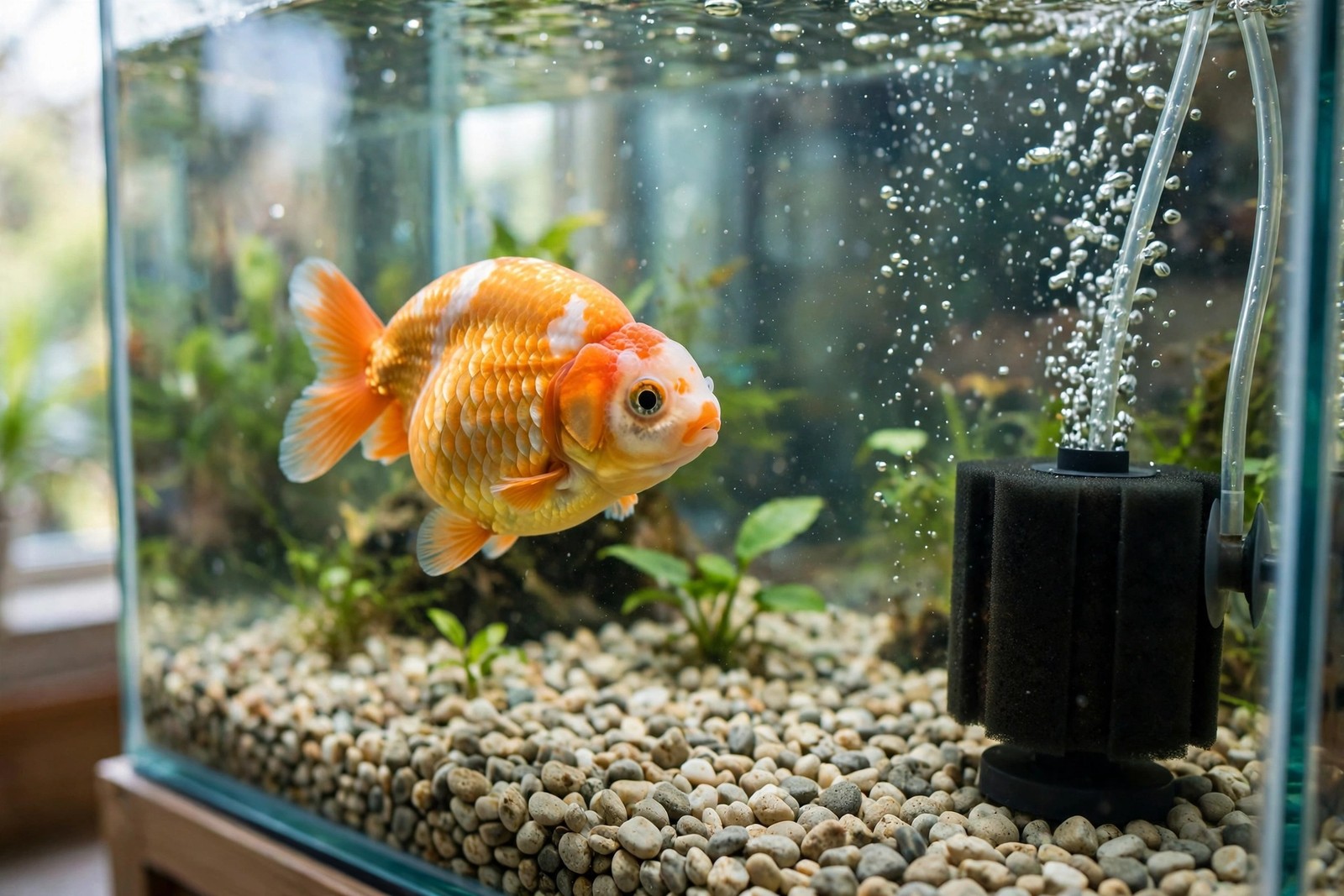
Goldfish have a reputation as dirty fish, and the reputation is earned by their anatomy. Many familiar aquarium fish have a stomach that holds a meal and releases it gradually; goldfish have no true stomach at all. Food travels from the mouth through a long, looping intestine where nutrients are absorbed on the move, and the remainder exits relatively quickly. With no storage chamber, a goldfish is built to graze and process food continuously — and to produce waste continuously in return, as solid droppings, as food debris, and as ammonia released directly into the water through the gills as protein is metabolised.
Why the Load Is So Heavy
Three factors multiply the output. First, appetite: goldfish remain eager feeders at almost any time of day and will keep eating well beyond need, so generous feeding converts directly into extra waste, both as droppings and as uneaten pellets decaying in the gravel. Second, body mass: a fancy goldfish is a deep-bodied, heavily built fish compared with a slender tetra of similar length, and bigger bodies process more food and excrete more ammonia. Third, growth: goldfish grow quickly in their first years and single-tailed varieties can reach substantial sizes, steadily outgrowing filters and water volumes that coped when they were small.
The result is a tank where ammonia production rarely pauses. In a healthy setup the filter's bacteria convert that ammonia through nitrite to nitrate, but the conversion does not remove the end product — nitrate accumulates until your water changes carry it out, and solid waste accumulates in the substrate until the gravel vacuum lifts it.
What This Means for Tank and Filter
House goldfish for the waste load, not the fish's current length. They need generous water volume per fish, strong filtration rated above the tank's size, and enough surface movement to keep oxygen high for both fish and filter bacteria. Small bowls and tiny unfiltered tanks fail this species precisely because there is nowhere for the waste stream to go: ammonia rises within days and the fish effectively poisons its own water. Stocking lightly matters as much as equipment — each added goldfish adds a full extra waste stream, and a tank that tests clean with two fish can slide quickly with four.
Feed with the anatomy in mind. Offer measured meals the fish finish within a couple of minutes, once or twice a day for adults, and favour sinking foods for fancy varieties so they swallow less air while feeding. Remove visible uneaten food, and remember that every extra pinch you add reappears as tank load within hours.
The Cleaning Rhythm That Matches the Biology
Weekly partial water changes of 25 to 50 percent, siphoning waste from the gravel as you drain, are the routine this species' output demands, with the share rising as fish grow or stocking increases. Rinse filter media in removed tank water when flow slows, replace media in stages so the bacterial colony survives, and test ammonia, nitrite and nitrate regularly — in an established goldfish tank, ammonia and nitrite should read zero, and a climbing nitrate reading between changes tells you the cleaning rhythm has fallen behind the fish.
Cloudy water, stringy droppings trailing from the fish, gasping at the surface or a sudden algae surge are all downstream symptoms of the same waste stream overwhelming the system. Answer them by testing and changing water first, not by feeding less nutritious food or adding treatments at random; if readings stay wrong despite prompt changes, or a fish stops eating or develops sores or clamped fins, consult an aquatic veterinarian.
Keeping feeds, test results and cleaning sessions in one shared record in KinsLe's Care Teams makes the cause and effect visible — when nitrate started climbing, the household can see whether portions crept up or a change was missed, and adjust the routine before the waste load turns into a health problem.