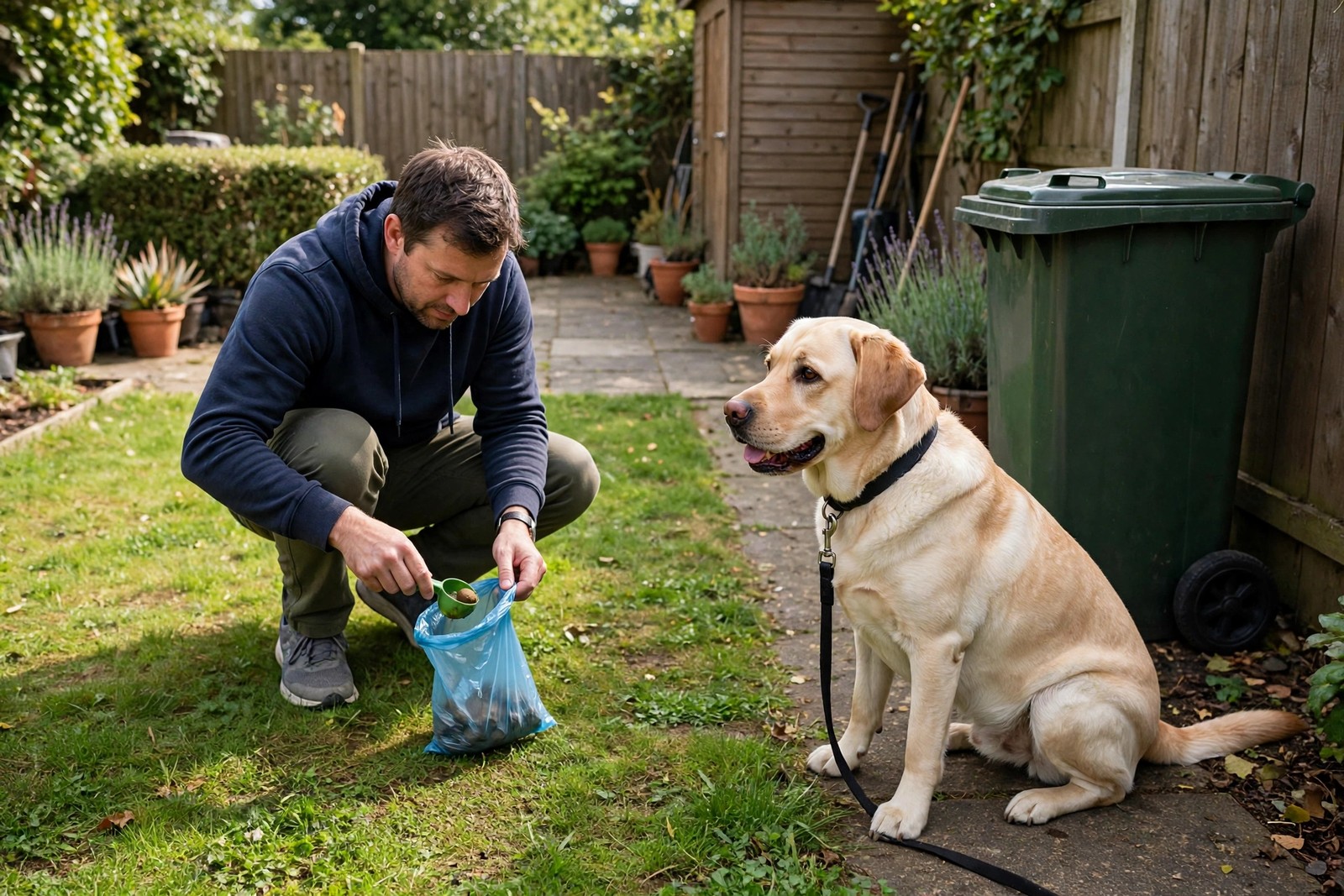
Few habits horrify owners like coprophagia, the eating of poop, yet it is common, especially in puppies, and it is rarely a sign that a dog is disturbed or defiant. Dogs experience the world through smell and taste in ways that do not map onto human disgust. Understanding which version your dog is practising tells you whether management, training, or a vet visit leads the response.
Why Dogs Do It
Several ordinary causes cover most cases:
- Puppy exploration. Young dogs mouth everything, and stool is available, soft, and interesting. Most grow out of it if it never pays off.
- Maternal behaviour carried forward. A mother dog eats her puppies' stools to keep the den clean, so the behaviour sits within normal dog wiring rather than outside it.
- Taste and leftovers. Stool can contain undigested food traces, and many dogs rate cat, rabbit, horse, and deer droppings as delicacies even when they ignore their own.
- Boredom and attention. A dog left in a yard with stools and nothing else will invent occupations, and a dog whose owner erupts at the sight learns that stools produce exciting human involvement.
- Anxiety about accidents. A dog scolded or punished for toileting indoors sometimes starts removing the evidence, which is one more reason accident punishment backfires.
- Health and digestion. A sudden new habit in an adult dog, especially with weight loss, a ravenous appetite, or loose stools, can point to a digestion or absorption problem, and that combination belongs in front of your vet.
Stopping It: Management First, Then Training
Remove the opportunity before you try to train around it. Pick up stools in the yard immediately, every time, and keep toilet outings supervised on a lead until the habit fades, because an unsupervised dog gets to rehearse and reward the behaviour daily. Block access to cat litter trays with a gate the cat can pass and the dog cannot, and on walks, watch for other animals' droppings ahead of her nose rather than after the fact.
Train the alternative in parallel. Teach leave-it indoors first, starting with a boring item, paying with a high-value treat from your other hand the moment she turns away, and only then practise it near stools outdoors. Add a cheerful recall away from any find, paid every time, so coming to you outbids the droppings. Keep your reaction flat when she does beat you to one: chasing, shouting, and prising jaws open can turn eating faster into a game or a contest. Feed a consistent diet, keep meals and exercise regular, and give the yard time a legal occupation, such as a sniffing game or a toy, so stools are not the highlight. If the habit is new in an adult, stubborn despite clean management, or paired with appetite or weight changes, your vet should rule out a physical cause before you treat it as pure behaviour, and KinsLe Care Teams makes the management half reliable by assigning the prompt yard sweep after each outing to whoever let the dog out, timestamped so nothing is left behind.