
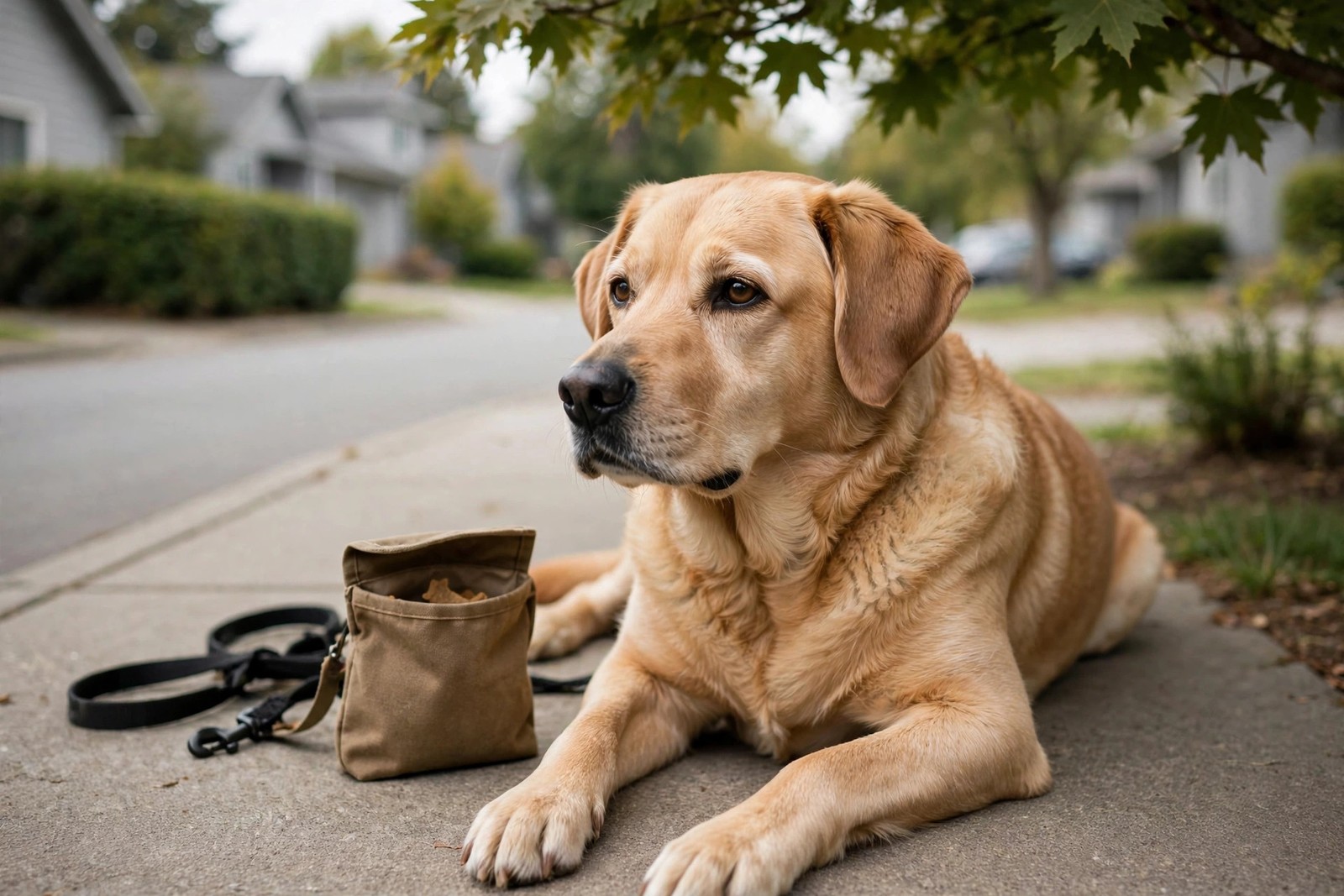
Pulling is not defiance; it is a skill your dog has practised successfully, possibly for years. Dogs naturally walk faster than people, and every step taken on a tight lead teaches the same lesson: lean in, and the world comes closer. Loose-leash walking is therefore a rule change, delivered kindly and identically on every walk — forward movement is bought with a slack lead, never with pressure.
The Core Rule: Tight Stops, Slack Pays
The moment you feel the lead tighten, plant your feet and become a tree, or calmly turn and walk a few steps the other way. Do not jerk the lead back, haul your dog toward you, or keep shuffling forward while you complain. The instant the lead goes slack — your dog glances back, slows, or returns toward you — mark it warmly and pay with a small, high-value treat delivered beside your leg, exactly where you want your dog to be. Then walk on. Treat placement matters: paying at your trouser seam builds a dog who hovers in that rewarding spot, while paying out in front builds a dog who surges ahead to the pay point.
Early sessions can feel ridiculous. You may stop twenty times on one short street and cover very little ground. That is normal for the first week or two. Dogs who have pulled for months need many repetitions of the new rule, and adolescents on exciting routes need more still.
Practise Where Your Dog Can Win
- Start in the lowest-distraction place you have: the garden, driveway, or a quiet side street at an off-peak time.
- Keep first sessions short — five to ten minutes of training woven into a walk beats an hour of drilling.
- Only move to busier routes, with their smells, dogs, and squirrels, once your dog can keep slack on the quiet route most of the time.
- Reward check-ins and slack generously at first, then space treats out gradually once the position is reliable, keeping occasional surprises so the habit stays strong.
Equipment That Helps Without Hurting
A well-fitted harness with a front chest attachment point can reduce how much force your dog can put into pulling and takes pressure off the neck, which is a sensible choice for strong dogs and still-growing puppies. Use a normal fixed-length lead rather than a long extending one while training, since a lead that is always taut at different lengths makes "slack" impossible for your dog to read. Avoid equipment that works by causing pain or choking; a dog walking nicely to avoid discomfort has not learned the skill, and discomfort near other dogs or children can create new problems.
Troubleshooting Slow Progress
If progress stalls, look at the rehearsal, not the dog's attitude. Is someone else in the household letting your dog pull to the park because they are in a hurry? Is the first five minutes out of the door — the most exciting part — the only part you train? A short game or sniff session before lead work often lowers arousal enough for learning. If pulling comes with lunging, barking, or panic, treat that behaviour separately and consider a force-free trainer, because arousal, not lead manners, is then the real problem.
One shared method across every walk is what finally makes slack the habit, and KinsLe Care Teams lets you assign the stop-and-reward steps to each person who walks your dog, with completed walks timestamped so training never quietly drops off the schedule.