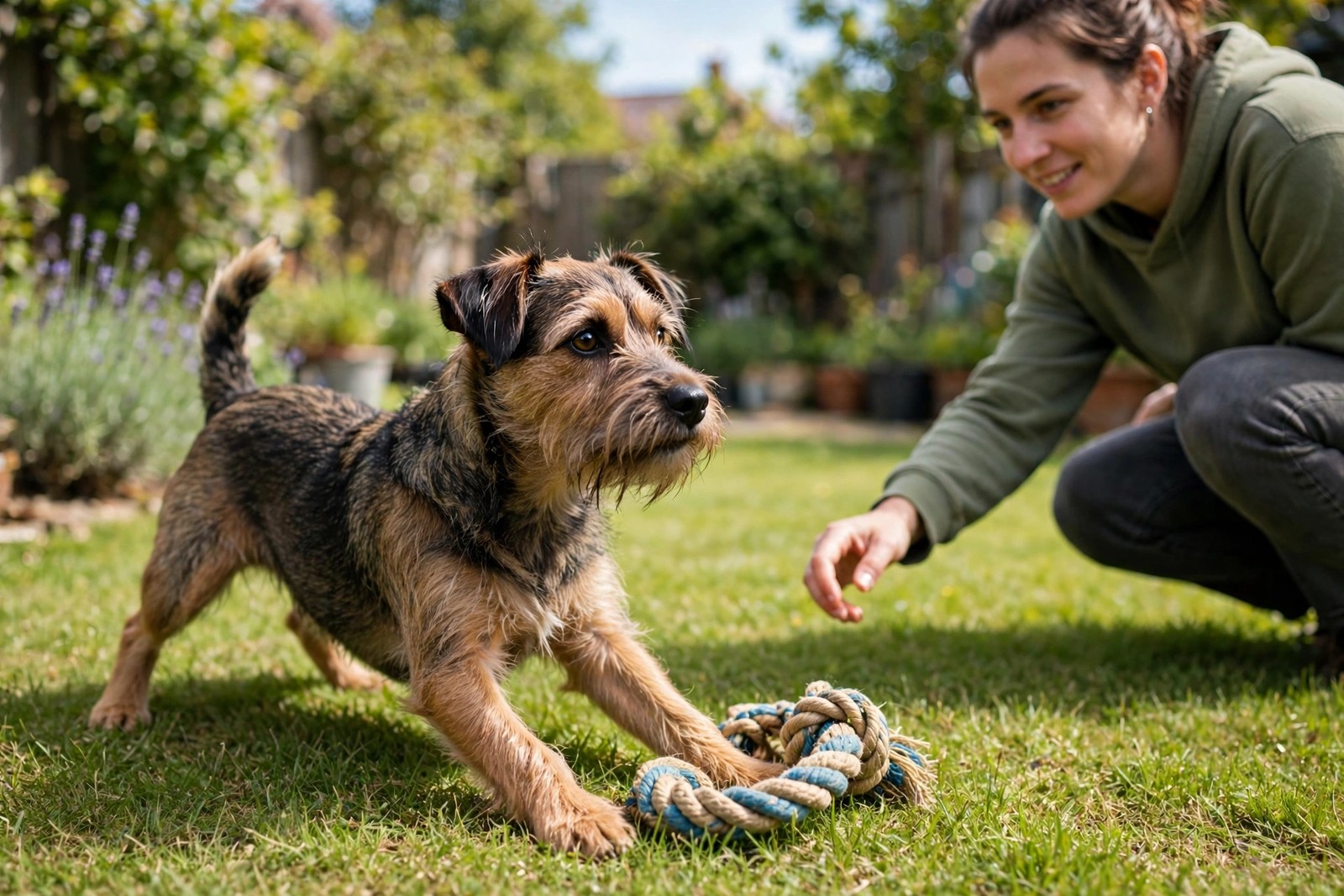
Your dog is not playing fetch badly; your dog is playing a different game very well. In fetch, the rewarding part for the human is the return and the handover. In your dog's version, the toy is an invitation token: carry it close, watch the human commit to a reach, then dodge, spin, and be chased. The chase is the prize — social, fast, and full of the feints and direction changes that predatory play is built from. Every lunge you make confirms that the rules are understood and the game is on.
Why the Reach Triggers the Dodge
Dogs read body language faster than words. A lean forward, a hand extending toward the toy, and your weight shifting all say "I am about to move" a moment before you actually do, and that telegraphed moment is exactly when a keep-away player breaks. There is also a value calculation running: surrendering the toy can end the game, and in many households it does end play, because the human throws once or twice and then checks a phone. Keeping the toy keeps the human engaged. From your dog's side, the dodge is not stubbornness; it is the strategy that has consistently produced the longest and liveliest play sessions.
Changing the Game Without Spoiling It
- Stop reaching. Stand still, turn slightly sideways, and let your dog discover that a stationary human is boring; many keep-away players deliver the toy to an unresponsive audience within a minute or two, and that delivery is your moment to restart play as the reward.
- Trade, do not take. Offer a piece of food, or produce a second toy and throw that one the other way, so releasing a toy makes another good thing happen instead of ending the fun.
- Play chase on your terms sometimes. If your dog adores being chased, use it deliberately as a reward after a clean drop, so chasing becomes something you give rather than something your dog steals.
- Keep sessions short and finish while your dog still wants more, which rebuilds the value of bringing toys to you in the first place.
Teaching the Skills Fetch Actually Needs
A reliable retrieve is two trained behaviours wearing one coat. Teach drop-it indoors first, with low-value items, paying every release with food and returning the item straight away most of the time, so giving things up predicts getting them back. Then build a short retrieve chain separately: a throw of a metre or two, a return encouraged by you backing away, a swap for the second toy, and gradually more distance. Keep these lessons distinct from free play at first, because drilling inside every game is how play goes stale for both of you. A few minutes of practice a day moves faster than one long weekly session.
When Keep-Away Is Worth a Closer Look
Ordinary keep-away is loose and joyful: play bows, exaggerated bouncing, a toy dropped and re-grabbed, and a dog who checks in often. Watch instead for a dog who grabs household items that are not toys — remote controls, children's shoes, small objects that could be swallowed — purely to start a chase, because that version needs management and training rather than more games. Stiffening over the toy, hard staring, or growling when you approach is resource guarding rather than play, and that deserves a qualified behaviourist's plan. Sharing the practice plan through KinsLe's Care Teams, with drop-it sessions assigned to family members and marked complete as they happen, means everyone your dog plays with is building the same retrieve instead of half the household still paying out in chases.