
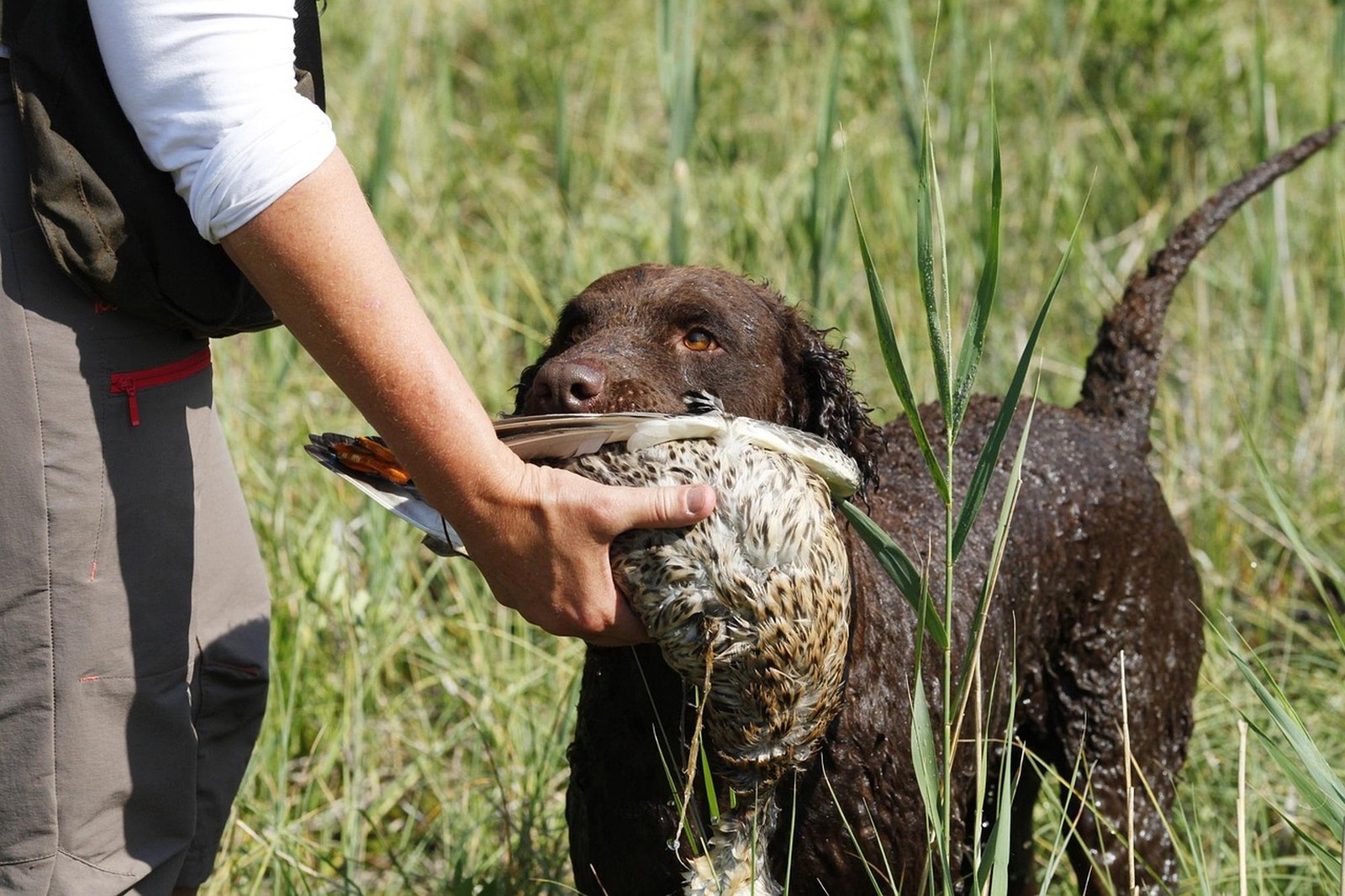
The Retriever Who Marches to His Own Drum
Of the retriever family, the Curly-Coated Retriever is the independent one. Bred to work long days in cold water and marsh, often at a distance from the handler, a Curly tends to be self-reliant, thoughtful, and reserved with strangers rather than glued to his owner's heels. That temperament makes severe separation anxiety less common in this breed than in more dependent retrievers.
Less common is not the same as impossible. Individual Curlies do become anxious when left, and many more become destructive from under-stimulation — a different problem that looks similar in a chewed door frame. Telling the two apart is the first job.
Reading a Curly Who Is Left Alone
An anxious Curly usually shows it early: following you from room to room before you leave, refusing food once the door closes, pacing, whining, and staying wound up for the whole absence on camera. A bored Curly, by contrast, typically settles after an initial patrol, then goes looking for a project — digging in the garden, dismantling a cushion, or carrying household objects around.
Film two or three ordinary departures before changing anything. This breed's reserve can hide stress behind a still exterior, so look at the whole recording: does he ever lie down, sigh, and sleep? A dog who eventually sleeps is coping; a dog who stands oriented to the door for hours is not, however quiet he appears.
Building Alone Time a Curly Respects
Start with the work this dog was made for. A morning of retrieving — ideally involving water where that is safe and permitted — plus some scent games leaves a Curly genuinely tired in body and brain, and a tired Curly naps through absences that a fresh one fills with projects.
Then teach departures as a skill. Practise short, boring exits throughout the day: out the door, back in a minute later, no greeting ceremony. Stretch the duration gradually, mix up your leaving cues, and leave a food puzzle or a safe chew that appears only when you go. Because Curlies think for themselves, keep the pattern varied — the same rigid ritual every time teaches a clever dog exactly which step means the long absence.
For longer days, arrange a midday break: a swim, a game of fetch in the garden, or simply company for half an hour resets his tolerance.
When to Get Professional Help
Book a veterinary visit if filmed departures show continuous pacing, drooling, or escape attempts, if he hurts himself trying to get out, stops eating on days you work, or if his behaviour changes suddenly — a previously settled adult who becomes clingy and distressed deserves a check for pain or illness. A behaviour professional can then build a desensitisation plan paced to him.
Keep expectations matched to the breed's temperament while you train. A Curly may never greet you with retriever-style ecstasy or shadow you from room to room, and that reserve is not coldness or a symptom — it is who he is. Judge progress by the camera evidence: longer settled stretches, food toys finished, and a dog who lifts his head at the key in the door rather than one already standing wound tight behind it.
In KinsLe, Care Teams keeps your Curly's retrieving sessions, midday breaks, and short departure practices assigned across the family, so the plan advances steadily instead of depending on one person's memory.