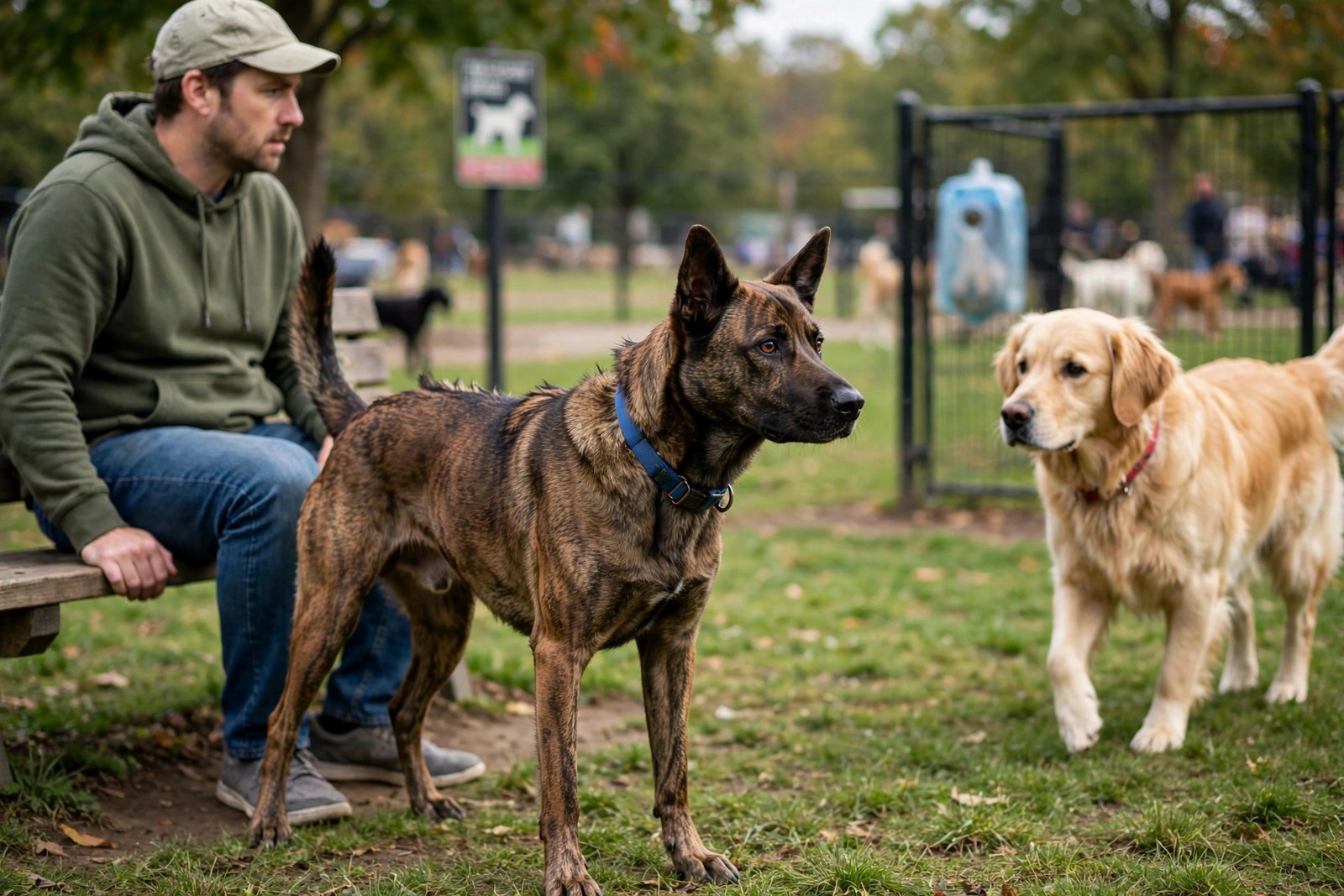
When your dog steps between you and every approaching dog at the park, you are the thing being guarded. That matters, because guarding a person can escalate in exactly the places where dogs arrive fast, owners chat in clusters and nobody is watching the approaches. Manage the picture: keep moving rather than standing in clusters, step away with your dog when others approach, reward check-ins, and avoid the situations — bench sitting in busy areas — where guarding rehearses. Do not scold the dog for telling others off, and do not let strange dogs test it repeatedly. A behaviourist's assessment is worthwhile here, because guarding a person generalises more readily than guarding a bowl.
What Actually Matters Here
Treat the guarding as information about how close is too close. Note which approaches set him off: dogs running straight at you, dogs his own size, dogs who stare, or any dog near a bench where you sit. What he gains from stepping in is distance — the other dog turns away — so the behaviour works for him every time it is rehearsed. Offer him a paid alternative instead: a check-in with you, rewarded the moment it happens, followed by the two of you moving away together, so distance arrives without the display. Correcting the warning away leaves a dog who feels the same but says less, which is the more dangerous combination.
His threshold will move with the day: tiredness, a busy park, a painful joint or a run of rude approaches can all lower it, while a quiet morning with space to move can raise it. Young dogs can grow into guarding as they mature, and an older dog's soreness can make him guard the person who represents safety, so read each outing on its own evidence rather than expecting last week's behaviour to repeat exactly.
Practical Steps That Help
Make space your first tool, in this order:
- Keep moving through open ground instead of standing in groups
- Step away early with your dog when a fast approach starts
- Reward every check-in with you immediately while you create distance
- Skip bench sitting and gate clusters where approaches come from all sides
- Note which dogs and distances trigger the guarding after each visit
Short, calm outings protect the lesson better than one long park session: five relaxed minutes with space around you teach him that approaches end without his help, while an hour of repeated near-misses rehearses the guarding until it sharpens.
Making It Part of Everyday Life
After each outing, note the closest approach he tolerated, what the other dog was doing, and how quickly he settled once you moved away. Owners often feel the guarding is unchanged because the display still happens, yet a fortnight of notes may show the distance shrinking and the settling speeding up — the trend a behaviourist will want to see. Back home, the Care Teams rota in KinsLe notifies a helper when a quieter practice outing is due and timestamps it once finished, keeping everyone to the same distance plan.