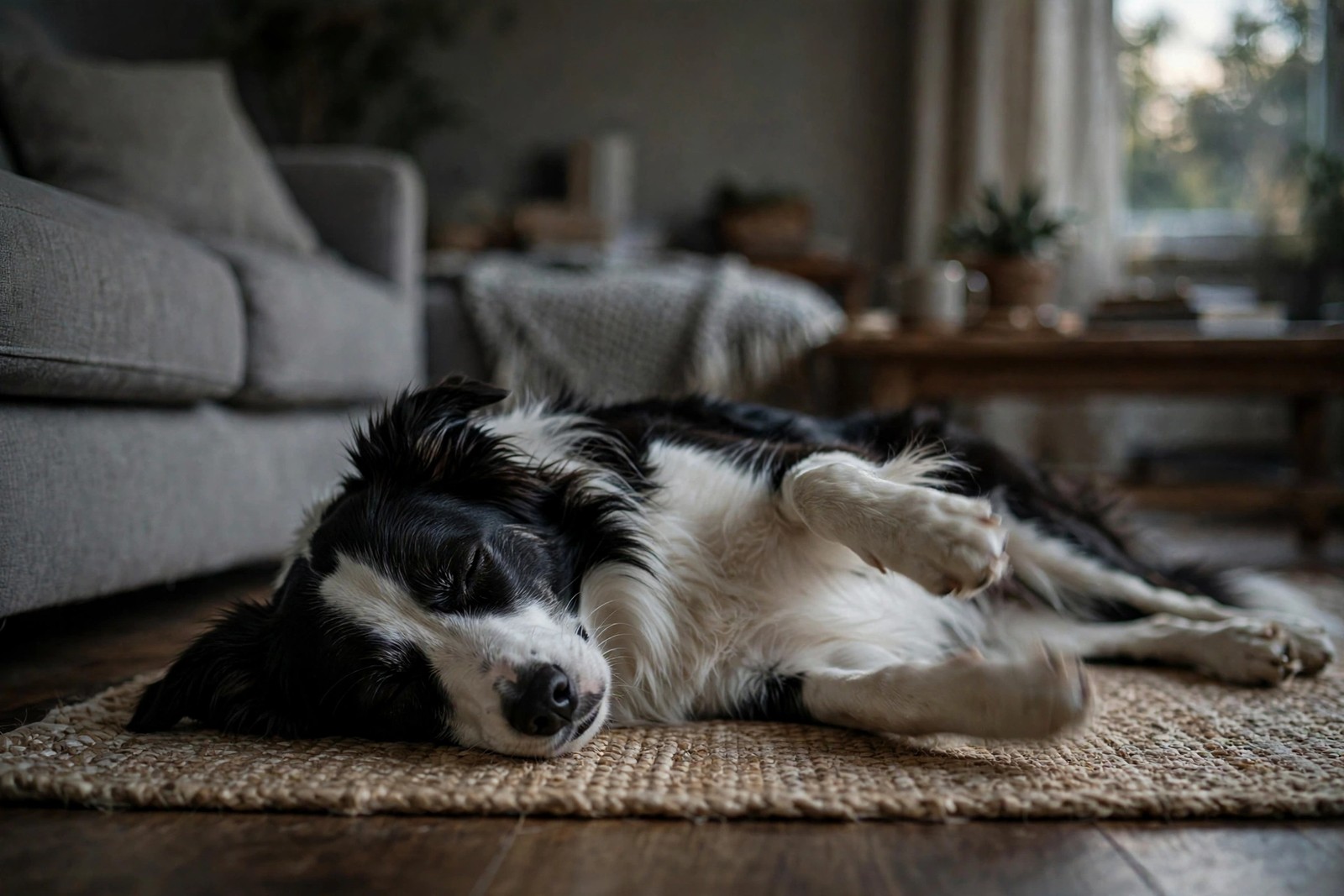
Few things unsettle an owner like watching a sleeping dog shake, paddle his legs, and whine as if something is wrong. In most cases, nothing is: your dog is dreaming. Dogs pass through sleep stages similar to ours, including a rapid-eye-movement stage in which the brain is active, the eyes dart beneath closed lids, and the body's normal muscle relaxation is incomplete enough that small movements and sounds escape.
What normal dreaming looks like
A dreaming dog typically twitches in bursts — an ear flicks, whiskers quiver, paws paddle as if running, the tail may thump, and soft whimpers, whines, tiny barks, or growls come out muffled, as though heard from another room. Breathing often turns quick and irregular for a short stretch, then settles. Puppies dream very actively because their sleep regulation is still maturing, and senior dogs can also move and vocalise more in sleep. Episodes usually pass within a short time and the dog sleeps on peacefully or wakes looking mildly surprised.
Should you wake a dreaming dog?
Generally, let him sleep. A dog woken suddenly from a vivid dream can be disoriented for a moment and may snap before he realises where he is, which is a startle response rather than aggression. If you want to check on him, say his name softly from where you are rather than touching him. A dreaming dog responds — he may stir, open his eyes, and settle again — and once awake he is quickly his normal self, keen for a fuss or a drink, with no lingering strangeness.
Dreaming versus a seizure: the contrasts that matter
A seizure looks and feels different in several specific ways. The body tends to stiffen and convulse rhythmically rather than twitch loosely; legs may paddle in a rigid, repetitive motion; there can be drooling, chomping, or loss of bladder or bowel control; and the dog does not respond to his name during the episode. Afterwards, a dog who has had a seizure may seem confused, wobbly, clingy, or unusually tired for a while, whereas a dreaming dog is simply awake. Any episode with those features, any episode that goes on and on, or episodes that cluster together need prompt veterinary attention, and a phone video of the event is extremely helpful to the vet.
Keeping a simple sleep record
Note the nights you notice episodes, how long the movements lasted, whether your dog woke normally, and anything different about that day — an unusually exciting outing, a thunderstorm, a missed meal. Ordinary dreaming needs no treatment, but a record turns a vague worry into clear information if the pattern ever changes, and it stops normal puppy dreaming being mistaken for a new problem months later.
Puppies, seniors, and breed differences in dream sleep
Young puppies can look almost theatrical in sleep, twitching, whimpering, and paddling through much of a nap. That intensity is normal: the mechanism that keeps adult sleepers still while they dream is still developing, so more of the dream leaks into movement. Senior dogs may also move and vocalise more, and an older dog who seems restless through the night, wakes confused repeatedly, or changes sleep habits markedly is worth discussing at a senior check, because pain and cognitive change can disturb sleep as well as joints and appetite. Flat-faced breeds may add snores and snorts to the soundtrack; loud breathing in sleep is expected for them, while new breathing effort at rest is not.
Shared notes are what make that record reliable in a busy home. KinsLe's Care Teams lets whoever is up in the evening add a timestamped note about that night's sleep behaviour against your dog's profile, building one shared picture instead of scattered memories.