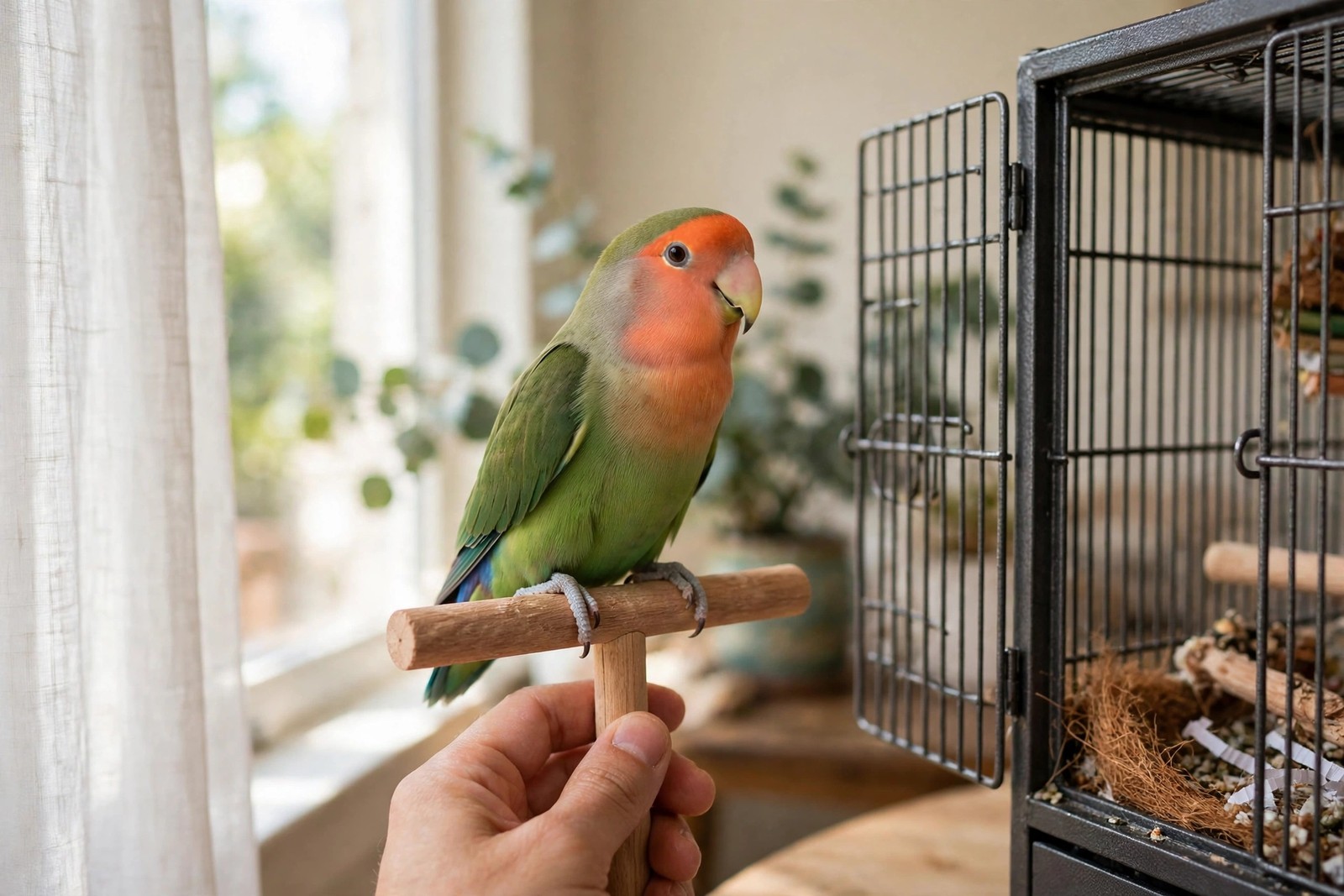
Owners are often shocked by the force involved. A lovebird weighs very little, but her beak is a serious tool, shaped to crack hard seeds, strip bark, and cut the neat nesting material she carries, and it is worked by strong jaw muscles. A committed bite breaks skin easily. The important question is rarely the strength, though. It is the message, because lovebirds bite for identifiable reasons, and fingers keep getting bitten when the reason keeps being repeated.
The Three Usual Reasons
Cage territoriality leads the list. To a lovebird, the cage is not a container; it is her territory and safe core, and many birds who are charming on a play stand will lunge at a hand crossing the cage door. Hens are often more intense about this than males, and a hormonal hen in breeding condition can defend a favourite perch, food pot, or dark corner as if it were a nest site, because to her it is one.
Fear of hands is the second driver. A hand entering from above, fingers spread, reaching to grab, matches a predator's approach closely enough that biting first is a rational defence, and every successful bite teaches the lesson owners least want taught: biting makes the scary hand go away. The third is defence of a bond. A lovebird bonded strongly to one person, another bird, or a chosen nest-like spot may bite other fingers, and sometimes the favourite person's fingers too, when they come between her and what she is guarding.
Learn to read the half-second before the bite: feathers slicked tight or fluffed in display, beak open, body rocking or lunging, eyes pinning, and a bird who leans away or retreats is asking for space in quieter language first.
Handling That Lowers the Bite Count
Change the approach before you ask the bird to change:
- Stop reaching into the cage to extract her. Open the door and let her come out by choice, or offer a hand-held perch for a step-up, which most birds accept far more calmly than fingers.
- Build a step-up and target routine outside the cage with tiny treat rewards, in short sessions, so hands start predicting good outcomes instead of grabs.
- Hand-feed a favourite treat through the bars at first if she lunges, keeping fingers at a distance she can accept, and withdraw before she feels the need to bite, not after.
- Respect the defended spots. Clean and rearrange the cage while she is out, and remove dark, nest-like hideaways and shredding material if biting peaks with breeding behaviour, while keeping her sleep long and regular, since most parrots do best with around ten to twelve hours of quiet darkness.
- Never flick the beak, shake her off, shout, or force a step-up through a bite. Each reaction either frightens her or entertains her, and both outcomes raise tomorrow's bite count.
When Biting Is a Health Signal
A bird who suddenly bites after being reliably gentle, or who bites alongside fluffed sitting, reduced appetite, changed droppings, or less vocalising, may be in pain or unwell, and birds hide illness well. That change deserves an avian vet promptly rather than more training. Bites that follow the territorial and fear patterns above, though, usually soften within weeks once the whole household handles her the same patient way, and KinsLe Care Teams helps you hold that consistency by assigning the daily out-of-cage, target-training, and cage-care duties, so no one reverts to reaching in and grabbing.