
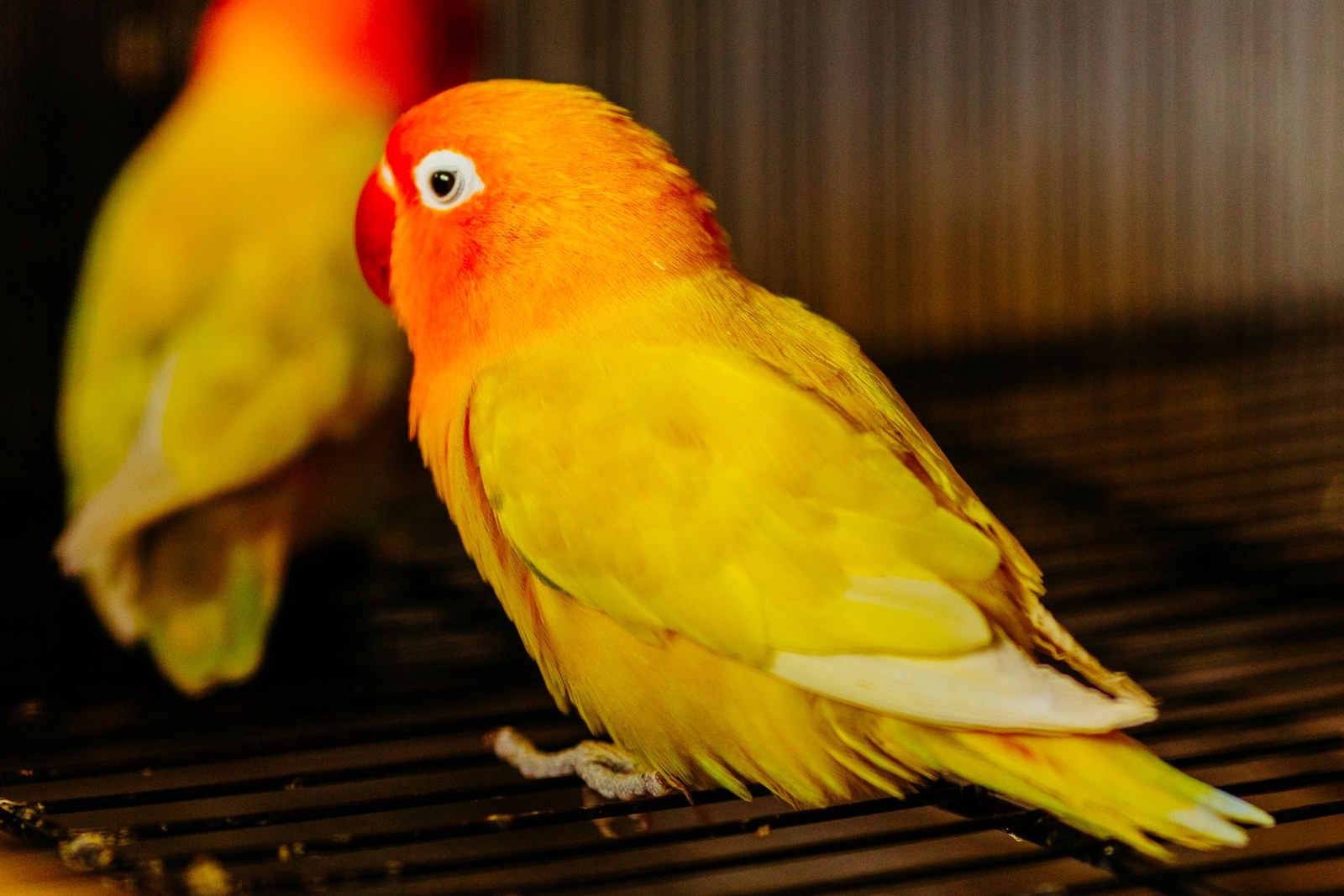
A lovebird biting the cage bars and lunging at hands is usually guarding what she considers hers — lovebirds, especially females, can be famously territorial about their cage, and cozy hideaways that feel like a nest site make the guarding fiercer. She's not spiteful; in her mind, she's a tiny sentry defending the castle, and fingers coming through the door are invaders.
Why Lovebirds Guard So Hard
Lovebirds are bold, intense little parrots. In the wild, a female lovebird defends a nest cavity vigorously — a good cavity is survival — and pet hens often bring that same seriousness to a cage corner, a sleep hut, a cardboard box, or even a favorite food dish. Bar-biting and lunging commonly spike during hormonal periods, when days are long and rich foods are plentiful. You'll see the full display: crouching low with wings slightly quivered, beak open, rapid chattering, shredding paper obsessively for nesting material, and charging the bars when anyone — person or passing pet — comes close. Males can be territorial too, but a determined hen defending a perceived nest is in a class of her own, and her beak is surprisingly powerful for a bird that weighs about 50 grams.
Reduce the Triggers Around the Cage
- Remove nest-like invitations. Sleep huts, tents, boxes, and dark hidey corners are the biggest territorial triggers — swap them for an open perch for sleeping.
- Watch the shredding. Limit access to piles of paper she can turn into nesting strips during hormonal stretches, and rotate foraging toys instead.
- Rearrange the furniture. Moving perches, toys, and dishes around every week or two makes the cage feel less like a fixed, defendable fortress.
- Keep days even. Around 10–12 hours of darkness helps settle hormonal cycles that fuel guard mode.
- Feed thoughtfully. A varied diet with plenty of vegetables and measured seed or pellet portions matters more than any single "hormone food" myth — ask your avian vet if you're unsure.
Work With Her, Not Against Her
Let her come out on her own terms: open the door, step back, and let her climb out to a playstand before you clean, rearrange, or change dishes — servicing the cage while she's elsewhere avoids the classic reach-in bite. If you must reach in while she's home, move slowly, talk to her, and watch for the crouch-and-lunge posture that says today is not the day; a perch offered for step-up is safer than fingers. Never punish the lunging or flick at the beak through the bars — provoking a territorial bird is a game she will happily escalate, and children especially should be taught to admire her from outside the bars. Many "cage-aggressive" lovebirds are perfectly sweet once they're out and away from the fortress, so judge her personality on neutral ground.
When Territorial Tips Into a Vet Question
Territorial behavior paired with straining, a swollen abdomen, sitting on the cage floor, or passing very large droppings can point to egg-laying, which carries real risks like egg binding — contact an avian veterinarian promptly if you see those signs. Chronic egg-laying, feather plucking that starts alongside the guarding, or sudden personality change in a previously easy bird are also worth a vet conversation. And take any bite that breaks skin seriously: clean it well, and seek medical advice if it becomes red, swollen, or painful.
Warn Everyone Before They Reach In
The fastest way someone gets bitten is not knowing today is a guard-mode day. KinsLe Messenger, the per-pet communications hub on your lovebird's profile, gives you one place to warn family members or a sitter — "she's nesty this week, let her come out on her own, don't reach past the door" — so nobody learns it from her beak. Notes about her moods, her favorite out-of-cage stand, and her current triggers all live with her profile instead of scattered across texts. Tell your cousin through the KinsLe Messenger chat on KinsLe, before the visit, that she is shredding paper for a nest and must be left to hop onto her stand before anyone opens the door.